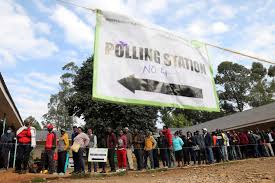
As the country heads toward the 2027 General Election, the nation faces a critical test of its democracy.
The responsibility falls squarely on the shoulders of the Independent Electoral and Boundaries Commission (IEBC), chaired by Erastus Edung Ethekon, to conduct elections that are not only free and fair but widely perceived as credible.
In a country where elections are often the ultimate arbiter of political legitimacy—and, at times, a source of tension—the IEBC must rise above political pressures, ensure transparency, and guarantee that the sovereign will of every voter is respected.
Kenya’s electoral history reminds us of what is at stake.
From the post-election violence of 2007-2008 to recurring disputes over technological glitches and procedural errors in subsequent polls, the consequences of perceived or real electoral malpractice have been profound ranging from loss of lives, economic disruption, and societal divisions. 2027 presents an opportunity to rewrite that narrative—if the IEBC demonstrates competence, impartiality, and accountability.
A prerequisite for a credible election is citizen empowerment.
Voters must be able to register easily, access accurate information, and cast their ballots without fear of intimidation or manipulation.
The IEBC has a duty to ensure that every Kenyan—regardless of political affiliation, ethnicity, or location—can participate fully in the democratic process.
This requires robust voter education campaigns, widespread verification of registration lists, and clear channels for reporting irregularities. Citizens should not feel powerless or excluded; instead, they must be confident that their vote truly matters.
Technology will play a decisive role in 2027. Biometric verification, electronic transmission of results, and other digital safeguards can increase transparency and efficiency—but only if implemented with rigorous oversight and tested thoroughly.
Independent observers, civil society, and the media must be empowered to scrutinize the process, ensuring that no corner of the system is opaque. Any failure or lack of preparedness would not just be an administrative lapse—it would be a betrayal of public trust.
Equally important is the IEBC’s impartiality. Kenya’s multiparty politics often heighten suspicion and amplify tensions.
Chairperson Ethekon must act consistently, transparently, and without favoritism, signaling to the nation that the Commission’s authority derives not from politicians, but from the Constitution and the people. Perceived bias, even in technical matters, can undermine confidence, fuel unrest, and weaken democratic institutions.
The stakes for Kenya could not be higher. Free, fair, and credible elections are the foundation of national unity, social cohesion, and long-term stability.
A botched process risks more than political uncertainty—it threatens public faith in democracy itself.
Conversely, an election conducted with integrity will strengthen institutions, empower citizens, and position Kenya as a model of democracy in the region.
For 2027, the message is concise and clear, every vote must count, every voice must be heard, and every Kenyan must trust the process.
The IEBC has the tools, the mandate, and the responsibility to deliver on this promise. The nation is watching—and history will judge whether the Commission rises to the challenge or falters when it matters most.
Kenya cannot afford a repeat of past failures. The time for preparation, transparency, and accountability is now. The eyes of every voter are upon the IEBC—and they expect nothing less than a credible, free, and fair election.