Kenyan gamblers lose Sh186million daily as betting craze deepens, KRA data shows

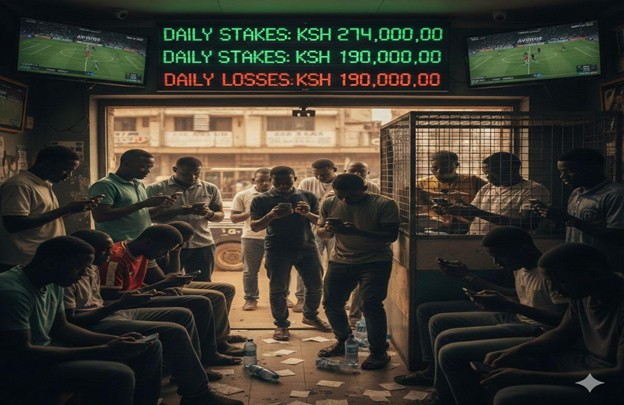
Kenyans are losing an estimated Sh186million every day to betting and gambling, exposing the harsh realities behind the country’s rapidly expanding betting culture, according to data compiled by the Kenya Revenue Authority (KRA).
The figures, contained in a KRA report published in May 2025, show that from July 2024 to March 2025, Kenyans staked an average of Sh274.37 million daily on sports betting, virtual games and other gambling products.
During the same nine-month period, punters received average daily winnings of just Sh87.83million, meaning betting firms retained about Sh186million each day before taxes.
Over the nine months, total stakes amounted to more than Sh75billion, while total winnings stood at approximately Sh24billion, leaving households to quietly absorb billions in cumulative losses. In simple terms, for every Sh100 wagered, bettors got back only about Sh32, translating to a payout rate of roughly 32 per cent, one of the lowest reported globally.
The data is derived from taxes remitted to KRA, including excise duty on stakes and withholding tax on winnings, offering a reliable snapshot of the industry’s scale. It also reveals a troubling trend: while betting stakes rose by about 17 per cent year-on-year, payouts to players fell by nearly 15 per cent.
Analysts attribute the widening gap to a combination of higher taxation and aggressive bookmaker strategies. In late 2024, the government raised excise duty on betting stakes to 15 per cent, increasing the cost of doing business for operators. In response, many bookmakers adjusted odds downward, reducing potential returns to punters while protecting margins.
“The house edge has grown significantly,” said a financial analyst familiar with the sector. “What we are seeing is a market where players are taking on much more risk for much lower reward.”
Separate figures from the Gambling Regulatory Authority (GRA), formerly Betting Control and Licensing Board (BCLB) reinforce the grim picture. The regulator estimates that Kenyans lost close to Sh190 million daily over the same period, after wagering about Sh274 million per day and receiving only Sh88 million in winnings. The BCLB estimates that millions of Kenyans—many of them young and urban place multiple bets daily, often chasing long-odds accumulators with slim chances of success.
Betting has exploded in popularity, fuelled by widespread smartphone access, mobile money integration and relentless marketing by operators such as SportPesa, Betika, SportyBet and Afropari. Platforms are seamlessly linked to M-Pesa and Airtel Money, allowing instant deposits and withdrawals, a convenience that critics say encourages impulsive and repeated betting.
Youth unemployment, stagnant wages and rising living costs have further pushed many young people toward betting as a perceived shortcut to financial relief. Yet social media conversations increasingly paint betting as a trap rather than a lifeline, with users warning that headline jackpot wins are statistical outliers designed to lure more wagers.
While betting firms and the government have benefited financially, households have paid the price. KRA data shows the industry generated roughly Sh12billion in taxes during the nine-month period, including excise duty and withholding tax on winnings. Officials argue that some of this revenue supports sports development and youth programmes.
However, financial experts warn that sustained losses at this scale are quietly draining household savings, fuelling debt cycles and worsening mental health challenges. Counsellors report rising cases of young men seeking help after accumulating unpaid loans from digital lenders used to finance betting habits.
Families across urban centres tell similar stories of breadwinners diverting rent, school fees and business capital into betting accounts, hoping to recover earlier losses. Support groups in Nairobi, Mombasa and Kisumu say attendance has grown steadily, mirroring patterns seen in countries grappling with gambling addiction.
Regulators say they have intensified oversight of licensed firms, pushing for responsible gaming messages, self-exclusion tools and advertising restrictions. Recent caps on betting advertisements during family viewing hours have been welcomed, but advocacy groups argue the measures fall short.
“The payout rate we are seeing is not accidental,” said a responsible gaming advocate. “It reflects a regulatory environment that allows heavy taxation, aggressive odds and relentless marketing to coexist. Other countries run betting industries without crushing players. Kenya has chosen a harsher balance.”
Operators defend their business models, insisting betting is a form of entertainment with genuine winning opportunities and pointing to occasional multi-million-shilling payouts that make headlines. They also note that deposit limits and self-exclusion features exist, though uptake remains low among heavy users.
As Kenya’s betting market cements its place as one of Africa’s largest, policymakers face growing pressure to strike a balance between revenue generation and social protection. The Sh186 million lost daily is more than a statistic—it represents livelihoods eroded quietly, one small wager at a time, in an economy already under strain.
Without stronger safeguards, education and behavioural interventions, critics warn the costs of betting may continue to outweigh its economic benefits, leaving millions chasing hope in a system where the odds are firmly stacked against them.