Kalonzo Musyoka: The quiet contender emerging as the man to watch in 2027

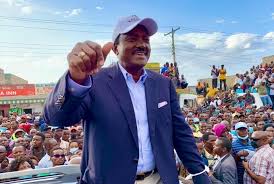
As Kenya’s political temperature slowly rises ahead of the 2027 general elections, one figure is steadily re-entering national focus with unusual calm and consistency, former Vice President and Wiper Patriotic Party leader Kalonzo Musyoka.
Long regarded as a consummate insider yet rarely the loudest voice in the room, Kalonzo’s greatest political asset today may be what many of his rivals’ lack, an untainted public record, institutional memory and political endurance without scandal.
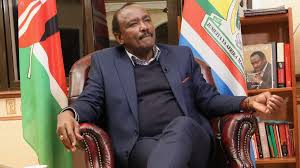
In a political culture often dominated by controversy, courtroom battles and corruption allegations, Kalonzo stands out for having no major corruption cases or personal scandals linked to his name across more than three decades in public life.
This alone gives him a unique platform in a country where voter fatigue with ethical lapses in leadership is growing, especially among the youth and middle class.
Kalonzo’s national stature was firmly established during the late Mwai Kibaki presidency, where he served as Vice President between 2003 and 2008.
That period coincided with one of Kenya’s most consequential reform eras marked by economic recovery, institutional rebuilding, and the early push toward constitutional change.
While Kibaki was the technocrat, Kalonzo played the stabilising political role, often acting as a bridge between government and opposition factions. His tenure reinforced his image as measured, diplomatic and loyal qualities that still define his political brand.
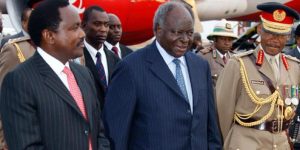
He later aligned himself with the late former Prime Minister Raila Odinga, supporting him in the 2013, 2017 and 2022 presidential elections, and serving as Raila’s running mate in 2013.
Through these alliances, Kalonzo embedded himself firmly within the reformist and opposition tradition, even as the coalition politics around him shifted and fractured over time.
Crucially, Kalonzo’s loyalty has often come at personal political cost. While others leveraged opposition platforms to bargain for state power, he remained largely consistent, choosing long-term political credibility over short-term transactional gains.
In the Kenyan context where party hopping and ideological inconsistency are common, this record increasingly works in his favour.
Today, with Raila Odinga’s political career having ended following his demise while receiving treatment in Nidia on October 15, 2025, Kalonzo has gradually assumed the role of a senior opposition statesman.
He is no longer merely a supporting actor but is now widely seen as one of the most credible figures to inherit the opposition mantle.
His recent positioning reflects a careful recalibration underscored by less confrontation, more policy tone; less mobilisation rhetoric and more institutional language. This shift aligns well with an electorate increasingly interested in governance, cost of living, jobs and national cohesion.
What makes Kalonzo particularly intriguing as a 2027 contender is his clean political health.
In an era where integrity has become a campaign issue rather than a footnote, his lack of corruption baggage allows him to campaign on credibility rather than defence. He can criticise governance failures without fear of counter-accusations rooted in his own past. That moral high ground, if effectively leveraged, could resonate strongly with voters disillusioned by cyclical scandals.
“He (Kalonzo) tried to respond to me and said he was the one who launched the road from Kibwezi to Bondoni. Look for the idiots to deceive. Fools are no longer in Kenya. You didn’t build that road. It’s Uhuru Kenyatta and I. We have the facts. We have the evidence. The mind to build a road, I am afraid, will take you a while,” President William Ruto noted.
The president continued his attack by questioning Kalonzo’s ability to deliver infrastructure for Kenyans when he allegedly cannot even construct a road to his own residence.
“If you can’t build your own road, you will build someone else’s. In 40 years you haven’t built a road to your own. How many hundred years do you need to build a road for other Kenyans? Wouldn’t it take 1000 years?” Ruto posed.
In response to President William Ruto’s criticism of his development track record, opposition leader Kalonzo Musyoka has asserted that despite serving in government for over forty years, his career has remained untainted by corruption scandals.
‘If I wanted to get rich as VP under Kibaki, I could have – but I didn’t!” Kalonzo remarked.
Equally important is his temperament. Kalonzo has long cultivated a diplomatic persona shaped in part by his tenure as Kenya’s Foreign Affairs minister that contrasts sharply with the populist, combative style dominant in recent elections. As Kenya grapples with deep political polarisation, this statesmanlike posture may appeal to voters seeking stability, predictability and national healing.
Critics have often labelled Kalonzo as “too cautious” or “politically patient to a fault.” Yet, in 2027, caution may become an asset. His ability to wait, negotiate, and build alliances quietly could prove decisive in a fragmented political landscape where no single bloc commands overwhelming dominance.
Regionally, Kalonzo also carries symbolic weight. As a senior leader from Ukambani, he commands a loyal base while retaining national acceptability a rare combination. Unlike ethnic kingpins whose appeal struggles beyond their core zones, Kalonzo has repeatedly demonstrated cross-regional political relevance.
Ultimately, Kalonzo Musyoka enters the 2027 conversation not as a political newcomer nor as a fatigued relic, but as a seasoned contender whose time may finally align with national mood. His unblemished record, institutional experience, and steady rise as the face of opposition politics position him as one of the most credible figures to watch.
In a race likely to be shaped by questions of integrity, economic competence and national unity, Kalonzo’s quiet consistency may yet prove louder than the noise.