Judiciary gets Sh27.7 billion for 2025/26 financial year but still far from target
Out of the allocation, Sh1 billion is expected to be spent on the hiring of new judiciary officers and judges

As the Judiciary plans to expand its footprint and hire more judges and magistrates across the country and use technology to facilitate access to justice, its previous push to be allocated at least Sh50 billion budget is yet to be realised.
In his budget speech before the National Assembly yesterday, National Treasury Cabinet Secretary John Mbadi stated that Sh27.7 billion has been allocated to the third arm of government.
Out of the allocation, Sh1 billion is expected to be spent on the hiring of new judiciary officers and judges.
In the Judiciary’s Mid-Term Economic Framework Report for the Financial Years 2025/26 and 2027/28, the Judiciary had said its established resource requirement for FY 2025/26 is Sh40.1 billion out of which Sh31.6 billion and Sh8.5 billion are the recurrent and development vote requirements respectively.
The Judiciary recently advertised vacancies for Judge of the Court of Appeal (15 slots), Judge of the High Court (20 slots) and Judge of the Environment and Land Court (10 slots), the JSC has also invited applications for Resident Magistrate (100 slots), Resident Kadhi (5 slots) and Resident Magistrate/ Adjudicator Small Claims Court (40 slots).
In the 2024/25 financial year, JSC was forced revoked a planned recruitment of 16 High Court and Court of Appeal judges after the Judiciary’s 2004/20025 budget was cut by 15 per cent as part the austerity measures enforced by President William Ruto following the withdrawal of the Finance Bill 2024 in the wake of the Gen Z protests.
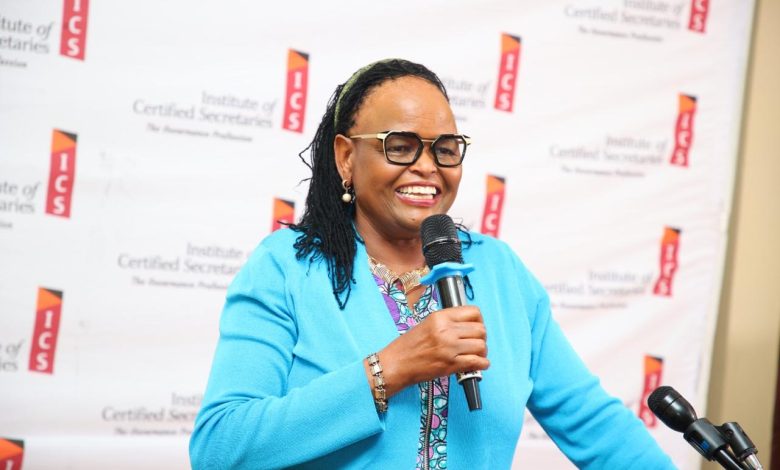
Chief Justice Martha Koome, who chairs JSC, said at the time that they were compelled to make major adjustments to planned programmes and activities, including recruitment of the judges.
According to Koome, the Court of Appeal had a total of 29 Judges serving in three different stations across the country, with a total of 13,331 pending cases as of May 2024.
She said they have made efforts to increase the maximum number of judges from 30 to 70 by amending the Judicature Act.
The figures have since gone down following the deaths of High Court judges David Majanja and Daniel Ogembo last year.
In November 2024, Koome also revealed that funding for the Judiciary has consistently fallen short by nearly 50 per cent for the past three financial years saying this limited its capacity to meet the expanding demands of the institution.
She cited the need for further investment to fully staff the Judiciary to meet the needs of a growing caseload and enhance service delivery.
“In the past financial year, we received only Ksh 22.42 billion, significantly below the required budget of Ksh 43.17 billion. This funding gap restricts our ability to expand infrastructure, enhance security, and support the wellness of our judicial personnel,” the CJ noted during the presentation of the State of the Judiciary and the Administration of Justice (SOJAR) Report 2023/24 in Nairobi.
This comes as a backdrop in their fight to have a 25 per cent share of the total budget, as they expected that after the approval of the Judiciary Fund, they would be receiving Sh75 billion to spend independently.