Israel lifts Ebola-linked travel restrictions on Kenyans after diplomatic protest by Nairobi
Although no Ebola case has been confirmed in Kenya and no related death reported as of now, so far, police have killed four protesters during demonstrations in Nanyuki town against the construction of an Ebola quarantine centre for US citizens. Further, High Court in Nairobi has issued court orders barring continued construction of the facility which has raised serious concerns on Kenya's national interests and state sovereignty.

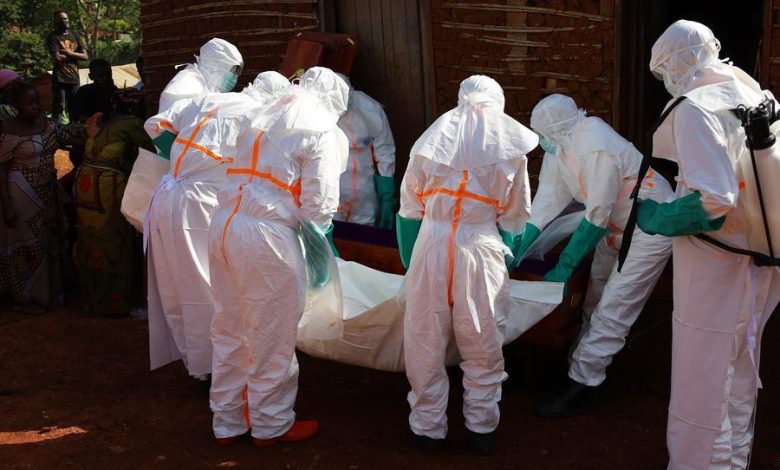
Israel has lifted temporary Ebola-related travel restrictions on Kenyan travellers, reversing its earlier decision just hours after Nairobi lodged a strong diplomatic protest, describing the move as unjustified and inconsistent with the public health situation in the country.
Although no Ebola case has been confirmed in Kenya and no related death reported as of now, so far, police have killed four protesters during demonstrations in Nanyuki town against the construction of an Ebola quarantine centre for US citizens.
Further, High Court in Nairobi has issued court orders barring continued construction of the facility which has raised serious concerns on Kenya’s national interests and state sovereignty.
The Israeli Embassy in Nairobi confirmed the development, announcing that Israel’s Ministry of Health had removed Kenya and Rwanda from the list of countries subject to temporary Ebola-related entry restrictions following a review of the regional outbreak situation.
“We are pleased to announce that Israel’s Ministry of Health has decided to remove Kenya and Rwanda from the list of countries subject to temporary Ebola-related entry restrictions,” the embassy said in a statement.
The reversal followed a strongly worded protest by Foreign Affairs Principal Secretary Dr. Korir Sing’oei, who criticised Israel’s decision to place Kenya on a restricted list alongside the Democratic Republic of Congo (DRC), South Sudan, Rwanda and Uganda following an Ebola outbreak in the region.
Sing’oei argued that Kenya’s inclusion was unfair, noting that the country has not recorded a single Ebola case despite extensive surveillance and testing efforts.
“Kenya strongly protests the decision by Israel to include the country amongst those whose travellers it will restrict. This is especially unfortunate given Kenya’s support to regional surveillance and response to Ebola. With over 80,000 tests, no case of Ebola has been reported in Kenya,” he stated.
The original directive, issued on June 10, 2026, by Ben Gurion International Airport’s Head of Border Control, Amnon Shmueli, instructed airlines to deny boarding to foreign nationals from the affected countries, as well as travellers who had visited those nations within 21 days prior to departure, regardless of their citizenship or country of residence. Israeli citizens and permanent residents were exempted from the restrictions.
Kenya’s government maintained that the country remained Ebola-free and had implemented robust surveillance measures to prevent any cross-border transmission of the disease.
The diplomatic row highlighted growing concerns in Nairobi over travel measures perceived as disproportionately targeting countries that have not reported infections but are actively supporting regional disease monitoring and containment efforts.
Israel’s decision to rescind the restrictions is likely to ease tensions between the two countries and restore confidence among travellers and businesses affected by the short-lived directive.