Islamabad locked down as Iran-US peace talks hang in balance

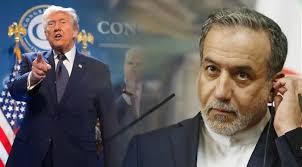
Pakistan’s capital, Islamabad, has been placed under tight security lockdown ahead of high-stakes ceasefire talks between Iran and the United States, in what is being described as a critical attempt to end a devastating regional conflict.
The negotiations, scheduled to begin over the weekend, follow a fragile two-week ceasefire brokered earlier this week through mediation efforts by Pakistan.
The truce came after months of intense hostilities that erupted in late February, when Israel and the United States launched strikes against Iran, triggering a wider conflict that has left thousands dead and disrupted global energy supplies.
Iran’s subsequent blockade of the strategic Strait of Hormuz—a vital oil shipping route—has contributed to a severe global energy crisis, sending oil and gas prices soaring and rattling international markets.
Despite the ceasefire, tensions remain high. Continued Israeli bombardment in Lebanon and disagreements over whether the truce extends beyond Iran and the US have cast uncertainty over the talks.
Iranian President Masoud Pezeshkian has warned that negotiations would be “meaningless” if attacks in Lebanon persist.
Pakistan has maintained that the ceasefire includes broader de-escalation across the region. Iranian Deputy Foreign Minister Saeed Khatibzadeh said Islamabad has continued behind-the-scenes efforts to preserve the truce, including preventing further retaliatory action by Tehran.
Security across Islamabad has been significantly heightened, with army troops and paramilitary rangers deployed at key locations.
Authorities declared public holidays to minimise movement, leaving streets largely deserted as preparations intensified.
Delegations from both sides are expected to arrive ahead of the talks, with the US team led by Vice President JD Vance alongside envoys Steve Witkoff and Jared Kushner.
Iran’s delegation will include Foreign Minister Abbas Araghchi and Parliament Speaker Mohammad Bagher Ghalibaf, as well as senior figures from the Revolutionary Guard.
Regional stakeholders, including Qatar and Saudi Arabia, are also expected to send representatives for parallel discussions.
Several venues are under consideration for the talks, including the high-security Serena Hotel, the Prime Minister’s Secretariat, and Islamabad’s Convention Centre, with final arrangements being kept confidential for security reasons.
Officials say there is no fixed timeline for the negotiations, but expectations are high that the talks could lay the groundwork for a lasting peace.
Prime Minister Shehbaz Sharif and Army Chief Asim Munir, who played a key role in brokering the ceasefire, expressed cautious optimism, noting “satisfaction over the de-escalation achieved so far.”
“Our priority is that the talks go smoothly,” one Pakistani official said. “We are here to facilitate dialogue and ensure both sides have the space to reach a lasting solution.”