Greenland row between US and Denmark, a threat to NATO continuity
Greenland has flatly rejected any possibility of joining the United States, sending a strong political message to Washington amid repeated annexation threats by President Trump. Greenland is part of the Danish kingdom. Denmark formerly ruled it as a colony and today still controls its foreign and security policy.

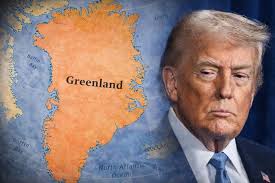
The escalating row pitting the US and Denmark over the oil and gas rich Arctic territory, Greenland which is part of the Danish Kingdom is now threatening the unity and continuity of North Atlantic Treaty Organization (NATO) after Denmark’s Foreign Minister said there is a “fundamental disagreement” with the US over Greenland after talks at the White House.
NATO is an intergovernmental military alliance between 32 member states which, US President Donald Trump insists its military strength depends heavily on U.S. power, arguing the alliance would be far more effective with Greenland under American control but leaders in Greenland and Denmark have rejected that position.
Greenland has flatly rejected any possibility of joining the United States, sending a strong political message to Washington amid repeated annexation threats by President Trump.
Similarly, European troops drawn from NATO members notably from from France, Germany, Norway and Sweden are expected in Greenland to bolster security after talks with Denmark, Greenland and the U.S. underscored what officials described as fundamental disagreements with the Trump administration.
Lars Lokke Rasmussen said the meeting with Vice-President JD Vance and Secretary of State Marco Rubio on Wednesday had been “frank but constructive”.
But he added that US President Trump was insisting on “conquering” Greenland which was “totally unacceptable”.
“We made it very, very clear that this is not in the interest of (Denmark) ,” Lars said.
Trump afterwards reiterated his interest in acquiring the resource-rich island, a position that has rattled allies across Europe and stoked tensions with Nato.
The hour-long meeting between the US, Denmark and Greenland failed to bring a major breakthrough, although all sides agreed to set-up a high-level working group to discuss the future of the autonomous Danish territory.
Lars said there were “red lines” the US could not cross, and the working group would meet in the coming weeks in an effort to find a compromise. He added that Denmark and Greenland were open to the possibility of the US opening more military bases on the island.
“It’s productive to start discussions at a high level,” he said.
Despite being a sparsely populated territory, Greenland’s location between North America and the Arctic makes it well placed for early warning systems in the event of missile attacks and for monitoring vessels in the region.
Trump has repeatedly said acquiring it is vital to US national security.
US President Donald Trump has quickly moved on to the subject of Greenland, renewing calls for a US takeover of the Arctic territory barely weeks after forceful removal of Venezuela’s president, Nicolás Maduro through military invasion and kidnapping.
Last weekend, Trump said that he needed Greenland “very badly”, prompting a ramping up of tensions between the US, Greenland and Denmark.
Greenland is part of the Danish kingdom. Denmark formerly ruled it as a colony and today still controls its foreign and security policy.
Mette Frederiksen, the Danish Prime Minister has since said that an attack by the US on a NATO ally – in this case Greenland as part of Denmark would mean the end of the alliance.
Trump also claimed NATO’s military strength depends heavily on U.S. power, arguing the alliance would be far more effective with Greenland under American control.
Leaders in Greenland and Denmark have rejected that position.
Greenland’s Prime Minister, Jens-Frederik Nielsen, has urged Trump to give up his “fantasies about annexation”.
European leaders have also given Denmark and Greenland their backing, saying “Greenland belongs to its people”.
But according to Stephen Miller, one of Trump’s top aides, the administration is determined to acquire Greenland and believes it will do so without the need for military intervention.
Greenland has long been on Trump’s agenda but the reasons behind it have changed over time.
In 2019, during his first term, he confirmed reports that he had been urging aides to find out how the US could buy the vast Arctic island, describing a sale as “essentially a large real estate deal”.
Last January when Trump, then president-elect, said he needed control of Greenland he said it was for “economic security”.
But in recent days he has said he needs Greenland “from the standpoint of national security” – despite the risk this would pose to the future of NATO.
Strategically positioned between the US and Russia, Greenland is viewed as increasingly important for defence and is emerging as a geopolitical battleground as the climate crisis worsens.
As well as oil and gas, Greenland’s supply of multiple in-demand raw materials for green technology is attracting interest from around the world – including from China, which dominates global rare earth production and has threatened to restrict the export of critical minerals.
By acquiring Greenland, the US could keep China out.
The rapid melting of the island’s huge ice sheets and glaciers could open up oil drilling (although Greenland stopped granting exploration licences in 2021) and mining for essential minerals including copper, lithium, cobalt and nickel.
Melting Arctic ice is also opening up new shipping routes, providing alternatives to the Suez canal through the Arctic that shorten the journey from western Europe to east Asia by almost half.
China and Russia agreed in November to collaborate on developing new Arctic shipping routes. Greenland is already an important military base for the US and its ballistic missile early warning system. The US has had a military base at Pituffik (previously Thule) since the cold war.
Kinyuru Munuhe is a Diplomacy, Statecraft & Strategic Communications Specialist. He is also the Executive Director at Governance and Diplomacy Associates (GDA) Associates)