Government unveils Sh2.1bn livestock plan to cushion farmers against El Niño
The plan targets 24 flood-prone and livestock-rich counties following advisories from the Kenya Meteorological Department indicating an increased likelihood of enhanced rainfall, flooding, flash floods and localised inundation.

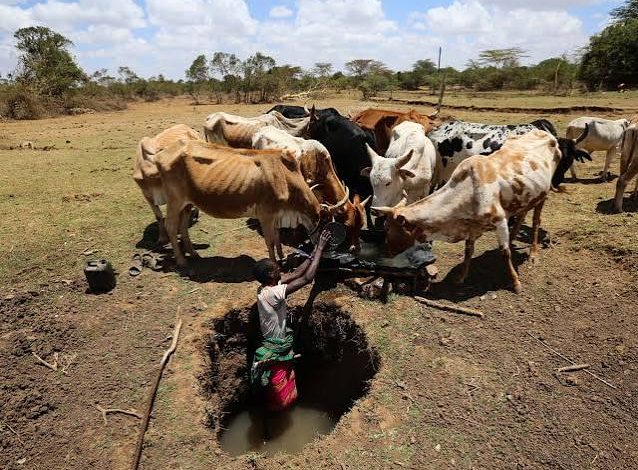
The Government has unveiled a Sh2.1 billion preparedness and anticipatory action plan to protect livestock farmers and pastoral communities from the anticipated effects of El Niño, with the bulk of the funds earmarked for vaccines, veterinary medicines and emergency response equipment.

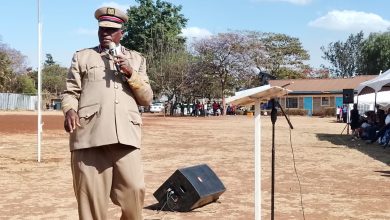
Agriculture and Livestock Development Cabinet Secretary Mutahi Kagwe said the National Livestock Sector El Niño Preparedness and Anticipatory Action Plan was designed to enable farmers and authorities to act before extreme weather causes losses, rather than wait for disasters to strike.
The plan targets 24 flood-prone and livestock-rich counties following advisories from the Kenya Meteorological Department indicating an increased likelihood of enhanced rainfall, flooding, flash floods and localised inundation.
Launching the plan in Isiolo County, Kagwe said the Government was seeking to avoid a repeat of the devastating livestock losses recorded during the 2023 El Niño rains and the 2024 long rains.
“The 2023 El Niño and the 2024 long rains floods caused devastating losses to our livestock farmers, destroyed critical infrastructure and triggered disease outbreaks that set back the sector significantly,” Kagwe said.
“We therefore need to learn from our experiences and ensure that our farmers and pastoralists are not caught unprepared.”
Of the Sh2.1 billion, Sh1.5 billion will finance the procurement and pre-positioning of vaccines, veterinary medicines, laboratory reagents, personal protective equipment, mobile veterinary clinics and emergency response kits in the targeted counties.
The investment is intended to strengthen preparedness against climate-sensitive diseases, including Rift Valley Fever, whose transmission risks can rise during prolonged flooding as conditions favour disease-carrying vectors.
A further Sh250 million will be spent protecting critical livestock infrastructure, including cattle dips, livestock markets, slaughterhouses, milk-cooling facilities, veterinary laboratories and feed stores.
The Government has allocated Sh100 million for early-warning systems, climate-risk mapping, emergency communication networks and inter-agency coordination, while another Sh100 million will support livestock evacuation, welfare and logistics.
An additional Sh50 million will establish strategic feed and fodder reserves, rehabilitate water points and provide emergency water supplies. The remaining Sh100 million will support farmer awareness campaigns, biosecurity measures, livestock insurance sensitisation, commercial offtake and contingency planning.
Kagwe said livestock was a critical livelihood asset for millions of households, particularly in arid and semi-arid areas.
“Protecting that asset during an extreme weather event is a matter of food security, economic stability and national resilience,” he said.
The targeted counties are Garissa, Tana River, Lamu, Kilifi, Isiolo, Wajir, Mandera, Marsabit, Turkana, Samburu, Narok, Kajiado, Baringo, West Pokot, Busia, Kisumu, Siaya, Migori, Homa Bay, Kitui, Makueni, Machakos, Meru and Embu.
The list could be expanded depending on subsequent weather advisories.
The interventions will be implemented under the One Health framework, bringing together human, animal and environmental health agencies to manage zoonotic disease risks associated with flooding.
Principal Secretary for Livestock Development Jonathan Mueke said more than 20 million cattle, sheep and goats had so far been vaccinated under the national programme.
He said improved animal health would strengthen Kenya’s ability to access international livestock markets.
During the Isiolo visit, Kagwe also inspected the Isiolo International Abattoir, which is nearing completion and is expected to be officially launched by President William Ruto.