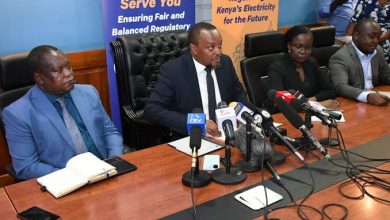
Government maintains defiant stance as fuel protests cripple transport

The government has maintained a hardline stance over the controversial fuel price hikes, insisting that pump prices will remain unchanged despite a nationwide transport strike that paralysed movement and disrupted businesses across the country.
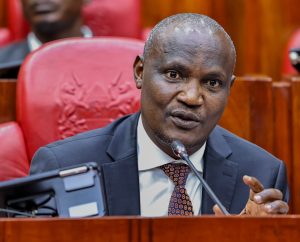
Treasury Cabinet Secretary John Mbadi said the current fuel prices would stay in place until the next review cycle on June 14, 2926, arguing that the increases were largely driven by global factors linked to the ongoing conflict between the United States and Iran.
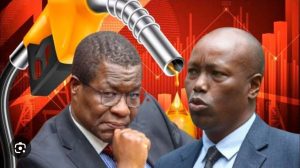
Speaking during NTV’s “Fixing the Nation” programme today morning, Mbadi said disruptions in global oil supply chains caused by the Gulf conflict had pushed up petroleum costs internationally, limiting the government’s options.
“We can only hope that this war will end, but even as we hope, we must make certain decisions. I am sure the government will sit again once the President returns to assess what more can be done,” Mbadi said.
President William Ruto is expected to chair a high-level meeting on fuel prices upon his return from an official visit to Azerbaijan.
Mbadi said the government was considering additional interventions to cushion consumers, including tapping into the Sh5 billion Petroleum Development Levy (PDL) Fund and reviewing fuel levies and expenditure cuts.
“We will look at the subsidy kitty that we have and if that is not going to be sufficient, we will see what to do. We will then look at the fuel levy, especially VAT, and check on what to cut in terms of expenditure,” he said.
The CS defended the government’s intervention measures, arguing that fuel prices would have been significantly higher without subsidies.
“If we were to leave the prices without any intervention, diesel today would be costing not less than Sh35 more, and petrol would be costing over Sh70 more,” he said.
Mbadi, however, criticised the nationwide matatu strike, terming it unnecessary and economically damaging.
“In my view, the matatu strike is completely uncalled for, even though the prices of fuel have gone up. My concern is that we are trying to solve a global problem by applying domestic means, which is not appropriate,” he said.
He warned that the ongoing strike could worsen the economic situation by reducing government revenues needed to stabilise the market.
“I don’t think a strike is the solution. The price of petroleum products has increased everywhere in the world,” Mbadi said.
“It is now like biting the finger you want to heal. The economy will be hit further and we will have no resources to further subsidise. I am not happy to see Kenyans walking.”
Mbadi also faulted transport stakeholders for failing to engage the government before calling the strike.
“Have they spoken with us and now they are saying that there is nothing the government can do?” he posed.
“We will sit again when the President comes back and see what we can do, but let us not be emotional about this. It was not necessary to call the strike.”
His remarks came as thousands of Kenyans across Nairobi and other major towns were forced to walk to work after matatu operators withdrew services in protest against soaring fuel prices.
The strike, which began at midnight on Sunday, crippled transport services across the country, with most matatus remaining parked in depots and residential areas. Ride-hailing drivers, boda boda operators, truckers, logistics firms and private motorists also joined the shutdown, which organisers described as “the mother of all strikes” in Kenya’s transport sector history.
Major highways, including sections of Thika Road, were engulfed in chaos after protesters lit tyres and barricaded roads, triggering running battles with police.
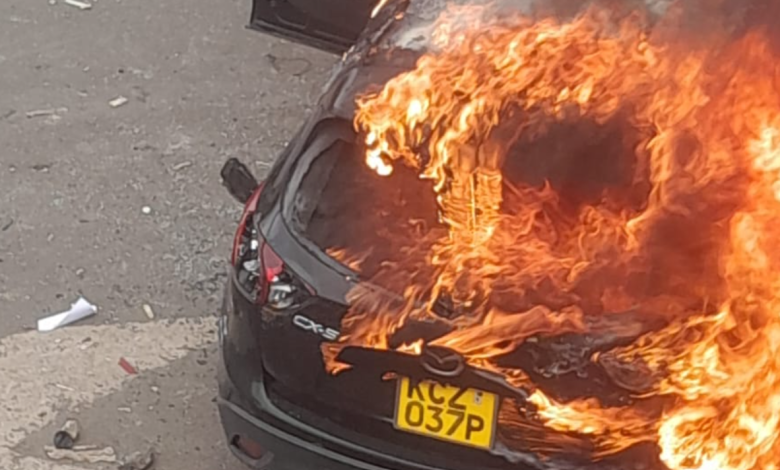
Private motorists were also caught up in the unrest, with one vehicle reportedly set ablaze and several others vandalised along Thika Road as tensions escalated around Githurai and Kenyatta Road.
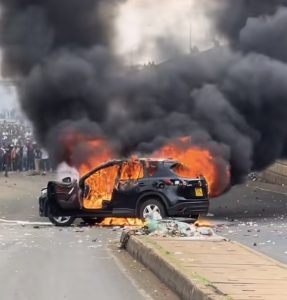
Motorists were forced to make abrupt U-turns as thick smoke from burning tyres blocked sections of the highway, disrupting movement into Nairobi and its outskirts.
In response to the unrest, the National Police Service (NPS) said security had been heightened across the country to maintain order during the demonstrations.
In a statement issued by NPS spokesperson Muchiri Nyaga, the police warned against unlawful conduct and destruction of property during the protests.
The protests were triggered by the latest fuel review by the Energy and Petroleum Regulatory Authority (EPRA), which increased the price of Super Petrol by Sh16.65 and diesel by Sh46.29 per litre, while kerosene prices remained unchanged.
Under the new pricing cycle effective May 15 to June 14, Super Petrol in Nairobi now retails at Sh214.25 per litre, diesel at Sh242.92 and kerosene at Sh152.78.
In Mombasa, Super Petrol is retailing at Sh211.09, diesel at Sh239.64 and kerosene at Sh149.49.
The Transport Sector Alliance (TSA), which coordinated the strike, said stakeholders had “unanimously reaffirmed” that no vehicle would move beginning midnight Sunday.
The alliance said the shutdown involved passenger transport, cargo and logistics operators, ride-hailing services, motorcycle transport, tourism transport, school buses, driving schools and private motorists.