Government drafting new law to shield whistleblowers from retaliation, Pareno says
Pareno also announced the tabling of the Anti-Corruption Laws (Amendment) Bill, 2025, which proposes reforms to several key statutes

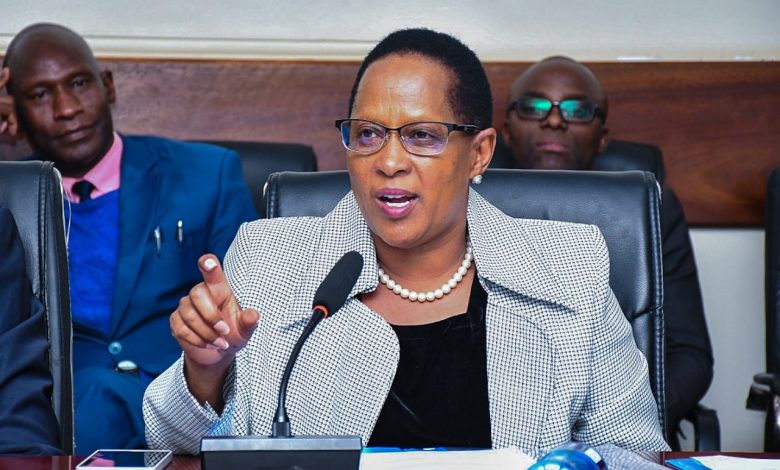
The government has announced the formulation of the Whistleblower Protection Bill, 2025, which aimed at shielding individuals who report corruption and wrongdoing from retaliation.
“Corruption weakens institutions, erodes public trust, and undermines development. Through coordinated multi-agency efforts and new legislative proposals, we are confronting impunity with resolve,” Justice, Human Rights and Constitutional Affairs Principal Secretary Judith Pareno has revealed.
Pareno also announced the tabling of the Anti-Corruption Laws (Amendment) Bill, 2025, which proposes reforms to several key statutes, including the Proceeds of Crime and Anti-Money Laundering Act, the Anti-Corruption and Economic Crimes Act, the Evidence Act, and the Witness Protection Act.
The PS was speaking during a high-level roundtable meeting bringing together Kenya’s development partners and key justice sector stakeholders to discuss progress and partnerships in advancing access to justice, upholding human rights, and combating corruption
She expressed the government’s readiness to implement recommendations from the Maraga Taskforce on Justice Sector Reforms, particularly those targeting systemic inefficiencies and corruption loopholes.
The roundtable was attended by representatives from German Corporation for International Cooperation (GIZ), United Nations Development Programme (UNDP), United Nations Office on Drugs and Crime (UNODC), International Senior Lawyers Project (ISLP), UN High Commissioner for Refugees (UNHCR), the International Commission of Jurists (ICJ), the Witness Protection Agency, the Kenya Law Reform Commission, and the Paralegal Society of Kenya, among others.
Speaking at the meeting, Pareno reaffirmed the government’s commitment to a rights-based, inclusive, and accountable justice system. She emphasized that access to justice remains a cornerstone of Kenya’s constitutional democracy, citing significant efforts to expand legal aid services under the Legal Aid Act and strengthen outreach to vulnerable and marginalized groups.
“We have deployed 90 State Counsel across all 47 counties, ensuring that even expansive counties like Kajiado, which is the size of Rwanda, are not left behind. With the support of the Paralegal Society of Kenya, we aim to deepen grassroots legal awareness,” Pareno stated.
Digitization of court processes and the promotion of Alternative Dispute Resolution (ADR) mechanisms were highlighted as key strategies for reducing case backlogs and making justice more efficient and accessible at the county level.
The meeting also addressed Kenya’s progress in human rights commitments with Pareno revealing that the government is in the process of reviewing the National Policy and Action Plan on Human Rights, with a renewed focus on climate change, digital rights, and socio-economic rights; the rights of indigenous, minority, and marginalised populations; operationalisation of the National Coroner Service through legislative amendments; and criminalisation of enforced disappearances.
Additionally, Kenya is preparing periodic reports under key international and regional human rights treaties, including the International Covenant on Economic, Social, and Cultural Rights (ICESCR), UN Convention Against Torture (UNCAT), and the African Charter on Human and Peoples’ Rights (ACHPR).
Pareno also called on development partners to deepen their collaboration by supporting technical capacity building, civic education, digital infrastructure, and forensic investigative tools to strengthen the country’s justice and governance ecosystem.