Global South pushes for new aid order amid funding squeeze

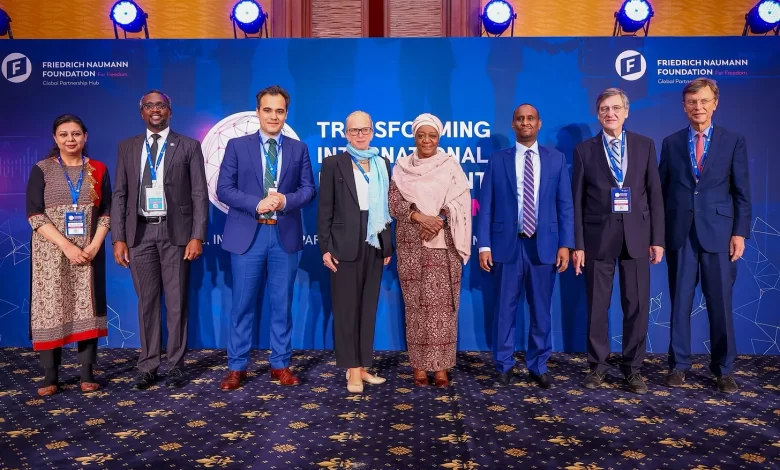
Global development experts, policymakers, economists, business leaders and civil society representatives have called for a fundamental overhaul of international development cooperation, citing shrinking aid budgets, mounting debt burdens and growing demands from developing countries for more equitable partnerships.
During a two-days development partners’ convening in Nairobi, the calls were made under the theme “Transforming International Development Cooperation: Markets, Interests and Partnerships in a Changing Global Order.”
The meeting was convened by the Friedrich Naumann Foundation for Freedom (FNF) through its Global Partnership Hub in Nairobi.
Delegates said traditional donor-recipient models are increasingly ill-suited to address today’s complex global challenges and urged a shift towards partnerships anchored on trade, investment, entrepreneurship, innovation and shared economic opportunities.
Speaking at the conference, Director-General of the United Nations Office at Nairobi, Dr. Zainab Hawa Bangura, said international cooperation must evolve to remain effective and responsive to changing realities.
“The real question is whether we can adapt quickly enough, work more effectively across institutions and partnerships, and deliver results that people can see and trust,” Bangura said.
Participants noted that countries across Africa and the wider Global South are increasingly seeking development partnerships that recognise national priorities, strengthen local ownership, expand market access, attract investment and support home-grown solutions.
Discussions focused on how public development finance, private sector participation, technical cooperation and political engagement can be better aligned to stimulate economic growth, create jobs and build long-term resilience.
Ralf Erbel, Project Director for East Africa and the Global Partnership Hub at FNF, said the current challenges facing development cooperation should be viewed as an opportunity to reform the sector.
“Some criticism of development cooperation is justified; some of it is oversimplified or populist. Both must be taken seriously. To earn public trust, international cooperation must be able to show not only that intentions are good, but that results are real,” Erbel said.
Delegates observed that the debate is particularly significant for Africa, which is home to some of the world’s youngest populations and fastest-growing economies but continues to grapple with unemployment, climate-related shocks, food insecurity, debt distress, digital transformation challenges and barriers to regional trade integration.