Equalisation Fund Board under fire for financing projects beyond constitutional scope
Kitui Rural MP David Mboni demanded to know why the fund was implementing projects that can be managed by NG-CDF and some outside its mandate

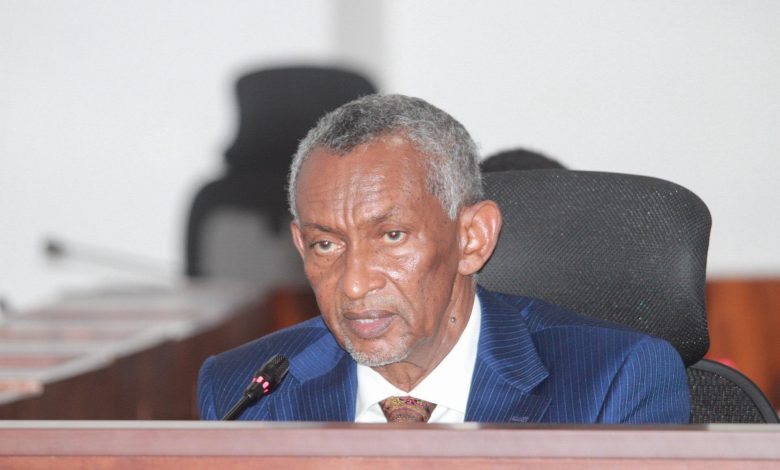
The Equalisation Fund Board has been put on spot by the National Assembly Committee for Finance and Economic Planning for overstepping its constitutional mandate.
During a meeting with the Board at the Assembly on Wednesday, concerns were raised about the board financing projects outside its scope, as the MPs also expressed concerns over the misuse of billions of shillings meant for the provision of water, roads, health facilities, and electricity in marginalized areas.
The committee, chaired by Molo MP Kuria Kimani, accused the Fund of financing projects such as laying of cables, street lighting, staff housing, and kitchen renovations rather than focusing on the provision of basic services as enshrined in the Constitution.
The lawmakers wondered why the Fund had decided to finance projects like the construction of classrooms that are handled by the National Government Constituencies Development Fund (NG-CDF) while, at the same time, duplicating county governments’ functions.
The committee poked holes in several projects out of the ongoing 310 projects, pointing out glaring inconsistencies in their implementation status.
Kimani singled out several irrigation projects, citing a five-acre scheme which cost Sh2.6 million, while ten acres were allocated Sh3.6 million for construction in the same locality. “There are some questionable projects like the construction of a staff house at Chalaluma dispensary in Witu, Lamu, for Sh6.2 million. If projects are this arbitrary, how can we ensure value for money?” Kimani asked.
“The projects are so diverse that even if you allocate the fund for 10 years, it will never make sense,” he added.
The lawmakers also sought to know how the Fund had indicated a bridge project was only two percent complete in Turkana South constituency when the area MP John Ariko, who is a Member of the committee, noted it was 40 percent complete.
“This board is presenting misleading reports that cast doubt on the accuracy of its project data,” Ariko said.
“The information presented to the Committee is wrong in the first place. This board has ignored the law and is implementing projects that were not envisioned,” he added.
Kitui Rural MP David Mboni demanded to know why the fund was implementing projects that can be managed by NG-CDF and some outside its mandate.
“The Board and Commission on Revenue Allocation (CRA) have diluted the objective of this fund. It was to address the inequalities in Sessional Paper No.10 of 1965,” Mboni said.
In response, the Board said its role is to allocate funds to projects as determined by the CRA, adding that the implementing agencies were entities within the national and county governments.
Chairman Mahboub Mohamed said the board has financed all projects as identified by the CRA and blamed county governments for any failures in the implementation of the same.
“The Equalisation Fund has no role in identifying beneficiaries and needs of a region. This is done by the CRA,” Mohamed said.
“The unpredictable movement of funds has resulted in many audit queries. We have people queuing for pending bills,” he explained.
Mohamed told the committee that the total entitlement to the Equalisation Fund from the Treasury stood at Sh80 billion as at the end of June 2025.
He further told the Committee that the Treasury had only appropriated Sh39.89 billion to the Equalisation Fund, out of which only Sh15 billion had been released to the Fund.
The committee was, however, forced to adjourn after it emerged that the data submitted on the Fund’s projects was inconsistent with the reality on the ground.
“Looking at projects done, they are spread too thin and are outside the mandate of the Fund. One is left to wonder whether this Fund has created any impact,” Kimani stated.
“If you continue to do all manner of projects from installation of cabros to staff houses, will it serve the purpose for which the Equalization Fund was established?” Kimani asked.
The Equalisation Fund is intended to bridge the development gap by improving the quality of basic services in marginalized areas to the level comparable to the rest of the nation.
Established under Article 204 of the Constitution, the Fund is intended to finance short-term projects that address food insecurity, health, water, sanitation, as well as electricity and energy needs.
The Fund, which aims to uplift the living standards of people in poor areas, is calculated at an equivalent of 0.5 per cent of the latest audited annual government revenue as approved by Parliament.