Endless corruption scourge bleeding Kenya: Decades of agencies, billions lost, little to show

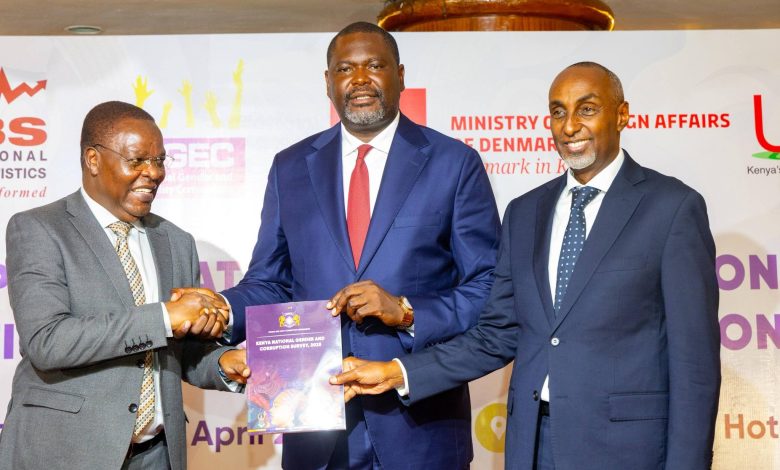
Entrenched graft in public and state offices at the national and county government levels has become the password to embezzlement, lacklustre service delivery and slow development.
For many decades, the fight against graft has defied the tumultuous evolution of mechanisms, by establishment and disbandment of different agencies, and enactment of statutes in attempt to contain the economic scourge.
Majority of Kenyans hold the conviction that corruption is cushioned at the top by bad governance in both levels of government.
It is also evident before the public court, that compromised oversight institutions – the National Assembly, Senate and County Assemblies have become part and and parcel of the gravy train in perpetuating corruption in the public sector.
When President Daniel arap Moi appointed businessman and former police officer, John Harun Mwau in December 1997, to head a newly established Kenya Anti-Corruption Authority (KACA), it seemed like a new dawn in the fight against graft.
Kenyans across the country had known Mwau as a person who detested corruption. They had high hopes he would clean up entrenched graft in the public sector, which had become synonymous with the KANU regime.
But in a surprise turn of events, President Moi suspended Mwau after only six months in office.
He would later be removed in 1998 through a Judicial Tribunal appointed by the president. Moi then appointed Justice Aaron G. Ringera in March 1999 as Chairman of KACA, to replace Mwau.
Mwau appointment followed the Amendment of the colonial – Prevention of Corruption Act (Cap 65, Laws of Kenya), in early 1997, leading to the establishment of KACA, to which he became the first Director in December 1997.
For the shot time he was the Director of KACA, Mwau had already rattled many top Government officials, some in parastatals and local authorities, who were President Moi’s close allies.
Today, it is clear that the corruption scourge in the public sector has significantly contributed to the rising levels of poverty afflicting millions of Kenyans today.
Yet over the years, the fight against graft has remained a tug of war, whether the Office of the Director of Public Prosecutions (ODPP) should cede prosecutorial powers to the Ethics and Anti-Corruption Commission (EACC).
Indeed, the power to prosecute criminal corruption cases lies with the Office of the Director of Public Prosecutions (ODPP). The existing legal framework as provided by the Constitution does not give the Commission power to prosecute criminal cases.
The commission only investigates cases that fall within its mandate and makes recommendations to the Director of Public Prosecutions for appropriate action as the chief prosecutor.
However, regarding civil cases on corruptly acquired assets, the EACC has powers to file cases in court for recovery of such assets.
On March 28, 2026 the Chairperson of the National Assembly Justice and Legal Affairs Committee (JLAC), George Murugara revisited the on-going debate whether EACC should be granted prosecutorial powers.
Murugara urged the Commission to formally present its proposals to Parliament for consideration.
Speaking during the Justice Sector Dialogue held in Nakuru, Murugara stated that any move to expand the Commission’s mandate must follow due legislative process, even as the country seeks more effective tools to combat corruption.
The Chairperson of JLAC noted that if the EACC believes prosecutorial authority was necessary to decisively win the war against graft, it should submit concrete reform proposals to lawmakers for consideration.
Even though, historical evolution and the metamorphosis in government efforts to fight and prevent the corruption monster have yielded minimal results.
Kenya’s first legislation in this fight was enacted by the colonial regime in August 1956, the defunct Prevention of Corruption Act, Cap. 65 of the Laws of Kenya, seven years before independence.
At one time, the defunct Prevention of Corruption Act was enforced by a special unit in the Police Department – the Anti-Corruption Squad, which was constituted in 1993. However, the Squad was disbanded in 1995 before it could make any significant impact.
But the colonial law remained in operation throughout the KANU regime up to 2003, after the Jogoo (cockerel) party lost power to the united opposition, under the National Rainbow Coalition, led by President Mwai Kibaki in the December 2002 elections.
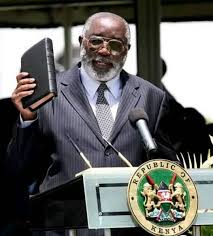
Chronology on the futile attempts to tackle corruption saw the formation of the Anti-Corruption Squad, which lasted from 1993 to 1995.
It was followed by the Kenya Anti-Corruption Authority (KACA), headed by Harun Mwau as the inaugural director. He lasted for only six months in office.
Then came Kenya Anti-Corruption Commission (KACC) which was established in 2003, after Kenya ratified the United Nations Convention Against Corruption (UNCAC).
However, due to legal challenges that arose in fighting corruption, the government formulated the Ethics and Anti-Corruption Commission Act, 2011 which outlawed KACC.
Through this Act, the government now established the current Ethics and Anti-Corruption Commission (EACC), which commenced its work in 2012.
On December 22, 2000, the High Court in the case of Gachiengo Vs Republic (2000), ruled that the existence of KACA undermined the powers conferred on both the Attorney General and the Commissioner of Police then by the Constitution of Kenya.
The court held that statutory provisions establishing the Authority were in conflict with Constitution. The ruling effectively declared the death of KACA and the various efforts that had been initiated by the Authority to take fight against corruption head on.
In August 2001, the government through an Executive Order created Anti-Corruption Police Unit (ACPU). Subsequently, KACA’s mantle was taken over by ACPU in September 2001, that was under the Criminal Investigations Department ( CID).
The Anti-Corruption Police Unit performed the function until the creation of Kenya Anti-Corruption Commission (KACC).
KACC was a public body that had been established on May 2, 2003 under the Anti-Corruption and Economic Crimes Act (ACECA) No. 3 of 2003. Effectively, Section 70 of the ACECA repealed the Prevention of Corruption Act (Cap. 65 of the Laws of Kenya).
Pressure from Parliament compelled Justice Ringera to resign, together with Ms Fatuma Sichale and Dr Smokin Wanjala, paving way for the appointment of Prof P.L.O. Lumumba in September 2010.
Justice Dr Wanjala is currently a judge of the Supreme Court while Justice Sichale sits in the Court of Appeal. Justice Sichale is also represents the Court of Appeal in the Judicial Service Commission (JSC).
Prof. Lumumba’s team comprising Prof. Jane Onsongo as director of Prevention Services and Pravin Bowry, director Legal Services joined the existing team of Dr. Mutonyi and Wilson Mutonyi, who served as assistant directors.
But in yet another turn of events, Parliament, pursuant to Article 79 of the Constitution disbanded KACC on August 24, 2011, through enactment of the Ethics and Anti-Corruption Commission Act, 2011.
Consequently, the Ethics and Anti-Corruption Commission was established on September 5, 2011. Its first Commissioners, Ms. Irene Keino and Prof. Jane K. Onsongo were appointed on May 11, 2012.
Mumo Matemu was appointed the first Chairman of the restructured EACC and took oath of office on August 5, 2013. The Court of Appeal quashed an earlier ruling that had barred him from assuming office, for allegedly lacking integrity.
In the restructured EACC, Jane Muthaura served as the Secretary/Chief Executive Officer until January 21, 2013, when Halake D. Waqo was appointed to the substantive position.
Waqo became the first Secretary/CEO of the restructured EACC, which was established to replace Kenya Anti-Corruption Commission.
However, this commission’s life was also short lived. Three commissioners, Jane Onsongo, Vice Chairperson Irene Keino and the Chairperson Mumo Matemu tendered their resignations from EACC between March and May 2015.
Consequently, in November 2015, President Uhuru Kenyatta nominated new Commissioners headed by Mr. Philip K.B. Kinisu, as Chairman, and Commissioners Sophia Lepuchirit as Vice Chairperson, Dr. Dabar Maalim, Paul Gachoka, and Rose Mghoi- Macharia, who were sworn into office on 18th January 2016.
In August 2016, Kinisu tendered his resignation from the Commission. Vice-Chairperson, Ms. Sophia Lepuchirit became the Acting Chairperson.
On 23rd January 2017, the former Head of the Anglican Church in Kenya, Archbishop (Rtd) Eliud Wabukala was sworn in as the third EACC Chairperson.
Twalib Abdallah Mbarak formally took office as the EACC Secretary/Chief Executive Officer after taking oath of office on 14th January, 2019.
He was the Commission’s second Head of the Secretariat, having taken over from Mr. Halakhe D. Waqo whose six-year term ended in January, 2019.
Today, Bishop Dr. David Oginde is the Chairperson of EACC while Abdi Mohamed is the Secretary and Chief Executive Officer of the Commission.
Surveys have identified corruption in the public sector as a serious impediment to sustainable development in the country.
The state of affairs and magnitude of graft that has impoverished the country makes a joke of the EACC and the Public Officer Ethics Act.
The writer is a veteran journalist, Adieri Mulaa