Economic magic of communal beadwork for Kajiado women
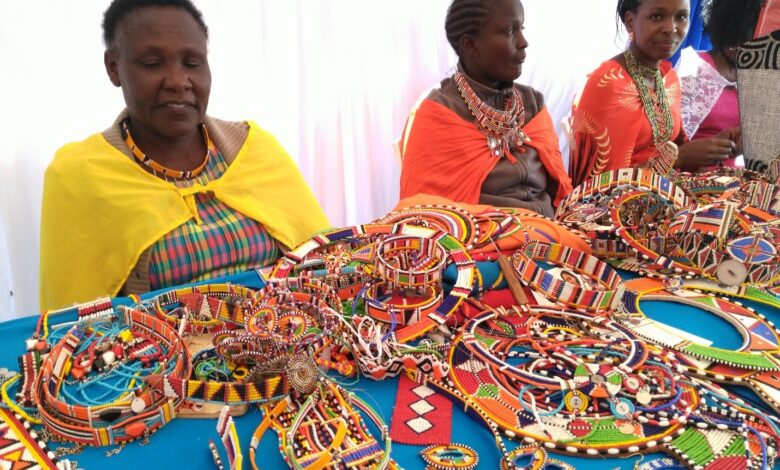
The touch of modernity is also evident in the designs and a range of colors for the beadwork ranging from clothes to other artifacts

By Larry Lesian
In the past, pastoralist women in Kajiado County engaged in beadwork as a leisure meant to preserve their culture. However, the trend has changed. Beadwork is now a magic stick steering empowerment wheel and improving livelihoods.
Women have embraced communal beading as opposed to individual beading which was the norm in the past. To maximise benefits of training and market, the women have registered empowerment groups of a minimum of 15 members and a maximum of up to 100.
The women groups have no defined age limit nor academic qualifications. Qualification is mainly passion and ability for beading. The group’s members come from the same locality with only a few groups composed of members from far flung areas.
“The reason we do communal beading is to attract support from various players including the national and the county government. We also receive a major funding boost from non-governmental organizations who support women empowerment. A key empowerment we have received is free training on modern and quality beading. Making unique and a variety of artifacts have expanded our market beyond just natives. We have customized products that attract customers who are from other communities and we have also captured the international market. When we bead as a team, we are able to increase our productivity because one specializes in the area, they are best. When we have orders of certain products, we are also able to work within the given deadlines making us more reliable. Some donors have empowered us by providing raw materials helping us maximize on profits, “narrates Joyce Neeso, a beader with Naanyu Dupoto women group, Oloshaiki in Kajiado East.
The touch of modernity is also evident in the designs and a range of colors for the beadwork ranging from clothes to other artifacts.
“In the past we only used to bead clothes, make belts and jewelery. We have now advanced to handbags, table mats, decors, among others. We have diversified our products to increase profitability. When we sell products, members agree what amount to subdivide, re-invest in the business and we also explore other income generating activities like bee keeping. We also do table banking to empower members financially and to grow our finances from interest accrued,” said Jane Naisiae a member of Olakir women group, Kajiado Central.
Red beads were in the past a must and predominantly used. When blended, blue and white beads were the blending options.
The women say exploitation by rogue brokers who buy their products in large quantities for international markets remains a major setback.
“Rogue brokers make huge profits at our expense because they have direct contact with clients. The direct markets we have are not sustainable and we must complement the same by agreeing with middlemen prices,”says Ann Supeet, a renowned beading trainer.
The National government in 2018 launched the Ushanga Initiative targeting six pastoral counties to commercialise women beadwork. The women acknowledge progressive economic empowerment the initiative has helped them attain.