Duale outlines major reforms after unearthing of nursing placement scandal
Among the changes, centralised digital platform will be established to streamline submissions, enhance data verification and eliminate errors

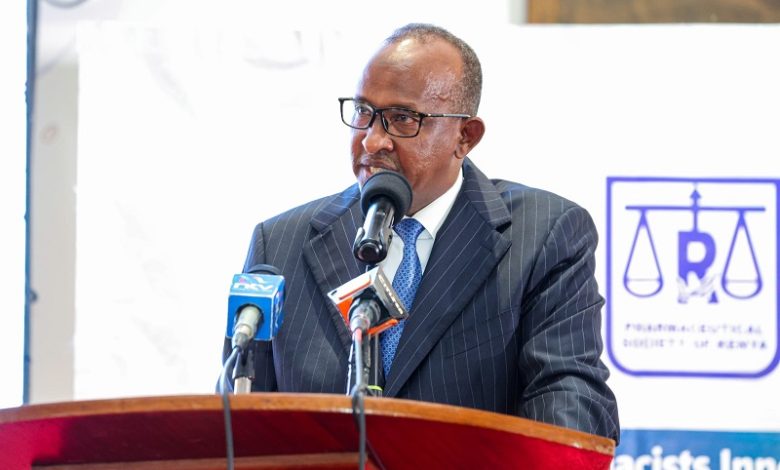
The ministry of Health has announced comprehensive reforms to strengthen transparency, accountability, and efficiency in Kenya’s healthcare internship programme, following serious irregularities in the posting of Bachelor of Science in Nursing (BScN) interns.
The move comes a day after Duale suspended the Nursing Council of Kenya (NCK) Chief Executive Officer Dr Lister Onsongo and revoked Bachelor of Science (BSC) Nursing internship placement of internship for 2025/26 after it emerged that she had unlawfully admitted 42 students from 10 public and private universities before completion of their courses, which he termed as a serious breach of regulations between the council and the universities.
In a statement issued on Monday, Duale said the individuals had been instructed to immediately vacate their places of work as investigations commence.
And speaking during a consultative meeting with universities offering nursing programmes on Tuesday, Duale said a centralised digital platform will be established to streamline submissions, enhance data verification, and eliminate errors.
The Director-General for Health will also issue uniform guidelines covering eligibility criteria, submission timelines, and stakeholder roles under Section 17(j) of the Health Act.
At the same time, a new unit within the ministry will oversee internship placement, improve institutional coordination, and enforce compliance while only students placed through the Kenya Universities and Colleges Central Placement Service (KUCCPS) will be eligible for government-sponsored internships. Self-sponsored students will be required to fund their own internships.
Further, under the new guidelines, universities must strictly follow student admission limits approved by the Commission for University Education (CUE), to prevent over-enrolment and planning distortions.
Duale said the ministry is also engaging the National Treasury to secure Sh408 million to support the posting of an additional 339 verified nursing interns beyond the PSC-approved annual cap of 2,000.
“These reforms are about safeguarding the future of healthcare in Kenya. We are building a system that ensures fairness, accountability, and quality in health professional training,” said Duale.
Apart from the erroneous inclusion of the 42 students who had not completed their training. Duale said the audit established the submitted through the Nursing Council of Kenya (NCK), also excluded 339 eligible candidates and included foreign students not eligible for government-sponsored internships.
The 10universities were found to have submitted unverified or unauthorised student data were Kenyatta University, Daystar University, Kenya Methodist University, Masai Mara University, University of Embu, Mount Kenya University, Umma University, Baraton University; Karatina University and Masinde Muliro University of Science and Technology.
NCK was also faulted for failing in its regulatory responsibility to verify submissions before forwarding them to the ministry.
Duale affirmed that all institutions involved will be held accountable and that the ministry remains committed to enforcing professionalism and safeguarding patient safety in Kenya’s health system.