Beyond Vision 2030 mooted as controversies, broken promises riddle Ruto’s flagship projects
The consultations, scheduled to begin on August 12, 2026 are expected to culminate in a citizen-driven development charter to guide Kenya over the next 20 to 25 years.

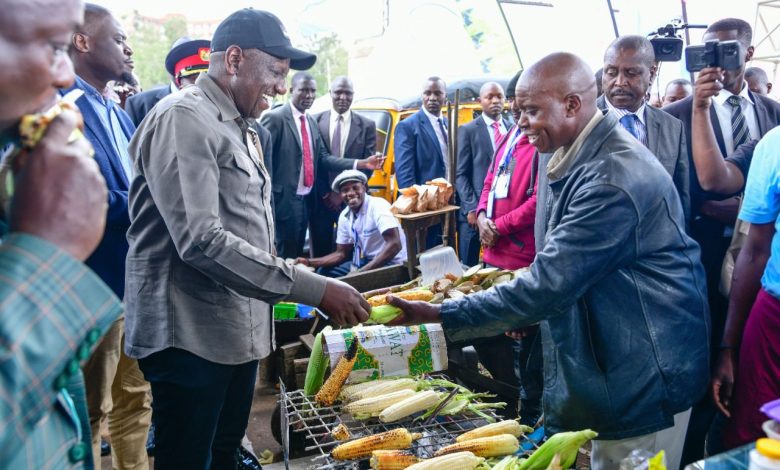
President William Ruto’s administration is set to launch nationwide consultations on Kenya’s development agenda beyond Vision 2030 next week, opening a fresh debate on the country’s long-term future while his government’s flagship programmes continue to attract both praise and criticism.
The consultations, scheduled to begin on August 12, 2026 are expected to culminate in a citizen-driven development charter to guide Kenya over the next 20 to 25 years.
President Ruto says the initiative is intended to give Kenyans an opportunity to collectively determine the country’s development priorities beyond the expiry of Vision 2030.
“Sasa ni nafasi yetu kama Wakenya, tuketi chini pamoja, tupange destiny ya taifa letu la Kenya. Miaka ishirini, ishirini na tano ijayo, tunataka Kenya isimame mahali gani,” the President said recently at State House, Nairobi.
He said the country’s future should not be determined by the Government or political parties alone.
“Kenya haiwezi kupangwa na serikali pekee, haiwezi kupangwa na chama kimoja, haiwezi kupangwa na wachache, sisi wote tutaketi chini tupange,” he said.
The new initiative comes as the administration approaches four years in office, having come to power in 2022 promising to transform the economy through the Bottom-Up Economic Transformation Agenda and place low-income households at the centre of policymaking.
The government has since rolled out several major programmes, including the Hustler Fund, affordable housing, Social Health Authority reforms, a new university funding model and agricultural interventions.
However, the programmes have also faced implementation challenges, criticism from opposition leaders and questions from sections of the public over their impact.
The affordable housing programme has been promoted by the government as a major employment generator, with officials saying it creates about 1,000 jobs daily.
The programme is, however, funded partly through a 1.5 per cent housing levy on employees, which has attracted criticism from workers who question affordability and access to the completed houses.
The housing levy comes alongside other statutory deductions, including contributions to SHA and the National Social Security Fund.
The government maintains that the deductions are necessary to finance social protection and long-term national programmes, while critics argue that the cumulative burden has reduced disposable incomes at a time when households are facing high living costs.
The government has also intensified tax collection through the Kenya Revenue Authority, saying increased revenue is necessary to finance public services, reduce fiscal deficits and meet debt obligations.
The higher taxation has nevertheless generated debate over the effect on consumers and businesses, particularly small and medium enterprises.
Kenya’s public debt remains another major economic issue, even as the administration argues that fiscal consolidation and improved revenue collection are necessary to stabilise the economy.
The Hustler Fund, launched to expand access to affordable credit, has similarly faced challenges. More than half of beneficiaries are reported to have defaulted on loans amounting to more than Sh12 billion, raising concerns about repayment and sustainability.

The government’s Government-to-Government fuel supply arrangements with Saudi Aramco, Abu Dhabi National Oil Company and Emirates National Oil Company were intended to improve fuel supply and reduce price volatility.
However, fuel prices have remained a major concern for consumers, with taxes and levies accounting for a significant portion of the pump price.
Following the escalation of the US-Israel-Iran conflict, Ruto announced a reduction of VAT on fuel from 16 per cent to eight per cent but rejected calls for the removal of all other taxes.
“Do we go back to the spectacle of stalled road projects that had become a hallmark across the country?” he asked, arguing that Government must balance immediate relief with the need to finance essential services and development.
Healthcare reforms have also been closely watched.
The government replaced the National Hospital Insurance Fund with the Social Health Authority and incorporated maternity services previously provided through Linda Mama into the new system.
The administration says SHA is intended to create a more comprehensive and sustainable health financing system.
However, implementation has attracted complaints relating to registration, access to healthcare, claims processing and funding.
Education has presented another major test.
The Student-Centred Funding Model was introduced to allocate university financial assistance according to students’ economic circumstances. The model has faced criticism from students and universities over funding levels and its implementation.
In July, Ruto acknowledged shortcomings in the previous approach and announced plans to review the financing framework.
“We tried the Differentiated Unit Cost. It didn’t work,” he said.
The president had earlier promised to reduce HELB interest rates to zero, increase loan allocations and extend repayment grace periods to five years, commitments that remain a subject of discussion among students and graduates.
Agriculture is another area where the Government has set ambitious targets.
Ruto promised to contract 1,000 dams and expand irrigation from about 600,000 acres to three million acres, with the aim of boosting food production, reducing dependence on rain-fed agriculture and improving food security.
The government says its broader agricultural reforms are intended to raise productivity and incomes, although the pace of implementation of some targets remains under scrutiny.
The new development conversation has also drawn criticism from opposition leaders, who argue that the Government should prioritise immediate economic and social challenges.
Former Deputy President Rigathi Gachagua has criticised the proposed long-term blueprint, saying Kenyans want solutions to current problems rather than distant targets.
“We have seen the President come here with Vision 2060. Kenyans do not want visions; they want action. We do not want dreams,” Gachagua said.
He cited the cost of living, agriculture, infrastructure, insecurity, illicit alcohol and preparations for El Niño rains as issues requiring immediate attention.
On agriculture, Gachagua said farmers in Mwea and Ahero were more concerned about the market for their produce than long-term development plans.
“Farmers in Mwea and Ahero do not want to hear about Vision 2060. They want the government to stop importing rice so that locally produced rice can be bought here in Kenya. They need that money now to educate their children,” he said.
Former Interior Cabinet Secretary and Jubilee Deputy leader Fred Matiang’i has also questioned the timing of the new initiative, arguing that the Government should address existing governance, economic and constitutional concerns before embarking on another long-term development framework.
The administration, however, says the new blueprint is necessary because Vision 2030 was formulated before the promulgation of the 2010 Constitution and Kenya now requires a framework reflecting the country’s current realities.
“It is going to be a conversation about the future of Kenya, and we are going to put it into law,” Ruto said.
Ruto maintains that his administration has already laid an economic foundation for the next phase of development.
“Tumedhibiti uchumi, mambo ya matibabu tumepanga, maneno ya housing tumepanga, maneno ya masomo tumepanga,” he said.
Ruto has expressed confidence that Kenya can become an upper-middle-income economy within the next decade and eventually transition into a high-income country.
“Inawezekana… we become an upper middle-income economy in the next ten years. And we must progress into a higher-income economy,” he said.
The consultations will bring together the private sector, academia, civil society, faith-based organisations, professional bodies, workers, young people and the creative industry.