Ruto’s university debt trap: 200,000 students in the crosshairs
In July 2026, the Kenya Universities and Colleges Central Placement Service (KUCCPS) placed 293,869 students in universities and colleges, underscoring the enormous scale of the financing challenge confronting the Government. Of these, 220,684 students secured places in public universities to pursue degree programmes, while 17,151 were admitted to private universities for the 2026/27 academic cycle. But education stakeholders now fear that the universal loans might simply transfer the cost of higher education from the government to students instead of expanding access.

More than 200,000 students expected to join universities in September could become the first casualties of the government’s radical overhaul of higher education financing, with the planned scrapping of undergraduate scholarships threatening to push an entire generation of graduates into millions of shillings in debt.
The proposed shift from scholarships to loans marks a dramatic reversal of President William Ruto’s flagship university funding model introduced in 2023, raising fresh concerns over how poor and vulnerable students will finance their education.
The Government is now moving towards a universal higher education financing system in which students admitted to both public and private universities will receive loans, regardless of their family’s financial circumstances.
Principal Secretary for Higher Education and Research Beatrice Inyangala confirmed the plan in Parliament on Thursday, August 6, 2026 saying the government was committed to treating students equally under the new financing framework.
“I confirm that as we move towards Universal Funding for Higher Education, all students will be funded equally. The loans will be awarded to students irrespective of whether they go to a public or private university,” Inyangala said.
The announcement effectively signals a major departure from the Variable Scholarship and Loan Funding Model introduced by the Kenya Kwanza administration in May 2023.
Under the model, students were placed in different funding bands according to their assessed financial need, with those from poorer households expected to receive larger government scholarships and loans.
But the system quickly became embroiled in controversy.
Thousands of students complained that they had been wrongly classified into higher-income categories, forcing families struggling with school fees to shoulder larger portions of university costs.
Others were locked out of funding altogether after technical problems affected the Higher Education Financing portal, causing delays in registration and admission.
The funding model was also challenged in court, with petitioners arguing that the system discriminated against students and violated constitutional guarantees on access to education.
While the government now seeks to dismantle the scholarship component and move towards universal loans, the financial implications for students could be enormous.
Students entering university this September face the prospect of graduating with substantial HELB liabilities, particularly those undertaking four- or five-year programmes.
The concern is particularly acute for students from low-income families who may have previously relied on scholarships to reduce the amount they borrowed.
Under the emerging system, a student who would previously have received a substantial scholarship could instead have to borrow more to meet tuition and other university-related costs.
The result could be a generation entering an already difficult job market burdened by loan repayments before they have secured stable employment.
The looming challenge is amplified by the unprecedented number of students seeking places in universities and colleges.
In July 2026, the Kenya Universities and Colleges Central Placement Service (KUCCPS) placed 293,869 students in universities and colleges, underscoring the enormous scale of the financing challenge confronting the Government.
Of these, 220,684 students secured places in public universities to pursue degree programmes, while 17,151 were admitted to private universities for the 2026/27 academic cycle.
The numbers mean that hundreds of thousands of new students will require financial support at a time when the Treasury is already struggling to meet existing obligations.
Kenyatta University emerged as the most preferred institution, receiving 11,224 students, followed by Maseno University with 9,196 and Moi University with 8,869.
The University of Nairobi admitted 8,604 students, while Chuka University received 7,946, Kisii University 7,903 and Jomo Kenyatta University of Agriculture and Technology 7,649.
The growing enrolment comes as public universities continue to grapple with severe financial difficulties.
Outstanding liabilities running into billions of shillings have left institutions struggling to meet salary, supplier and operational obligations, despite the Government’s introduction of the needs-based funding model as a solution to chronic underfunding.
The government itself is facing the difficult question of how to finance an expanding student population while simultaneously servicing existing commitments.
President Ruto has defended the proposed reforms and insisted that no student admitted to a university or TVET institution will be denied access to financial support.
The president has also urged parliament to fast-track amendments to the Higher Education Loans Board Act to facilitate implementation of the new funding framework.
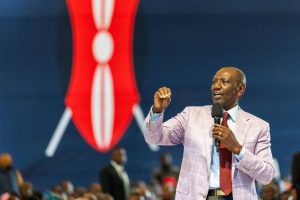
Speaking at State House during a meeting with Nairobi County artisans last week, Ruto defended his record on education financing and rejected doubts over his ability to deliver the reforms.
“In 2022, some of the universities were facing shutdowns because they could not afford to pay lecturers and supplies. I changed the funding model, which brought change to the universities,” he said.
“I am not a madman, nor a drunk, nor am I stupid. I know what I am saying. We said we will have affordable housing. Aren’t houses, markets and hostels being built? I know what I am doing,” Ruto added.
The president has previously promised that every student admitted to university or college would receive government financial support, arguing that admission — rather than the financial status of a student’s family — should determine access to higher education.
But education stakeholders now fear that the universal loans might simply transfer the cost of higher education from the government to students instead of expanding access.
The government’s argument is that a universal system will eliminate discrimination and ensure students in both public and private universities are treated equally.
Others contend that equality in access to loans does not necessarily mean equality in ability to repay them.