Besigye’s ordeal: Kenya’s secret handover, Uganda’s prison and the price of dissent
The worsening health of veteran Ugandan opposition leader Dr Kizza Besigye has reopened a politically explosive question stretching from the cells of Luzira Prison to Nairobi on how a man who was arrested in Kenya ended up in the custody of Uganda without going through the conventional extradition process and non-refoulement principles under the international law—and who should account for it.

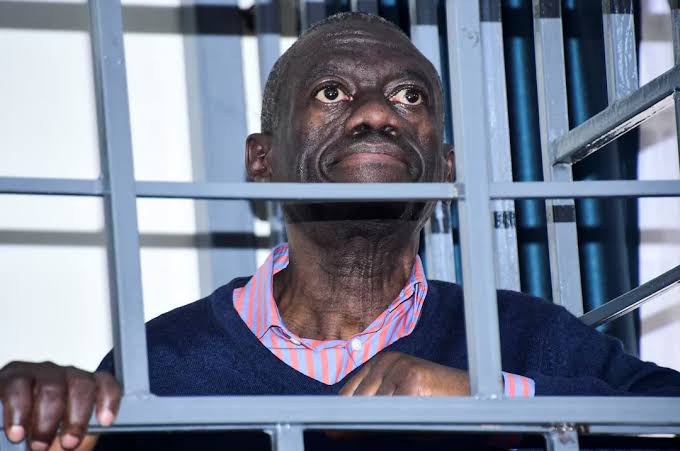
From a disputed abduction in Nairobi to a life-threatening health crisis in a Ugandan prison, Kizza Besigye’s case is raising uncomfortable questions about Kenya’s role and Uganda’s treatment of its most persistent opposition voice.
The worsening health of veteran Ugandan opposition leader Dr Kizza Besigye has reopened a politically explosive question stretching from the cells of Luzira Prison to Nairobi on how a man who was arrested in Kenya ended up in the custody of Uganda without going through the conventional extradition process and non-refoulement principles under the international law—and who should account for it.
People’s Liberation Party (PLP) leader and Senior Counsel Martha Karua has now demanded Besigye’s immediate release, warning that the 70-year-old opposition figure’s prolonged detention, deteriorating health and restricted access to his family and lawyers have turned his case into a matter of life and death.
Karua’s intervention comes as Besigye’s family reports a dramatic deterioration in his condition, including severe weakness, difficulty walking and speaking, dehydration, high fever and severe stomach pain.
The former presidential candidate was recently transferred from Luzira Prison to hospital under heavy security after embarking on a hunger strike. His family says doctors suspect a bacterial infection, while concerns have been raised over restrictions on access to his preferred medical team.
“Every hour they delay is a cost on his life because his condition is not under control,” his wife, Winnie Byanyima, has warned.
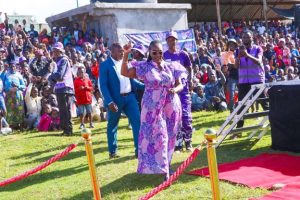
For Karua, however, Besigye’s medical emergency cannot be divorced from the circumstances that placed him behind bars in the first place.
“If Dr Besigye’s case is just, why make it harder for him to have the lawyers of his choice and keep him behind bars while his health is failing, separated from his family and those fighting for his rights?” she asked.
She challenged President Yoweri Museveni to explain why his government continues to hold a seriously ill political opponent while allegedly restricting his access to his family, legal team and medical support.
“President Museveni, release Dr Besigye. Let him receive the medical care he urgently needs. Let him be with his family. Let him live his life with dignity,” Karua said.
But behind the immediate demand for Besigye’s release lies an even more uncomfortable regional accountability question on what exactly happened in Nairobi?
The Nairobi operation
Besigye was arrested in Nairobi on November 16, 2024, while in Kenya to attend a book launch linked to Karua.
He and his political aide, Hajj Obeid Lutale, were intercepted by plainclothes operatives and subsequently transferred to Uganda.
The operation immediately raised questions because the transfer did not follow the conventional extradition process normally associated with the surrender of a person facing criminal proceedings in another country.
The circumstances surrounding the operation have since become one of the most controversial chapters in Besigye’s case, with questions raised about the alleged involvement of state security agencies and whether Kenya’s obligations under domestic and international law were respected.
The issue became even more contentious when Kenya effectively acknowledged that it had cooperated with Uganda.
In May 2025, Prime Cabinet Secretary and Foreign Affairs Cabinet Secretary Musalia Mudavadi said Kenya had cooperated with Ugandan authorities in Besigye’s transfer.
Mudavadi said Besigye’s circumstances in Kenya had been considered by the authorities and argued that the situation might have been different had the opposition leader sought asylum.
“Kenya cooperated with the Ugandan authorities,” Mudavadi said.
He maintained that Besigye was now under the authority of Uganda and sought to distance Kenya from responsibility for his subsequent prosecution.
But that explanation leaves a central question hanging: Does cooperation between two neighbouring governments override the legal safeguards governing the removal of a person from one country to face prosecution in another?
And more fundamentally, if Besigye was not formally extradited, what legal mechanism was used to transfer him from Kenyan territory into Ugandan custody?
Those questions have become increasingly significant as the consequences of that transfer play out in Uganda.
From Nairobi custody to Luzira
Besigye was initially brought before a military court in Uganda and accused of offences including plotting against the Museveni government.
His case was subsequently transferred to a civilian court.
Yet the legal controversy has continued alongside his deteriorating health.
Since his detention, Besigye has reportedly been taken to hospital four times.
On July 29, he collapsed during a court appearance in Kampala and was taken for treatment, including intensive care. He was later returned to Luzira Prison on August 8, reportedly against medical advice, according to his wife.
His latest hospitalisation has intensified concerns about whether a prison environment remains appropriate for a man whose physical condition has deteriorated so dramatically.
Byanyima has repeatedly called for specialised treatment outside Uganda and questioned why authorities continue moving her husband between prison and hospital.
“Why drag a sick man from place to place? Why deny him the care of his family? Why force a trial on a man too ill to defend himself?” she asked.
There are also concerns over the fairness of a criminal trial when the accused is reportedly too sick to walk, speak or adequately participate in his own defence.
The lawyers’ question
Karua has also raised concerns over Besigye’s legal representation, citing the alleged abduction and subsequent charging of his counsel, Erias Lukwago.
She said the restrictions surrounding Besigye had now extended beyond his family to those attempting to defend him.
“That is deeply painful to witness,” Karua said, questioning what Museveni and his government were afraid of.
The issue of access to counsel is particularly significant because Besigye’s prosecution has already attracted scrutiny over the circumstances of his arrest, transfer and initial appearance before a military tribunal.
Any further restriction on his ability to communicate with lawyers of his choice therefore adds another layer to questions about the fairness of the proceedings.
Kenya’s uncomfortable responsibility
For Kenya, the Besigye affair presents an awkward test of its commitment to human rights and regional democratic principles.
Kenya has historically presented itself as a regional champion of constitutionalism, democratic governance and human rights. Yet the government’s acknowledgement that it cooperated with Uganda in the transfer of a prominent opposition figure has left unanswered questions about the safeguards applied before that cooperation took place.
The principle of non-refoulement is particularly relevant to the broader debate because it seeks to prevent the transfer of individuals to places where they could face serious risks to their fundamental rights.
Whether that principle legally applied to Besigye’s specific circumstances is a matter requiring careful legal determination. But his subsequent detention, prosecution and deteriorating health have inevitably intensified scrutiny of the decision that placed him in Ugandan custody.
Besigye was one of Uganda’s most prominent political opponents, a former presidential candidate and a long-standing critic of Museveni.
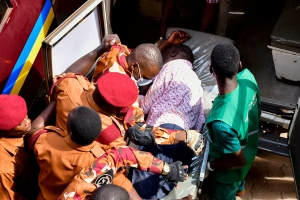
His political profile should have made the legal and human-rights implications of any transfer particularly obvious.
A regional test
Besigye’s political journey makes his current predicament even more striking.
A former personal physician to Museveni, he broke ranks with the Ugandan president more than two decades ago and became one of his most formidable political challengers.
He has endured repeated arrests, detentions and legal battles while challenging Museveni’s government.
Now, at 70, he is facing another prosecution while his family says his health is collapsing.
Karua says East Africa cannot afford to lose another political voice to fear.
“East Africa cannot afford to lose another voice to fear,” she warned.
By Peterson Philips
The author is an International Studies student, University of Nairobi