Babu Owino: Kenya’s rising political star and the looming battle for Luo leadership

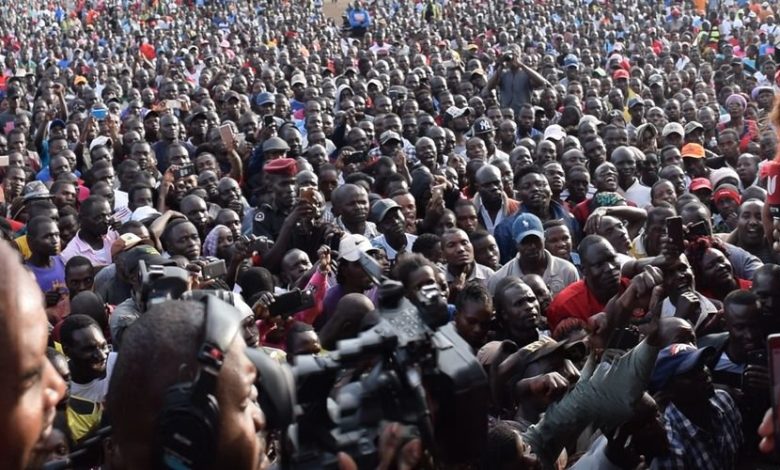
Embakasi East Member of Parliament (MP) and self-declared Nairobi gubernatorial aspirant come 2027 Babu Owino’s meteoric rise in Kenya’s political scene is becoming an undeniable force, not only within the opposition ranks but also in the broader national discourse.
A recent Infotrak Research opinion poll, conducted in December 2025, has solidified his position as the most preferred successor to the late ODM leader Raila Odinga, with 33 per cent of respondents across Kenya choosing him as the future Luo kingpin.
The opinion poll also showed that if elections were to held today, seven percent of Kenyans would vote for the youthful legislator known for his high-octane politics.
This move, which places him far ahead of other political heavyweights like Siaya Senator and ODM party leader Oburu Odinga (10 per cent), signals a pivotal moment in Kenya’s evolving political narrative, one where the generational divide within the Luo community is becoming increasingly apparent.
Babu’s rise is not an isolated phenomenon but rather a reflection of broader shifts in Kenya’s political climate. For decades, Raila Odinga’s name has been synonymous with opposition politics in Kenya, particularly within the Luo community. However, with Raila’s demise, his political compromises, including his tentative cooperation with President Ruto’s UDA, the winds of change are palpable.
Babu, long known for his fiery rhetoric and unapologetic activism, now stands poised as a possible successor. His leadership style and ideological direction, often marked by bold confrontations with both the government and ODM’s internal politics, are resonating with a younger, disillusioned electorate.
His appeal lies not just in his youth or his charismatic presence but in the authenticity he brings to Kenyan politics. Born in the impoverished Nyalenda slums of Kisumu, Babu’s personal story of overcoming adversity speaks to the masses of young Kenyans who feel left behind by the political elite.
His early life, shaped by the struggles of his single mother, who brewed chang’aa to support the family, has infused him with a sense of social justice and a deep commitment to fight for the downtrodden.
His journey from the University of Nairobi’s student politics to his current role as MP and newly admitted Advocate of the High Court illustrates a clear narrative of resilience, intellectual growth, and strategic political thinking.
However, Babu’s political ascension is not without controversy. The Infotrak poll reveals that while he commands a significant following among Luo voters, his national appeal remains limited. Only 7% of Kenyans would vote for him if elections were held today, a stark contrast to his dominance in Luo Nyanza.
This duality, his regional strength versus his national stature, reflects the complexity of Kenya’s political landscape, where ethnic loyalties often outweigh policy platforms. Yet, Babu’s ability to mobilise Gen Z and urban youth, who see him as a symbol of defiance against an unresponsive political class, could be the key to his broader electoral appeal in future elections.
Babu’s rise has set the Luo political elite on edge. Figures such as Raila’s brother Oburu Odinga and Siaya Governor James Orengo, long entrenched in the region’s power structures, view his popularity with some degree of trepidation.
The fear is that Babu could become another “Tom Mboya”—a brilliant Luo leader whose meteoric rise, while promising, was perceived as a threat to established political interests. In Mboya’s case, it led to a tragic assassination, a spectre that still looms over Luo politics.
Yet, Babu appears undeterred by such comparisons. He has embraced a bold, populist strategy that connects deeply with Kenya’s youth, articulating a vision of governance that rejects the status quo of elite-driven politics.
He has been unapologetic in his criticisms of both the government and ODM, particularly with regard to the party’s recent moves towards rapprochement with President Ruto’s government.
Babu’s denunciation of this “betrayal of the struggle” has further solidified his reputation as a champion of the disillusioned youth, who feel increasingly alienated from Kenya’s political establishment.
The Luo community, historically aligned with Raila, is now at a crossroads. Babu’s appeal as a potential successor to Raila represents the growing generational pressure within ODM to evolve.
While Raila remains a towering figure, his age and political compromises have made him less relatable to younger voters, who are looking for a leader who embodies their frustrations and aspirations. In this context, Babu has become the face of a new political era, one that prioritises generational renewal and a break from the past.
Yet, despite Babu’s rising star, the road ahead is fraught with challenges. ODM is in a precarious position as it grapples with questions of succession. The party, built around Raila’s legacy, now faces the uncomfortable task of navigating a post-Raila era.
The question is not just who will lead, but how ODM will manage the transition. Will the party embrace Babu’s vision of radical renewal, or will it resist, clinging to the old guard and their traditional methods of leadership?
Babu’s popularity within ODM and the Luo community could very well make him the next face of Kenya’s opposition politics. His ability to connect with the youth and challenge the established political order makes him a formidable force in the 2027 election cycle.
However, whether he can translate his regional appeal into national influence will depend on his ability to balance his defiant, populist image with the political savvy required to navigate Kenya’s complex political ecosystem.
In the coming months, Babu will likely face intense scrutiny and pressure from both his allies and adversaries within ODM. How he handles this challenge, and whether he can unite the party’s fragmented factions, will ultimately determine whether he becomes the political kingpin of Luo Nyanza or fades into political irrelevance.
Regardless of the outcome, Babu’s rise marks a critical turning point in Kenya’s political trajectory, a symbol of a new, more dynamic opposition that is ready to challenge the status quo.