Aviation education standards and Kenya’s unending tragedy of fatal air crashes

Kenya has long been haunted by high-profile aviation disasters, with helicopter and aircraft crashes repeatedly claiming the lives of senior government officials, military leaders and politicians raising serious questions on aviation education and standards in the country.
Despite extensive investigations aimed at uncovering causes and improving aviation safety, many of these tragedies remain unresolved, with probe findings often withheld from the public.
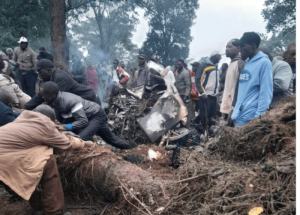
The latest incident occurred on February 28, 2026, when a helicopter carrying six people crashed and burst into flames in Chepkiep Forest, Mosop Sub-County, Nandi County.
Among the victims was immediate former Emurua Dikirr Member of Parliament Johana Ng’eno, a third-term legislator renowned for championing land rights, community justice, and Kalenjin culture.
Also killed were the pilot, retired Lt Col George Were, and passengers Nicholas Kosgei, Carlos Keter, Amos Kipngetich Rotich, and Wycliffe Rono.
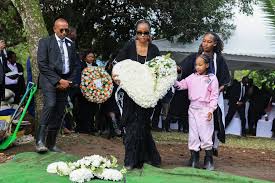
Their bodies were airlifted to Emurua Dikirr Primary School on Thursday, March 5, 2026, where a solemn requiem service was held ahead of their interment yesterday, a ceremony attended by President William Ruto among other leaders.
The National Assembly shared images of the caskets arriving, capturing the grief of family and community members as they received their loved ones.
Kenya’s history of aviation tragedies extends back decades, highlighting the recurring risks associated with chartered and military flights.
On April 18, 2024, a military helicopter carrying the Chief of the Defence Forces, Francis Ogolla, crashed in the Sindar area of Elgeyo Marakwet County.
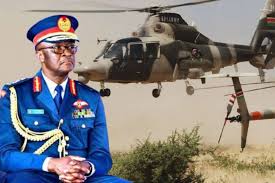
Operated by the Kenya Defence Forces, the Bell UH-1H Huey went down shortly after take-off during an official visit to troops in the North Rift.
General Ogolla and several other military officers died on impact. A military board of inquiry later attributed the crash to engine malfunction leading to loss of power.
In another high-profile tragedy, a police helicopter crashed in June 2012 in the Ngong Hills, killing six people, including then Internal Security Minister George Saitoti and Assistant Minister Orwa Ojode.

The aircraft had departed Wilson Airport enroute to a church fundraiser in western Kenya. Investigators concluded that poor visibility and spatial disorientation caused the helicopter to collide with fog-covered terrain.
The crash sparked intense public debate, with calls for deeper investigations due to the stature of the victims.
Kenya’s aviation tragedies also include the 2006 plane crash that claimed the life of former Labour Minister Bonaya Godana and 13 other passengers. The light aircraft crashed shortly after taking off from Marsabit Airport, killing regional leaders travelling for a peace meeting aimed at resolving inter-community tensions in northern Kenya.
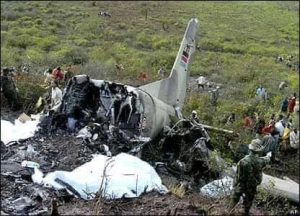
In the same script, investigators cited poor weather and limited visibility as key contributing factors.
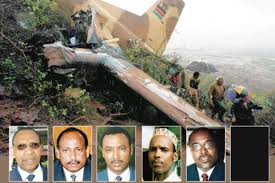
The rampant air crashes that have claimed multiple lives raise questions about aviation safety standards in Kenya, particularly for charter flights.
Over the years, investigations into these accidents have consistently pointed to a combination of mechanical failure, human error, challenging terrain, and adverse weather as major contributors.
In response, authorities such as the Kenya Civil Aviation Authority (KCAA) and the Air Accident Investigation Department (AAID) have issued recommendations aimed at improving safety.
These include enhanced aircraft maintenance checks, better pilot training, stricter regulation of charter operations, and improved weather monitoring systems.