Police bust human trafficking ring, rescue 70 in Nairobi
The issue has also drawn international attention after the Financial Action Task Force placed Kenya on its “grey list”, citing concerns about weaknesses in combating money laundering and terrorism financing—risks often associated with organised transnational crime networks

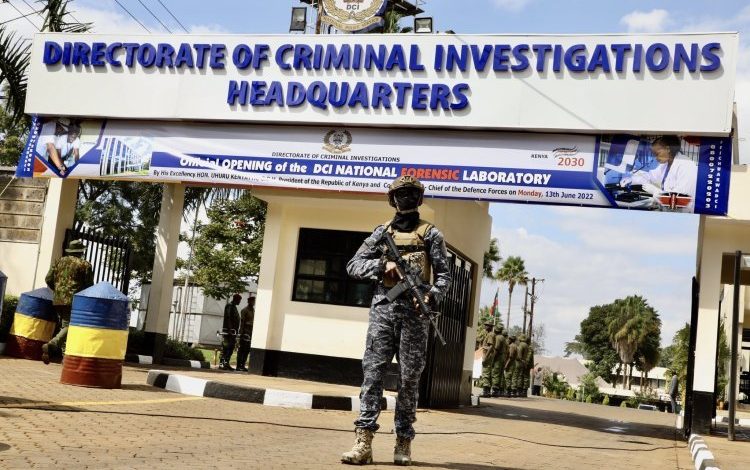
In what authorities say points to a growing cross-border human trafficking network, police in Nairobi have rescued 70 foreign nationals during a raid in the Ruai area, intensifying concerns that Kenya is increasingly being used as a transit hub for transnational crime.
Investigators believe the group may have been part of a larger organised smuggling chain that moves migrants through Kenya before transporting them to southern Africa or onward to the Middle East.
Security agencies say the country’s position as a regional transport and logistics hub makes it attractive to criminal syndicates involved in people smuggling.
The issue has also drawn international attention after the Financial Action Task Force placed Kenya on its “grey list”, citing concerns about weaknesses in combating money laundering and terrorism financing—risks often associated with organised transnational crime networks.
Authorities say they have stepped up enforcement operations to dismantle such networks.
Police say traffickers frequently use the northern corridor route through Moyale, a key crossing point between Kenya and Ethiopia.
The illegal aliens are typically transported across the border before being moved through Nairobi and other towns while awaiting the next leg of their journey.
The operation was carried out by detectives from the Directorate of Criminal Investigations through its Transnational Organised Crime Unit (TOCU), following a tip-off about suspected human trafficking activities in the area.
Officers raided a residential house in Ruai where dozens of foreigners were found confined under unclear circumstances.
Police said the victims appeared to have been kept inside the house while awaiting further transportation. Officers from Ruai Police Station later joined the operation.
According to investigators, 66 of those rescued were Ethiopian nationals while four were Eritreans.
Authorities arrested a Kenyan suspect at the scene believed to be linked to the operation, while efforts are ongoing to determine whether more members of the trafficking network are involved.
The rescued individuals were taken into custody for processing, documentation and further investigations as authorities seek to establish how they entered the country and who facilitated their movement.
Preliminary interviews with the victims revealed that most of them were fleeing economic hardship and instability in their home countries and were attempting to travel to South Africa in search of better opportunities.
Authorities say many illegal immigrants who undertake these journeys are often unaware of the risks involved, including exploitation, detention or abandonment by traffickers once payments are made.
“Tens of foreign nationals are intercepted across the country every year while awaiting transportation to their next destinations,” a police officer involved in the investigation said, noting that traffickers often house migrants in crowded residential buildings to avoid detection.
The Ruai raid adds to a growing list of cases highlighting Kenya’s role in transnational migration and human trafficking networks.
In one recent incident on February 7, 2026, officers at Jomo Kenyatta International Airport (JKIA) intercepted two separate suspected cases involving human trafficking and immigration fraud.
According to the Kenya Police Service, a traveller attempting to fly to Europe was found in possession of a forged visa, while another traveller heading to the United Kingdom was detained with a fake UK residence permit.
In the second case, authorities arrested a Sudanese national who was allegedly travelling using the forged document. His Kenyan facilitator was also apprehended during the operation.
Police say such cases highlight the increasing sophistication of trafficking and migration fraud networks, which often involve recruiters, document forgers, transporters and safe-house operators working across several countries.
Authorities have warned that traffickers frequently exploit vulnerable individuals by promising jobs abroad, particularly in Europe and the Middle East, only to subject them to exploitation, extortion or abandonment along the journey.
Recent reports have also pointed to a rising trend of Kenyans themselves being targeted by fraudulent overseas job offers, with intermediaries charging large sums for non-existent employment opportunities.