Amnesty International: What must the compensation panel deliver for protest victims?
According to Houghton, Kenya’s record on delivering reparations to state victims is complex and disappointing. The most ambitious effort was the Truth, Justice and Reconciliation Commission

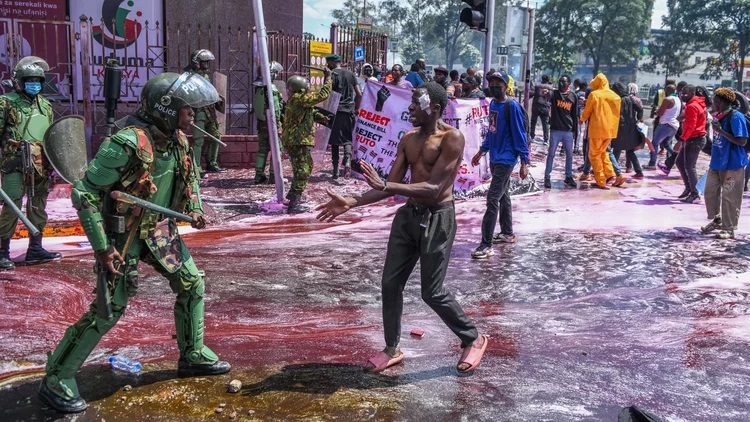
Amnesty International wants President William Ruto to go beyond compensation of victims of protests since 2017 and instead support the panel he recently constituted to break through Kenya’s inter-generational cycle of violence, impunity and failed transitional justice efforts.
“Should it fail, the political backlash will also be another personal tsunami for President Ruto and the Kenya Kwanza administration. If the first sin were harming hundreds, the second would be acknowledging that harm, then abandoning the victims,” Amnesty International Kenya Executive Director Irũngũ Houghton said in a statement.
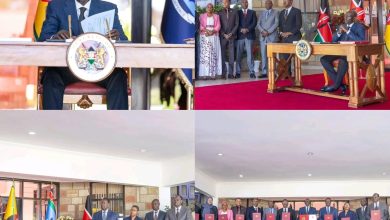
While questioning the value of a human life, and how should victims of wrongful deaths caused by state officers be compensated, Houghton said President Ruto’s August 6 announcement of an implementation panel, chaired by his Constitutional Affairs and Human Rights Senior Advisor Prof Makau Mutua, to compensate victims of protest-related deaths opens a new chapter in Kenya’s transitional justice journey.
“It raises critical questions. Is financial compensation enough? Or should justice and accountability take precedence in addressing state violence and abuse?”
According to Houghton, Kenya’s record on delivering reparations to state victims is complex and disappointing. The most ambitious effort was the Truth, Justice and Reconciliation Commission (TJRC). The Commission was formed after the 2007 post-election violence to investigate abuses from 1963 to 2008.
He noted that over four years, it received 40,000 statements, a global record. However, torpedoed by political resistance and weak public pressure, only one of its 200 recommendations was ever implemented.
Houghton also pointed out that in 2015, President Uhuru Kenyatta issued a public apology from the floor of the National Assembly but made no concrete commitments to address 52 years of violations.
“Several other efforts remain stalled. In 2022, the African Court ordered the government to pay Sh157 million to the Ogiek for violations of land and cultural rights, but this remains unpaid. Over 3,000 residents of Uhuru Owino, Mombasa, were awarded Sh2 billion in 2020 for lead poisoning deaths and injuries. Repeated state appeals and foot-dragging continue to block compensation. The Victims Protection Act, enacted 11 years ago, remains unimplemented. Its regulations are still in draft form, unfunded, and the oversight panel is inactive. The Kenya Reparations Bill (2017) and the Sh10 billion Restorative Justice Fund are likewise stillborn in the Office of the Attorney General,” he noted.
According to Houghton, there have also been some local and international successes citing the 2013 case where the Kenya Human Rights Commission and UK firm Leigh Day Legal pressed the British Government to apologise and pay Sh2.6 billion to 5,228 Mau Mau and Kenya Land and Freedom Army veterans for colonial-era torture and ill-treatment.
“After 13 years of a landmark legal civil case, four survivors received Sh16 million in 2015 after police officers sexually violated or failed to protect them during the 2027-8 post-election violence. The judgment also held the government accountable for failing to investigate and prosecute the officers,” he said.
“With this poor track record, thousands of survivors of historical injustices have faced years of neglect and broken promises. With this experience, is the right to reparation for victims of protest-related violence an international human rights pipe dream? It shouldn’t be. Albeit messy, political and incomplete processes at times, other countries have had successes compensating Native American communities, police torture, forced sterilisation and slavery (USA), Nazi Holocaust victims (Germany), authoritarianism victims (Chile and Argentina) and sexual slavery survivors (Japan), among others,” Houghton added.
He said that after listening to survivors and victims’ families this week, the Mutua-led mechanism must adopt clear, victim-centred principles.
“The 120-day process must go beyond monetary compensation to non-monetary reparations as well. If footballers can earn Sh2.5 million for a couple of rounds of 90-minute games, victims of state violence deserve compensation that is dignified, substantial, and accessible. The Panel must uphold victims’ right to judicial redress and not undermine ongoing criminal cases. It must not silence victims’ families’ demands for an end to killings of Kenyans for expressing themselves online or in our streets.”
He said public hearings could be held with survivors and families driving the agenda, adding that it could explore creative truth-telling, memorialisation and push for institutional and legislative reform.
“Failure to adopt and implement these principles will confirm the Kenya Human Rights Commission’s warning on Thursday that this process is clumsily institutionally anchored, a whitewashing exercise and a cover-up for state abuses.”