New benchmark for disability rights and inclusion in Kenya unveiled
This historic launch reaffirms Kenya’s leadership in disability inclusion and its commitment to upholding the dignity, rights, and aspirations of all citizens

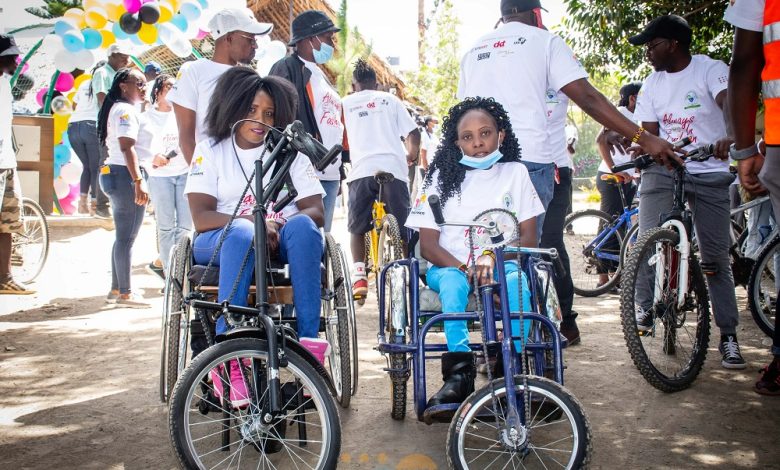
Kenya has launched the Joint Disability Inclusion Strategy (2025–2027), a landmark framework designed to accelerate the rights, empowerment, and inclusion of persons with disabilities nationwide.
Anchored in the Persons with Disabilities Act 2025 and aligned with the global UN Disability Inclusion Strategy (UNDIS), the three-year framework is built on five strategic pillars: Economic Empowerment, Political Empowerment, Digital Empowerment, Access to Facilities and Services, and Data and Statistics.
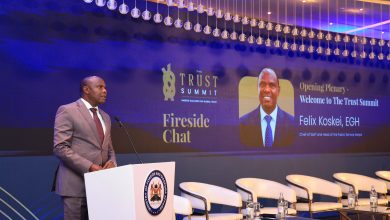
Speaking at the launch that was held in partnership with 71 organisations from civil society, the private sector, development partners and the United Nations, representatives emphasised Kenya’s commitment to advancing disability rights through coordinated, multi-sectoral action.
The strategy introduces concrete measures such as enforcement of the 5 per cent employment and political participation quota, expansion of assistive technologies, development of inclusive infrastructure guided by the AAA-Q (Availability, Accessibility, Acceptability and Quality) Framework and strengthening of disability data systems to inform evidence-based policymaking.
The National Council for Persons with Disabilities (NCPWD) will serve as the lead coordinating agency, working with designated pillar leaders and implementation clusters to drive delivery. Implementation matrices for each pillar have been developed to guide rollout over the next three years.
This historic launch reaffirms Kenya’s leadership in disability inclusion and its commitment to upholding the dignity, rights, and aspirations of all citizens.
According to the United Nations Population Fund (UNFPA), persons with disabilities constitute 2.2 per cent (0.9 million) of Kenya’s population, with women making up 57 per cent (523,883), of all persons with disabilities. The common types of disability are mobility (42 per cent), followed by visual (36.4 per cent), cognition (23.2 per cent), hearing (16.7 per cent), self-care (15.3 per cent) and communication (12.1 per cent). More than 80 per cent of persons with disabilities live in rural areas, according to the 2019 Kenya Population and Health Census (KPHC) report.
Social and gender norms, misconceptions and negative attitudes around disability are some of the leading causes of marginalisation of persons with disabilities. In particular, women and children with disabilities continue to face various challenges in accessing sexual and reproductive health services.
Public health facilities lack or have inadequate equipment or amenities adapted for persons with disabilities such as access ramps, examination couches, and delivery beds, as well as insufficient assistive devices and technology. Sexual and reproductive health information is often not readily available in accessible formats, and persons with disabilities still struggle to access basic information online or via local apps as most digital platforms are not developed with their needs in mind.
Focusing on the rights of persons with disabilities supports the achievement of the Sustainable Development Goals, especially the principle of “leaving no one behind” (LNOB) and “reaching the furthest behind.”
The International Conference on Population and Development (ICPD) Programme of Action has called on states to address the sexual and reproductive health needs of persons with disabilities, and it demanded the elimination of discrimination that undermines the reproductive rights of persons with disabilities.
In order to accelerate progress on the agenda of the ICPD Programme of Action, it is important to effectively and systematically include persons with disabilities, especially women and young persons with disabilities in development, humanitarian, sustaining peace and peacebuilding settings.