Amid criticism, Murkomen issues guidelines on use of force and firearms by police
The policy outlaws the use of force as a form of extrajudicial killings and that no additional force is lawful is used when a suspect is safely and lawfully detained

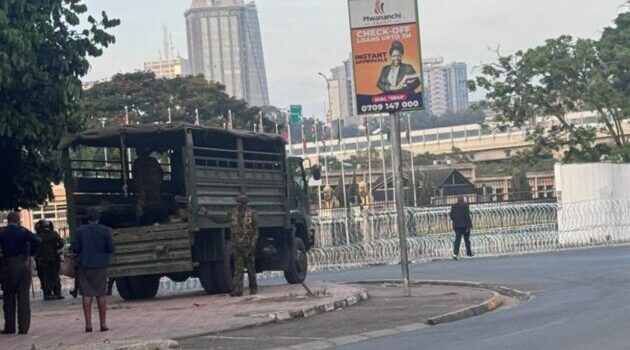
Interior Cabinet Secretary Kipchumba Murkomen has issued policy directives on the use of force following the recent spate of killings by the police and controversy over his shoot-to-kill order and a subsequent shoot-in-the-leg order by President William Ruto.
Through the Policy Directive No.1 of 2025 on the Use of Force $ Firearms, Murkomen has outlined various scenarios in which police officers can lawfully use force or firearms and the extent to which they can do so.
The policy outlaws the use of force as a form of extrajudicial killings and that no additional force is lawful is used when a suspect is safely and lawfully detained.
The police have been under fire both locally and internationally following the use of extensive force, including live ammunition, during protests since June last year leading to tens of deaths, with the situation being compounded by the death in police custody of teacher-turned-blogger Albert Omondi Ojwang at Central Police Station.
Security agencies have also been accused of abductions, enforced disappearances and extrajudicial killings targeting Gen Zs, who have stepped up pressure on the government to address the high cost of living, unemployment and bad governance since last year.
According to Murkomen’s new guidelines, law enforcement officers shall not use force or firearms against persons unless in self-defence or the defence of others against the imminent threat of death or serious injury.
They add that the use of force shall be no more than the minimum reasonably necessary in the circumstances and that the officers, in carrying out their duty, shall, as far as possible, apply non-violent means before resorting to the use of force/or firearms.
“Any use of force must be lawful, proportionable and reasonable in the circumstances to achieve a legitimate law enforcement objective,” the directive further provides.
According to the new policy, whenever the lawful use of force is unavoidable, the officers shall exercise restraint in such use and act in proportion to the seriousness of the offence and the legitimate objective to be met; minimise damage and injury and respect and preserve human life; and ensure that assistance and medical aid are rendered to any injured or affected persons at the earliest possible moment.
The police should also ensure that the National Policing Oversight Authority (IPOA) is notified at the earliest possible.
Regarding protests and demonstrations, the guidelines provide that law enforcement officers shall avoid the use of force in the dispersal of assemblies that are unlawful but non-violent or where that is not practical, shall restrict such force to the minimum extent necessary.
The directive adds that in the discharge of its obligations under Article 37 of the Constitution, the National Police Service shall provide adequate security to persons lawfully and peacefully assembled and shall take all reasonable measures to shield them from violence, intimidation or interference from third parties.
“A police officer is not entitled to discharge a firearm against a person unless the officer has reasonable grounds for believing that the person is committing, or about to commit, action likely to endanger the life or cause injury to the officer or any other person, and there is no other way to prevent the danger,” it adds.
Murkomen’s directive makes it clear that police officers have the right to defend themselves from unlawful physical violence.
However, in determining the proportionality to apply, the police officers shall consider; the person’s behaviour and their level of resistance, if the person refuses to comply or exhibits body language indicating non-compliance, any assault where there exists the possibility of bodily harm or death of the officers.
It urges police officers to act with self-control and tolerance, treating members of the public and colleagues with respect and courtesy and to also deploy strategies and techniques to manage potentially volatile situations by the reducing the likelihood of force and promoting peaceful resolutions.
“When applying force, officers shall exercise heightened caution when interacting with children, persons with disabilities, older persons and gender-based vulnerable groups ensuring that all interventions remain sensitive, proportionate and non-discriminatory.”
Murkomen has also tasked police authorities to ensure that all officers deployed to restore law and order are selected by proper screening with appropriate moral, psychological and physical qualities for the effective exercise of their functions and receive continuous and thorough professional training.
The nine-page policy document adds that their continuous fitness to perform these functions should be subject to periodic review.