DTB Bank faces Sh50 million suit over till mix-up, Sh477,891 mystery credits
Akisa Limited accuses bank of negligence after payments meant for another merchant allegedly landed in its account, while DTB insists it followed procedure and reversed disputed transactions Diamond Trust Bank (DTB) is an affiliate of the Aga Khan Development Network (AKDN), operating under the primary ownership and strategic oversight of the Aga Khan Fund for Economic Development (AKFED)

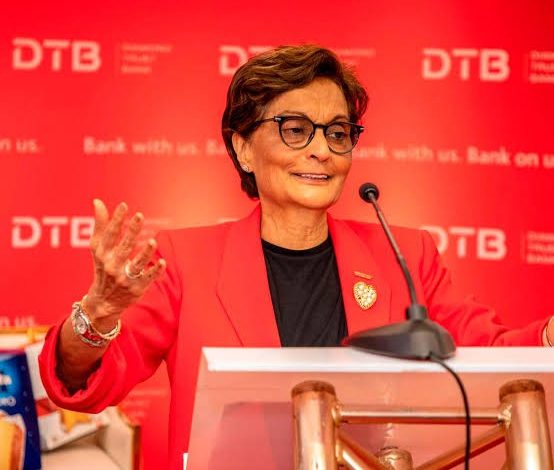
The Diamond Trust Bank (DTB) is facing a Sh50 million lawsuit over the reassignment of a business till number that allegedly resulted in unexplained payments totalling Sh477,891 being channelled into a company’s account, triggering fears of fraud and possible money laundering.
In a case before the High Court in Nairobi, Akisa Limited claims the disputed transactions began on February 19, 2026, barely five minutes after the bank assigned it a six-digit Till Moja number previously used by another merchant.
The company accuses DTB of negligence, arguing that payments intended for the previous user continued entering its account despite repeated complaints and written requests for intervention.
However, DTB denies liability, maintaining that the till was reassigned in accordance with its standard procedures and that it subsequently reversed disputed transactions, deactivated the code and issued Akisa with a replacement.
In a supporting affidavit, Akisa director Eugene Mokua says the company applied for a till number in February to facilitate business payments and received the assigned code by SMS at 10am on February 19.
Within five minutes, Sh27,000 unexpectedly landed in the account.
Mokua says he contacted DTB customer care and was informed that the money had been sent in error. He agreed to its reversal, but later received additional credits of Sh9,400 and Sh4,300 on the same day.
He subsequently visited the bank’s Tom Mboya branch in Nairobi and submitted written instructions authorising the reversal of all wrongly credited funds.
The problem allegedly persisted. On February 23, another Sh60,000 entered the account, prompting a second visit to the bank and another written request for reversal.
According to Akisa’s court filings and account records, further unexplained credits were recorded between February 26 and March 12, bringing the listed transactions to Sh477,891. The company says the disputed amounts were subsequently reversed.
Sh250,000 credit raises alarm
Mokua says a Sh250,000 credit on March 10 prompted him to email DTB, reject the transaction and warn that the account could potentially be used to facilitate money laundering.
Akisa further claims that a caller subsequently contacted Mokua and said he had obtained his telephone details from DTB.
On March 12, the bank allegedly sent Mokua a replacement Till number by SMS, which he says the company had neither requested nor authorised. Akisa wrote to DTB on March 19 seeking clarification but claims it received no response.
The company wants the court to declare the disputed transactions fraudulent, unauthorised and invalid. It is also seeking an order compelling DTB to provide a comprehensive report on the payments, preserve the Till unless otherwise authorised by the company or the court, and refrain from facilitating unlawful transactions through it.
Akisa is seeking Sh50 million in general damages for alleged negligence, alongside aggravated or exemplary damages and legal costs.
Bank blames old till code
DTB’s legal officer, Jennifer Thiga, disputes the allegations, saying the bank’s standard practice allows previously used short codes to be reassigned once deactivated or closed and marked available in its system.
“The Bank’s standard practice [was] that a previously used short code, once deactivated or closed, could be reissued to a different customer if the system showed it as available,” Thiga says in her affidavit.
She says Akisa’s application specified two preferred short codes, one of which was subsequently assigned to the company.

According to DTB, the previous user later reported that his customers were still sending payments to the old code, causing the money to be credited to Akisa because the till had been linked to its account.
Thiga says the bank contacted Akisa and sought permission to reverse the erroneous payments. While some reversals were completed, further payments continued arriving.
She alleges that Akisa later declined to authorise another reversal, thereby “effectively opting to keep funds belonging to another customer”, potentially exposing the bank to litigation by the rightful recipient.
DTB says it subsequently assigned Akisa a new Till in March, which it maintains had never previously been used, while closing the disputed code.
“The Bank’s actions were proportionate, timely, and in everyone’s best interest,” Thiga says.
She also rejects the money-laundering allegation, arguing that there is no evidence the disputed funds were proceeds of crime. The bank denies that an outsider obtained Mokua’s contact details, saying the caller was a DTB officer investigating the matter.
DTB’s Till Moja service enables merchants to receive real-time payments into linked business accounts through six-digit codes, with payments accepted via M-Pesa, Airtel Money and T-Kash. Merchants can request multiple codes linked to one or separate bank accounts.