Alarm as over 3,500 women die annually in Kenya from cervical cancer

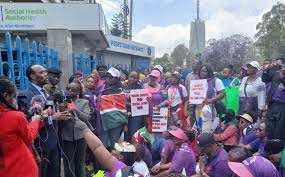
More than half of women diagnosed with cervical cancer in Kenya die each year, largely because the disease is detected too late, alarming new figures reveal.
A national survey indicates that of the approximately 6,000 women screened annually, nearly 3,500 do not survive beyond a year after diagnosis. Health officials attribute the high mortality rate to low screening uptake and late presentation at health facilities.
Public Health and Professional Standards Principal Secretary Mary Muthoni said that the government is deeply concerned by the statistics, noting that fewer than half of women at risk seek cervical cancer screening.
“This means many women are walking around with the disease unknowingly, only seeking medical attention when it has already advanced,” PS Muthoni said.
Cervical cancer experts warn that early symptoms often take time to manifest and can easily be mistaken for less serious conditions, increasing the risk of delayed diagnosis and treatment.
As the country marks Cervical Cancer Awareness Month, PS Muthoni has urged women nationwide to seek information about the disease and take advantage of available screening services to establish their health status.
The World Health Organization (WHO) has set an ambitious target to eliminate cervical cancer as a public health threat by 2030, guided by the “90–70–90” strategy.
The framework calls for 90 per cent of girls aged 10 to 14 to be fully vaccinated against the human papillomavirus (HPV), 70 per cent of women aged 25 to 49 to be screened, and 90 per cent of those diagnosed to receive treatment.
While Kenya remains below these targets, PS Muthoni said the Ministry of Health has rolled out a strategic plan running to 2030 aimed at achieving the WHO benchmarks.
To accelerate progress, the national government is working closely with county governments and other health sector stakeholders to scale up awareness, screening, and treatment.
Community Health Promoters (CHPs) are also being mobilised to encourage women at the grassroots level to undergo regular screening.