Ruto signs Sh71 billion county funding law, approves assembly reforms
Counties to receive Sh71.09 billion in additional allocations for 2026/27 as new law introduces safeguards in the removal of county assembly officials

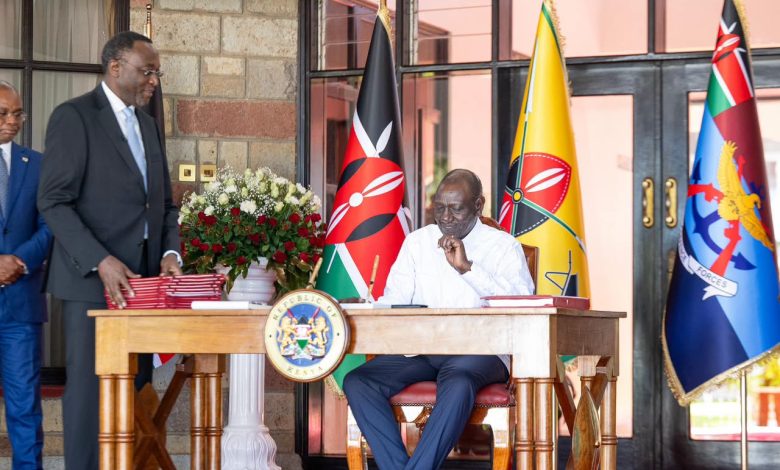
President William Ruto has this morning signed into law two Senate Bills, paving the way for county governments to receive Sh71.09 billion in additional funding in the 2026/2027 financial year and introducing new safeguards in the management of county assembly administrations.
Ruto assented to the County Governments Additional Allocations Bill, 2026, and the County Assembly Services (Amendment) Bill, 2023, at Eldoret State Lodge in Uasin Gishu County on Monday, October 19.
The additional allocations legislation provides for Sh71.09 billion to be channelled to county governments, an increase of Sh425.6 million from the Sh70.67 billion allocated in the 2025/2026 financial year.
In a statement posted on his Facebook page, the president said the funding would support healthcare, agriculture, climate change resilience, drought response, water and sanitation, and other priority programmes.
“Our goal is to strengthen devolution, improve service delivery and ensure county governments have the resources necessary to fulfil their responsibilities and improve the lives of Kenyans,” Ruto said.
The County Governments Additional Allocations Act establishes the legal framework for transferring additional resources to all 47 county governments through statutory entitlements, conditional allocations from the National Government’s share of revenue, and loans and grants from development partners.
Of the total Sh71.09 billion allocation, approximately Sh16.46 billion will come from the National Government, while Sh53.82 billion will be sourced from development partner loans and grants.
The funding is expected to support priority projects in healthcare, agriculture, affordable housing, urban infrastructure and climate change resilience, among other areas.
Deputy Chief of Staff Josephat Nanok, who outlined the funding priorities during the presentation of the bills, said the legislation would enable counties to make the necessary budgetary appropriations and utilise the funds.
“The bill is much awaited by the county governments so that they can make due appropriation and utilize the funds,” Nanok said.
He added that conditional allocations from the National Government would help supplement the construction of county headquarters, while other funding streams would support health sector programmes, including Universal Health Coverage workers and Community Health Promoters.
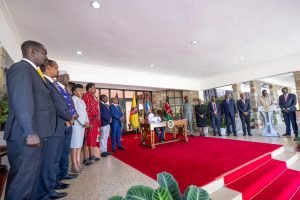
The additional allocations are expected to strengthen county governments’ capacity to finance projects and sustain essential services amid growing demands for improved healthcare, infrastructure and local economic development.
However, the funds will require proper budgeting, utilisation and oversight by county administrations to ensure that the additional resources translate into tangible improvements in service delivery.
New rules for county assembly officials
In a separate measure, Ruto signed the County Assembly Services (Amendment) Bill, 2023, introducing formal procedures for the removal of County Assembly Service Board members and the suspension or removal of county assembly clerks.
The legislation seeks to strengthen governance and administration within county assemblies by establishing clearer procedures for disciplinary action, protecting due process and safeguarding the rights of affected officials.
Under the new framework, a petition seeking the removal of a County Assembly Service Board member must be submitted to the Clerk and forwarded to the county assembly by the Speaker within seven days.
An 11-member select committee will then review the petition within 10 days, providing a structured process for considering allegations against board members.
The law also provides for the affected individuals to be represented by a lawyer, strengthening procedural safeguards in removal proceedings.
For county assembly clerks, the legislation introduces requirements governing suspension, including written reasons for the proposed action, an opportunity to respond within seven days and a hearing before a decision is reached.
The provisions are intended to reduce arbitrary administrative decisions and ensure that disciplinary processes follow established procedures.
The law further protects the rights and benefits of officers seconded to other institutions, including their salaries, allowances and other employment entitlements.
It also provides safeguards relating to their reinstatement, addressing concerns about the treatment of staff temporarily assigned to serve in other institutions.
The reforms are expected to provide greater clarity in the administration of county assemblies, where service boards play a central role in staffing, human resource management and institutional operations.
Focus on devolution
The two laws address separate but complementary aspects of devolution: the financing of county governments and the governance of county assembly institutions.
While the additional allocations law provides counties with resources for development projects and public services, the amendments to county assembly administration establish procedures intended to strengthen institutional accountability and protect staff rights.
The additional funding comes at a time when county governments face pressure to improve healthcare delivery, expand infrastructure, support agriculture and respond to climate-related emergencies.
The success of the allocations will depend on how effectively county administrations prioritise expenditure, manage projects and account for public resources.