Duale defies NCIC as Gachagua joins hate speech probe list of suspects
Those under investigation are Gachagua, Duale, Public Service Cabinet Secretary Geoffrey Ruku, Busia Governor Paul Otuoma, Mandera Deputy Governor Ali Maalim Mohamud, Sirisia MP John Waluke, Kipipiri MP Wanjiku Muhia, Nakuru Town East MP David Gikaria, social media commentator Tipape Naini Musa and Dr Dennis Adison Ouma.

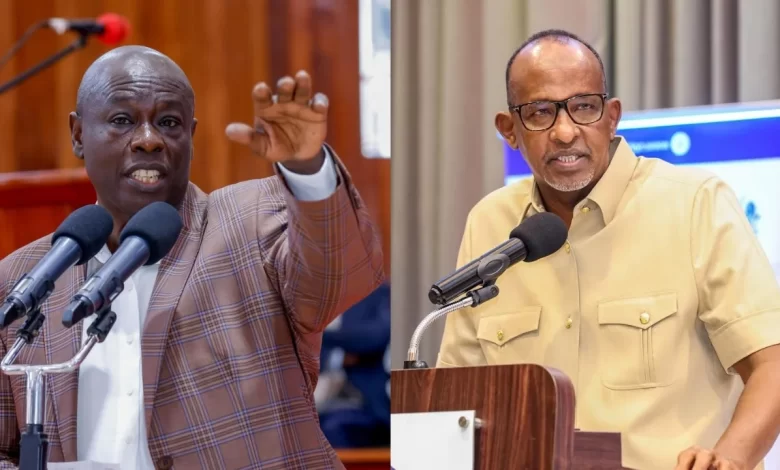
The National Cohesion and Integration Commission (NCIC) has launched investigations into former Deputy President Rigathi Gachagua, Health Cabinet Secretary Aden Duale and eight other prominent leaders over remarks that could amount to hate speech or ethnic incitement, amid growing concern over rising political intolerance ahead of the 2027 General Election.
In a joint statement issued today, Tuesday, July 28, 2026 with the Inter-Religious Council of Kenya (IRCK), the commission said its Investigations and Compliance Department was conducting independent inquiries into recent utterances attributed to the leaders under the National Cohesion and Integration Act.
Those under investigation are Gachagua, Duale, Public Service Cabinet Secretary Geoffrey Ruku, Busia Governor Paul Otuoma, Mandera Deputy Governor Ali Maalim Mohamud, Sirisia MP John Waluke, Kipipiri MP Wanjiku Muhia, Nakuru Town East MP David Gikaria, social media commentator Tipape Naini Musa and Dr Dennis Adison Ouma.
NCIC stressed that the investigations were being conducted independently and in accordance with due process, adding that all those named remained innocent until proven guilty.
“These investigations are being undertaken strictly in accordance with due process and the law. No individual, regardless of office or standing, is beyond the reach of the law where credible allegations of hate speech or ethnic incitement arise,” the commission said.
It added that its investigative and enforcement mandate was exercised independently, without political direction or interference, and cautioned against assigning collective guilt to communities on the basis of ethnicity, religion or region.
“No community, region or group should be held collectively accountable for the alleged conduct of an individual,” the statement said.
The announcement came as pressure mounted on Duale over controversial remarks that critics said profiled members of the Kikuyu community following the recent Ol Kalou by-election.
Lands Cabinet Secretary Alice Wahome and Kirinyaga Governor Anne Waiguru both demanded that the Health CS withdraw his remarks and issue an unconditional public apology.
In a strongly worded statement, Wahome dismissed Duale’s argument that other politicians had made more inflammatory remarks without facing similar criticism.
“Two wrongs don’t make a right. You should withdraw your remarks and apologise profusely,” she said.
Waiguru described the remarks as “deeply regrettable”, warning that reducing the government’s political setbacks to ethnicity was both simplistic and dangerous.
“Cabinet Secretary Aden Duale, given your stature and long experience in politics, such utterances are wholly unacceptable. An apology is not only necessary, it is owed to the people of Kenya,” she said.
However, Duale has remained defiant, insisting he will neither apologise nor honour any summons from the NCIC unless Gachagua is subjected to similar investigations.
Speaking during a wedding ceremony in Garissa on Sunday, the Cabinet Secretary accused the commission of selective enforcement, arguing that the former Deputy President had previously made inflammatory remarks targeting the Somali and Muslim communities.
“I want to tell NCIC, the day you are going to summon Rigathi Gachagua is the day you are going to summon Aden Duale. The day I appear before NCIC, I will walk in together with Rigathi Gachagua,” he declared.
Duale maintained that his controversial remarks had been taken out of context, saying he merely used a Somali proverb to illustrate that old habits are difficult to abandon and never intended to insult or profile any community.
He also accused critics of ignoring statements he considered more divisive, including Gachagua’s past “shareholding” remarks and comments questioning the appointment of Somalis to senior government positions.
The NCIC said the current investigations form part of broader efforts to curb inflammatory political rhetoric as the country moves closer to the 2027 elections.
Following consultations with the Inter-Religious Council of Kenya, the commission warned of an alarming rise in political intolerance across the country, saying politicians and social media users were increasingly employing language that dehumanised opponents and portrayed entire communities as enemies.
“Hate speech is not free speech. It is an assault on human dignity and on the constitutional order that binds this nation together,” the joint statement said.
The two institutions announced plans to strengthen real-time monitoring of hate speech, establish early-warning mechanisms with the National Police Service, revive the UWIANO Platform for Peace, develop peace pledges for political rallies, expand county-level interfaith peace networks and establish mediation teams to defuse emerging tensions.
They also urged politicians to campaign peacefully, avoid ethnic mobilisation and refrain from sponsoring political violence, while calling on young people to reject recruitment into divisive political activities.
“Kenya’s unity is non-negotiable,” the statement said, warning that coordinated action would be critical in preventing election-related violence and safeguarding a peaceful, inclusive and credible 2027 General Election.