Wetang’ula dragged into Kibabii University Vice-Chancellor succession battle

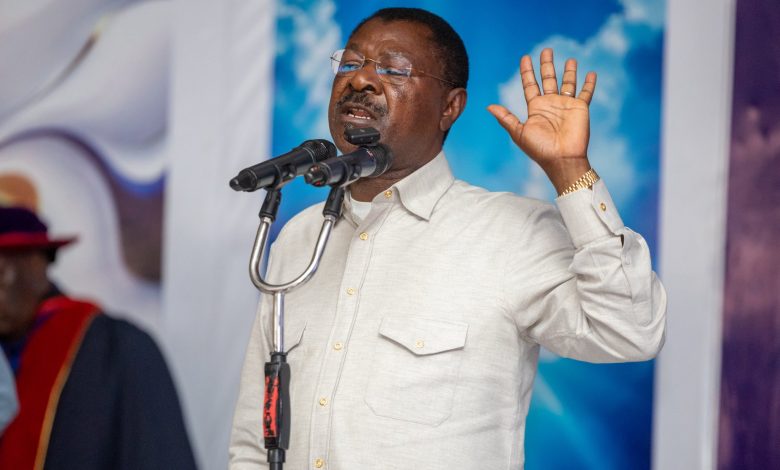
The National Assembly Speaker Moses Wetang’ula has been drawn into a deepening succession storm at Kibabii University, a dispute that threatens to destabilise the Bungoma-based institution amid growing claims of political interference, regional exclusion and elite manoeuvring over the next Vice-Chancellor.
The Speaker’s entry into the controversy comes as the tenure of the current Vice-Chancellor, Prof Isaac Ipara Odeo, nears its end later this year, an impending transition that has exposed long-simmering tensions within the university and among local political leaders.
Speaking on Saturday, February 7, 2026, during the funeral of Kibabii University Deputy Vice-Chancellor Prof Donald Siamba in Maeni Ward, Kimilili Constituency, Wetang’ula acknowledged the sensitivity of the succession process and pledged to intervene to protect the institution.
“Kibabii University is critical not only to national development but also to the social and economic life of Bungoma County. Its stability must be safeguarded at all costs,” Wetang’ula said, assuring the university community of a “fair, transparent and merit-based succession process.”
However, beneath the Speaker’s conciliatory tone lies a fierce political struggle that critics warn mirrors the destructive wrangles that nearly crippled Egerton University, once Kenya’s flagship agricultural institution.
Several leaders attending Prof Siamba’s funeral openly alleged that powerful interests were engineering the succession to sideline qualified candidates from the region.
Bungoma Senator and Senate Chief Whip David Wakoli, Kimilili MP Didimus Barasa and Kanduyi MP Kalasinga Majimbo claimed the late Prof Siamba had been a leading contender before his sudden death.
“We know Prof Siamba was a frontrunner. There were schemes to lock him out,” MP Barasa said, calling for investigations into the circumstances surrounding his death—remarks that sharply raised tensions at the ceremony.
Barasa warned that any attempt to manipulate the process could ignite unrest within the institution, pointing to the visibly emotional reaction of students whenever the succession debate surfaced.
He also questioned Prof Odeo’s conduct during the funeral, accusing the Vice-Chancellor of leaving prematurely after delivering his speech instead of remaining to honour his late deputy, an allegation that further fuelled suspicion and mistrust.
Senator Wakoli cautioned university management against conducting what he termed a “divisive and opaque” process, insisting leaders were closely monitoring developments.
“We will not allow any unfair attempts to impose a candidate on this institution,” Wakoli warned.
Kanduyi MP Kalasinga Majimbo escalated the rhetoric further, demanding the cancellation of planned interviews and a complete restart of the process to ensure inclusivity.
“If the interviews are not cancelled, we will mobilise residents to camp at the university until our grievances are addressed,” he said.
Education analysts warn that the unfolding standoff at Kibabii bears troubling similarities to the leadership wars that pushed Egerton University to the brink of collapse.
At Egerton, sustained political pressure from Rift Valley leaders who insisted the Vice-Chancellor must hail from their community—paralysed governance, triggered endless court battles, scared away donors and academic partners, and plunged the university into a severe financial crisis. Enrolment dropped, staff morale collapsed, and government bailouts became routine.
“Egerton is a textbook case of how ethnicised leadership succession destroys public universities,” said a governance expert familiar with the sector. “When political leaders capture councils and recruitment processes, merit disappears and institutions suffer.”
Critics fear Kibabii could follow the same path if political threats, ethnic considerations and funeral-platform declarations are allowed to override established governance structures.
In response to the escalating tensions, Speaker Wetang’ula promised decisive intervention, announcing he would convene a meeting of Bungoma County leaders in Nairobi on Wednesday to chart a way forward.
While the move has been welcomed by some as necessary mediation, others see it as confirmation that political actors not university councils are now steering the process.
Bungoma Governor Kenneth Lusaka backed the leaders’ concerns but urged calm, saying the matter would be resolved amicably in consultation with Wetang’ula.
“I want to assure our people that, together with the Speaker, we will resolve this issue to their satisfaction,” Lusaka said.
Yet education stakeholders caution that “people’s satisfaction” should not override national standards, warning that universities are not county fiefdoms but public institutions governed by law.
Wetang’ula also condemned the political chaos that briefly disrupted Prof Siamba’s funeral, describing it as shameful and disrespectful. He cautioned the youth against being used to foment disorder and urged leaders to show decorum.
In his tribute, the Speaker eulogised Prof Siamba as a distinguished scholar who served Kibabii University with humility and dedication, conveying President William Ruto’s condolence message praising the late don’s contribution to Kenya’s education sector.
As Kibabii approaches a critical transition, the central question remains whether lessons from Egerton’s collapse will be heeded—or whether political muscle will once again trump merit, placing another public university on a dangerous path.