Universities must account for the Sh500million KUCCPS debt
The revelation that universities owe the Kenya Universities and Colleges Central Placement Service (KUCCPS) approximately Sh500 million in placement fees should therefore trigger more than a parliamentary summons. It should prompt a serious audit of how institutions of higher learning manage public resources, student numbers and their financial obligations.

Kenya’s universities cannot continue demanding more public money while failing to account for obligations they are legally and administratively required to meet.
The revelation that universities owe the Kenya Universities and Colleges Central Placement Service (KUCCPS) approximately Sh500 million in placement fees should therefore trigger more than a parliamentary summons. It should prompt a serious audit of how institutions of higher learning manage public resources, student numbers and their financial obligations.
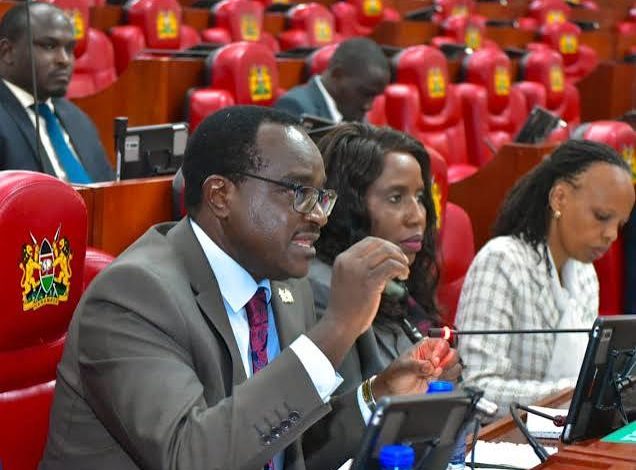
The National Assembly Education Committee, chaired by Tinderet MP Julius Melly, was right to demand that KUCCPS disclose the institutions that owe the agency and the amounts involved. Kenyans deserve to know who owes what and why.
The issue is straightforward. Universities are required to pay KUCCPS a one-off Sh1,500 fee for every student successfully placed. Yet some institutions have apparently failed to remit these funds, with some claiming that students assigned to them did not report.
That explanation raises an uncomfortable question: if a university tells KUCCPS that students did not report, what numbers does it subsequently present when seeking funding from the Universities Fund?
It was precisely this contradiction that Melly highlighted when he questioned universities that allegedly provide higher student numbers when seeking government funding while disputing the numbers placed through KUCCPS.
This is not a minor administrative discrepancy. Student numbers have significant financial consequences. They influence funding, institutional planning and resource allocation. If institutions report one set of figures to access public resources and another set to avoid paying a relatively modest statutory or administrative charge, then the matter deserves rigorous scrutiny.
KUCCPS Chief Executive Officer Dr Mercy Wahome said the agency had been forced to become more aggressive this financial year, withholding placement lists from universities until they committed to settling outstanding fees.
That such enforcement was necessary is itself troubling.
Universities are among the country’s most important public institutions. They educate doctors, teachers, engineers, lawyers, scientists and other professionals who will determine Kenya’s future. They should therefore be held to a higher standard of financial discipline, not a lower one.
It is encouraging that KUCCPS has introduced a debt policy requiring indebted institutions to sign agreements committing to clear their arrears gradually. But agreements alone are not enough. There must be consequences for persistent default.
The proposal by Baringo North MP Joseph Makilap to automatically deduct the Sh1,500 placement fee when students join universities deserves serious consideration. If universities cannot reliably remit the money themselves, the system should be designed to prevent the debt from accumulating in the first place.
But the bigger issue goes beyond the Sh500 million.
Dr Wahome told MPs that KUCCPS lacks a legal framework requiring universities to provide returns after placement. This means the agency can place students but may struggle to establish definitively whether they reported, progressed through their courses or completed their studies.
That is a glaring weakness in the management of Kenya’s higher education system.
The government cannot effectively fund universities if it does not have accurate and independently verifiable data on student enrolment, retention and completion. Universities should not be allowed to become the sole custodians of figures that directly determine how much public money they receive.
The proposed Tertiary Education, Placement and Funding Bill 2026 therefore provides an opportunity to close these loopholes. Parliament should ensure that the legislation establishes clear reporting obligations, transparent student data systems and enforceable financial responsibilities for universities.
There should also be regular reconciliation between KUCCPS placement records, university admission registers and the student numbers submitted to the Universities Fund and other government agencies.
If the figures do not match, institutions must explain the discrepancies.
Kenya’s universities have every right to demand adequate funding from the Government. They have every right to complain about rising costs, infrastructure deficits and financial pressures. But the demand for more public resources must be accompanied by accountability for existing resources and obligations.
KUCCPS itself reported Sh856.3 million in internally generated revenue in the 2025/26 financial year, despite operating without government capitation for the first time, against an approved budget of Sh796.5 million.
That performance makes the alleged Sh500 million debt even more significant. An institution operating without government capitation should not have to chase universities for money that is contractually or administratively due to it.
The Education Committee should therefore go beyond obtaining a list of debtors. It should demand a comprehensive reconciliation of the outstanding amounts, establish why each debt arose and determine whether universities supplied contradictory student numbers to different government agencies.
Where genuine disputes exist, they should be resolved transparently. Where there has been deliberate misreporting or avoidance of financial obligations, appropriate sanctions should follow.
The lesson must be clear that public institutions cannot demand accountability from Government while resisting accountability themselves.
Kenya’s university system deserves funding, but taxpayers deserve accountability. The two principles are not contradictory. In fact, sustainable university financing depends on both.
The Sh500 million KUCCPS debt should therefore not disappear into another parliamentary report. It should become the beginning of a wider audit of financial discipline, student-data integrity and institutional accountability across Kenya’s universities.