Magadi shutdown triggers Nairobi Water supply crisis fears
Among the major institutions and facilities affected by the water supply disruption include the University of Nairobi, Kenyatta National Hospital (KNH), KEMRI, Coptic Hospital, Daystar University, UNEP, the US Embassy, JKIA, SGR facilities, Athi River EPZ, Kenya Breweries and numerous residential estates and industries.

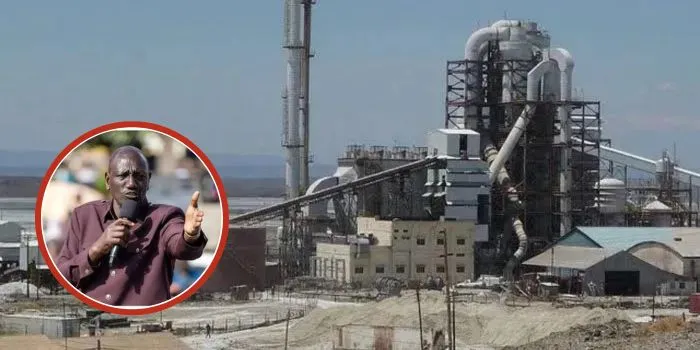
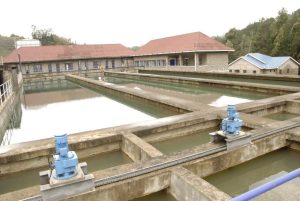
The controversial shutdown of Tata Chemicals Magadi Limited is beginning to expose a potentially serious threat to Kenya’s water supply, with Nairobi City Water and Sewerage Company (NCWSC) announcing a major shutdown of the Sasumua Water Treatment Plant amid a growing shortage of soda ash.
NCWSC scheduled the shutdown that begun yesterday, Friday, September 11, 6am to 8am today, September 12, 2026 officially citing emergency repair works along the Sasumua-Kabete pipeline.
Among the major institutions and facilities affected by the water supply disruption include the University of Nairobi, Kenyatta National Hospital, KEMRI, Coptic Hospital, Daystar University, UNEP, the US Embassy, JKIA, SGR facilities, Athi River EPZ, Kenya Breweries and numerous residential estates and industries.
However, water sector insiders told The Informer Media Group that the disruption comes against the backdrop of an emerging shortage of soda ash—the critical chemical used in the treatment of municipal water—following the suspension of operations at Tata Chemicals Magadi Limited (TCML).
Although the Nairobi City Water and Sewerage Company (NCWSC) associated the major shutdown of the Sasumua Water Treatment Plant citing emergency repair works along the Sasumua-Kabete pipeline, water sector insiders told The Informer Media Group that the disruption comes against the backdrop of an emerging shortage of soda ash—the critical chemical used in the treatment of municipal water—following the suspension of operations at Tata Chemicals Magadi Limited (TCML) following Ruto’s “pack and leave” order.
The development has raised concerns that a prolonged closure of the Magadi plant could disrupt water treatment operations in Nairobi and across the country, while simultaneously hitting industries that depend on soda ash as a key raw material.
On Friday last week, September 4, 2026, while in Kajiado, President William Ruto directed Tata Chemicals to leave the country, saying the Indian company failed to generate any economic impact in one of Kenya’s most important export sectors.
Tata Chemicals produces soda ash from Lake Magadi that is used in the manufacture of glass, soaps and detergents. Kenya’s exports of soda ash came to 254,779 tons, valued at $56.9 million, in the year to July 2025, according to government data. The company should “pack and leave” in place of a new investor, Ruto said at a public rally.
“The company should pack and leave,” Ruto said at a public rally on Thursday, adding that the government would bring in a new investor.
Ruto said soda ash from Lake Magadi could help transform Kenya’s economy, but accused the company of failing to make significant investments in Kajiado County, where the lake is located.
“They have not built any factory or employed people,” Ruto said.
“I told them to pack and leave. They have been taking our resources and shipping them to India. We will bring a new company, and the condition is that they must build a glass factory here,” President Ruto added.
TCML, Kenya’s only domestic manufacturer of natural soda ash, was ordered to suspend all mining operations on July 29, 2026, by Mining, Blue Economy and Maritime Affairs Cabinet Secretary Hassan Ali Joho until it complies with the Mining Act, its regulations and other applicable laws.
The shutdown followed what has been described as a contested “pack and leave” presidential directive by President William Ruto.
A senior water engineer, who requested anonymity, said TCML produces soda ash with up to 97 per cent purity, making it suitable for water treatment.
“If the plant closes down, Nairobi City Water and Sewerage Company will have to source soda ash from outside Kenya, creating a significant supply risk, especially given the ongoing disruptions in international shipping and global supply chains,” the engineer said.
Soda ash is used by water treatment plants to correct and neutralise pH levels during the purification process.
The engineer said demand from water and sanitation companies across the counties was substantial, although Nairobi alone consumed roughly twice the quantity used by treatment plants elsewhere in the country.
In an earlier interview with us, Nairobi County Chief Officer for Water and Sewerage Oscar Omoke confirmed the emerging challenge, saying the closure would affect water production operations.
“It will affect water production operations in Nairobi City. We are now being forced to seek soda ash from outside the country,” Omoke said.
He, however, said the county was working to ensure that water quality and the cost of water to residents remained stable.
The repercussions are also being felt in manufacturing, where soda ash is used in glass and bottle production, threatening supply chains serving the beverage, alcohol and pharmaceutical industries.
Meanwhile, the government appears to have softened its approach to the Magadi dispute.
Joho said on Tuesday, September 8, that the Ministry had established a high-level technical committee following a “fruitful engagement” with TCML executives over the compliance concerns.
The committee will be chaired by Mining Principal Secretary Harry Kimtai, representing the Government, and the TCML chief executive officer on behalf of the company.
It will review outstanding issues and submit a report to the CS for further direction.

Among the matters to be examined are mineral beneficiation and in-country value addition, outstanding community benefits and royalty obligations, and unresolved land matters.
“The committee will undertake a detailed technical review of the outstanding and unresolved compliance matters, prepare and submit a report to my office for consideration and further direction,” Joho said.
The water crisis fears come as NCWSC warns residents across large parts of Nairobi to store sufficient water ahead of the Sasumua shutdown.
The affected areas include Westlands, Lavington, Kileleshwa, Kilimani, Hurlingham, Upper Hill, Dagoretti, Kawangware, Waithaka, Uthiru, Mutuini, Gatina, Kibera, Langata, Nairobi West, Madaraka, Karen, South B, South C, the CBD, the Airport corridor, Ngara, Gigiri, Eastlands, Mathare, Huruma and the Industrial Area.
NCWSC has appealed to customers in the affected areas to use available water sparingly, saying, “Every effort will be made to restore supply as quickly and safely as possible.”