Kenya’s global standing in peril as Ruto’s diplomatic gaffes persists
In May, President Ruto received a rebuke from his Tanzanian counterpart Samia Suluhu after he announced that Nigerian billionaire Ali Dangote plans to build an oil refinery in Tanga, which she said she was not aware of.

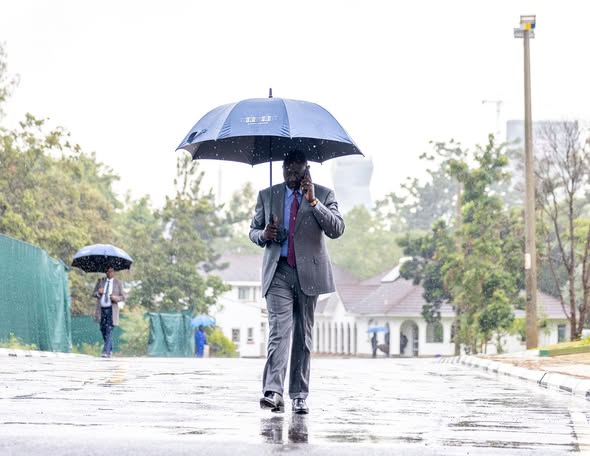
Since he came to power in 2022, President William Ruto has made several diplomatic gaffes that have left the country in a dilemma over how to navigate them, the latest being his order to expel foreign national engage in small scale trading, including hawking.
Critics warn it could expose Kenyan nationals doing business in neighbouring countries to revenge and harassment.
The order issued on Thursday, September 3, 2026 saw hundreds of Burundians jam their embassy in Nairobi seeking regularisation of their travel papers amid plans to return home even as some said they did not have fare with government officials left scrambling as they sought to contain the panic that ensued.
While there has been concern among Kenyans over the high number of foreigners engaged in hawking goods such as boiled eggs and roast maize and other small businesses such as barber shops and salons, the manner in which the edict requiring them to leave the country was seen as haste as there was no well thought out plan on how it was to be implemented exposing them to xenophobic attacks and harassment by law enforcement agencies.
According to critics, what the government needed to do was to ensure that the foreigners complied with Kenyan immigration, licensing, labour, tax, and registration laws while respecting the East African Community (EAC) Treaty and Common Market Protocol, which allows citizens from other partner states to, among others, move freely, set up and manage self-employed economic activities in other partner states.
State House later announced the very same requirements while giving the foreign traders 90 days to comply but not after Burundi warned the move could escalate and affect Kenyans working in the country.
Earlier, Ruto had caused another stir after he confirmed that the government had ordered Tata Chemicals, the world’s third-largest producer of soda ash (sodium carbonate), which factories use to make glass and detergents, to cease operations and leave the country accusing it of not adding much value to Kenyans save for services such as health despite operating for more than 100 years.
He announced that the government will advertise soda ash mining in Magadi and award the tender to up to five companies thus ending the Indian multinational’s monopoly.
However, Mining Cabinet Secretary Hassan Joho later announced they will engage Tata Chemicals in talks before charting the way forward.
The tussle had threatened to sever Kenya’s relations with India and the country’s reputation as an friendly investment destination for foreign companies.
The first diplomatic gaffe happened during Ruto’s swearing on September 13, 2024 when President Ruto hosted Sahrawi Arab Democratic Republic (SADR) President Brahim Ghali in Nairobi to Morocco’s chagrin.
While the African Union recognises SADR as an independent state, Morocco continues to reject its sovereignty.
A day after Ruto hosted Ghali at State House Nairobi, Moroccan Foreign Minister Nasser Bourita sought audience with him after which he tweeted that Kenya was rescinding its recognition of SADR and winding down its presence in Nairobi.
Hours later, however, it was deleted from his verified X account. The Foreign Affairs ministry later clarified that Kenya maintains its diplomatic recognition of SADR in alignment with AU policy.
Before Kenya’s retreat towards its traditional police, the move to appear to be leaning towards Morocco nevertheless strained regional ties.
In May, President Ruto received a rebuke from his Tanzanian counterpart Samia Suluhu after he announced that Nigerian billionaire Ali Dangote plans to build an oil refinery in Tanga, which she said she was not aware of.
“We’re going to have a joint refinery in Tanga to benefit all of us because that refinery is going to take on board the oil from DRC, the oil from Kenya, the oil from South Sudan, and the oil from Uganda,” the president said during an infrastructure financing conference in Nairobi at which Dangote was in attendance.
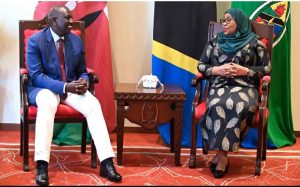
However, Suluhu pushed back against the plan when Ruto made a State visit to Tanzania, forcing his to clarify on the proposal before settling for Mombasa as the alternative location.
“While we were speaking inside, I pressed Ruto and asked him: you went ahead and announced a refinery in Tanga—why was I not aware? He will explain himself why he made that announcement,” she said during a joint press conference.
In April, while addressing Kenyans living in Italy, Ruto caused a storm on social media when he said that listening to a Nigerian speak English can be difficult to understand even though it is English as he praised Kenya’s education system.
He later defended himself stating that his original remarks part of a private, informal conversation with citizens that was leaked and misrepresented and went on to describe Nigerian English as excellent while referring to Nigerians as “in laws.”
On January 27, Ruto held a telephone conversation with French President Emmanuel Macron during which he sought support to end the conflict in Eastern Democratic Republic of the Congo, which did not go down well with countries such as Rwanda, which has had frosty relations with Paris since the 1994 genocide.
Critics argued that the move overlooked this and other sensitivities and inflamed tensions, contributing to localised protests and diplomatic fallout.
Observers have also noted sudden shifts in foreign policy positions, such as early statements on the Israel-Gaza conflict expressing solidarity for the former.
Muslim leaders, including groups from the Jamia Mosque and Supreme Council of Kenya Muslims (SUPKEM), further criticised his administration for failing to cut diplomatic ties with Israel as they asked the government to expel the Israeli ambassador to Kenya.
Critics have also noted fluctuating voting patterns at United Nations forums regarding Palestinian status requests, which they say project an image of an inconsistent foreign policy.
The President has also been censured for his heavy reliance on shuttle diplomacy and dozens of expensive foreign trips even as Kenyans continue to reel under a high cost of living, high taxation and a ballooning debt.