You’re foolish, Ruto tell governors alleging coercion into signing medical equipment leasing deal


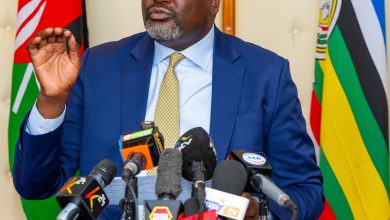
President William Ruto has today waded in into the controversial new medical equipment leasing deal by the Ministry of Health (MoH) to county governments under the National Equipment Services Program (NESP) launching a scathing attack against governors opposed to the new scheme and termed those alleging coercion into signing the contracts as “foolish”.
However, even as president Ruto said the deal is above board, the identity of the suppliers whom he said are seven in number and the costings alongside the procurement process remains a closely guarded secret by the Ministry of Health.
NESP is a successor to the contentious Medical Equipment Services (MES) that was implemented in the first devolved county governments.
An apparently agitated president took a swipe on Nyeri governor Mutahi Kahiga who also doubles as the Council of Governors (CoG) Vice Chairperson who had told the Public Accounts Committee (PAC) that county officials were kept in the dark about the National Equipment Service Project (NESP) that only fools can be forced into signing contracts.
“Nobody forced them to sign any contract. You have to be a fool to be forced to sign something and you actually sign it.” President Ruto said.
The President assured the public that under his leadership, fraudulent activities in the health sector would not be tolerated.
“I will look Kenyans in the eye and tell them that there will be no corruption in the health sector as long as I’m in charge…There will be no fraud. We have costed the equipment, we have costed the medicine, there was a procurement process between the counties and the Ministry of Health. There is no obligation for any county to get equipment from any suppliers.” Ruto added.
The President made the remarks during the official opening of the Kilifi International Investment Conference in Vipingo, Kilifi county earlier today.

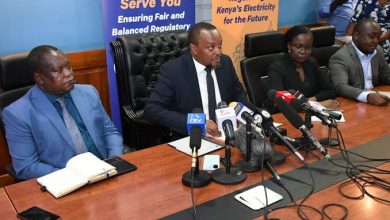
Hell broke loose early this week when governor Kahiga spilt the beans about the controversial medical equipment deal when he appeared before the Senator Moses Kajwang led PAC committee saying county governments were left with little choice but to sign the contracts, despite being kept in the dark about crucial details, including the identities of the suppliers.
Kahiga described the situation as a “desperate move” due to the failure of the previous Medical Equipment Service (MES) project, which saw billions of shillings lost on faulty equipment.
Kahiga explained that counties were left with no choice but to agree, citing financial constraints that made it impossible for them to purchase the required medical equipment.
“We had no option but to sign the deal. Counties do not have the funds to buy this equipment,” Kahiga told the committee
“We did not procure the machines, it’s the Ministry of Health that did the procurement. They even put out advertisements in the newspapers. We were not involved.” He added.
Kahiga further explained that counties were asked to select from 23 lots of equipment needed for local hospitals, but it was only after making these selections that they learned which companies would be providing the machines.
Under the arrangement, the counties will get the medical equipment under the Fee-For-Service (FFS) model that allows vendors to supply, maintain, and upgrade state-of-the-art equipment at no cost to county health facilities.
The contractors will be paid for services under gazetted Social Health Authority (SHA) tariffs.
The MoH and the CoG chair further clarified that onboarding the NESP is not mandatory but insisted that the model now employed will foster transparency, efficiency, and sustainability.
“I want to assure the country that the challenges of fraud and corruption that bedevilled the NHIF will never be part of our universal healthcare plan as long as I am in charge,” Ruto insisted.
Hours after the statement was issued, the Chair of the Council of Governors appeared to break ranks with the ministry, insisting that health remained devolved and counties did not need the national government’s interference.
The program ran into headwinds with counties claiming that the equipment delivered was dysfunctional and not serviced properly, costing the country billions of shillings with little returns on the investment.