When school fires kill: Why Kenya must finally hold education leaders accountable

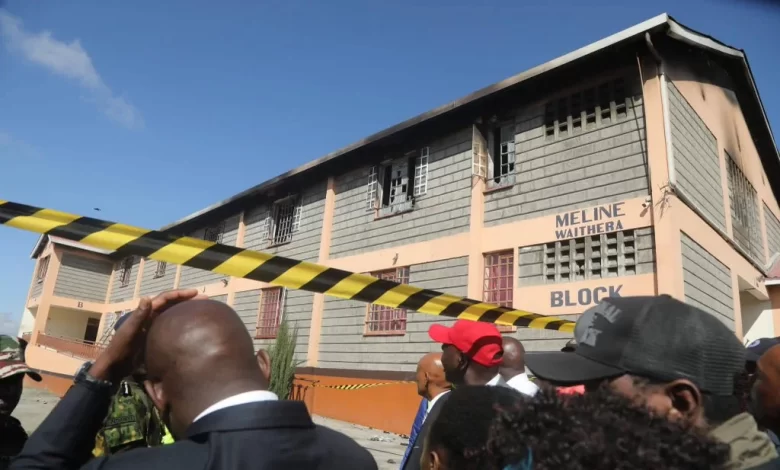
The closure of Utumishi Girls Academy in Gilgil following a dormitory fire that claimed 16 lives is yet another painful entry in our country’s long and unresolved history of school tragedies.
Each time a disaster strikes, the country mourns, leaders issue statements of condolence, commissions of inquiry are promised, and then—too often—life moves on without meaningful accountability. This cycle has become dangerously familiar.
From the devastating fire at Kyanguli Secondary School in 2001 that killed 67 students, to the tragedies at Asumbi Girls Boarding Primary School in 2012, and more recently incidents such as those at Nyeri and Nyeri-based institutions over the years, the pattern is unmistakable: preventable loss of young lives followed by limited consequences for those responsible for safety oversight.
The latest incident at Utumishi Girls Academy has once again exposed systemic weaknesses in school safety enforcement, emergency preparedness, and institutional accountability.
Initial reports suggesting possible arson only deepen the urgency of the matter, but whether accidental or intentional, the central question remains unchanged: how do students continue to die in locked dormitories, in buildings without effective escape routes, and under supervision structures that fail in moments of crisis?
It is no longer enough to treat these events as isolated tragedies. They are symptoms of governance failure.
The responsibility for this crisis cannot be placed solely on students or abstract “unknown causes.”
Cabinet Secretary in charge of Education Migos Ogamba must bear institutional responsibility for ensuring that safety regulations are not only written but enforced.
Policies on dormitory design, fire exits, staffing ratios, emergency drills, and inspection regimes exist on paper. The problem is compliance, enforcement, and political will.
When a child dies in a school fire, it is not just the school administration that should be questioned.
The entire chain of oversight—from school heads to county education officials and the national ministry—must be held to account.
School principals and boards of management who fail to implement basic fire safety measures, or who ignore known risks such as blocked exits, overcrowding, or lack of fire extinguishers, should face consequences beyond internal disciplinary processes against the facilitation accorded to them.
Kenya cannot continue treating school heads as symbolic custodians without enforceable liability.
Leadership in educational institutions carries a duty of care that must be legally binding. When negligence contributes to loss of life, administrative sanctions are not enough; criminal accountability should be considered where evidence supports it.
The recurrence of such tragedies also raises uncomfortable questions about inspection and regulation.
How often are school dormitories inspected for compliance? When violations are found, are schools closed until corrections are made, or are warnings quietly issued with no follow-up? These are not technical questions—they are matters of life and death.
The history is damning.
At Bombolulu Girls Secondary School in 1998, overcrowding and locked exits contributed to the deaths of 26 girls.
At St. Kizito Secondary School in 1991, broader institutional failure and insecurity resulted in the loss of 19 students.
At Kyanguli Secondary School, arson by students still points to unresolved issues of discipline, grievance handling, and dormitory supervision. These are not ancient memories—they are warnings that have been repeatedly ignored.
The continued repetition of such disasters suggests that lessons are acknowledged in speeches but not embedded in systems.
Kenya’s education leadership must move beyond reactive crisis management to proactive enforcement. Every school must meet minimum safety standards, and those standards must be independently verified and publicly reported.
There is also a moral dimension that cannot be ignored. Parents entrust schools with their children not only for education but for protection.
That trust is broken every time a preventable fire occurs. Accountability, therefore, is not merely administrative—it is ethical.
Cabinet Secretaries cannot be reduced to commentators during crises. They are custodians of national systems whose failures have real human consequences. Likewise, school heads cannot escape responsibility by attributing disasters to fate or unforeseeable events when negligence is evident.
What Kenya needs now is a hard reset on accountability. Mandatory fire audits, publicly available compliance reports, strict enforcement of dormitory safety standards, and clear legal consequences for negligence must become non-negotiable. Schools that fail inspections should be closed until compliance is achieved, not given grace periods that endanger lives.
The loss of 16 students at Utumishi Girls Academy must not be absorbed into the long list of national tragedies that fade without reform. It must become the moment when responsibility finally had consequences.
Because until accountability is enforced at the highest levels of education governance and school management, Kenya will continue mourning the same tragedy in different places, with different names—but the same unbearable outcome.