Wajir Ebola scare: Second suspected case as UK issue Kenya travel alert
The man, a resident of Habaswein in Wajir South Sub-County, was isolated after developing fever, headache and cough following recent travel through the Democratic Republic of Congo (DRC), Uganda and several parts of Kenya.

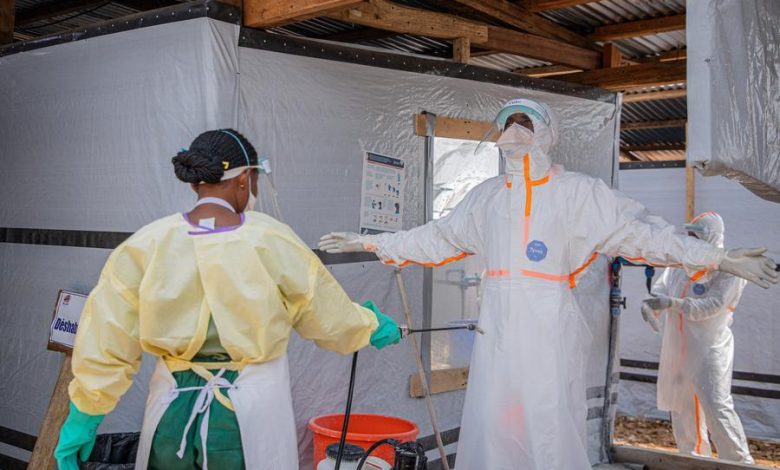
Kenya faces a fresh Ebola scare after health authorities isolated a 20-year-old man in Wajir over suspected viral haemorrhagic fever, hours after the UK issued a travel advisory following confirmation of the country’s first imported Bundibugyo Ebola case.
The man, a resident of Habaswein in Wajir South Sub-County, was isolated after developing fever, headache and cough following recent travel through the Democratic Republic of Congo (DRC), Uganda and several parts of Kenya.
He is currently admitted at Albadar Nursing Home, where health officials are monitoring him as samples are prepared for testing at the National Public Health Virology Laboratory (NPHVL).
The suspected case has heightened concern in Wajir, coming just a day after the Ministry of Health confirmed Kenya’s first imported case of Bundibugyo Ebola.
According to a police report, the man arrived in Habaswein on September 20 after travelling by trailer from the DRC through Uganda.
He told health officials that he developed fever and headache while in the DRC on September 2, where he worked as a “tan boy” on a cargo truck or trailer.
He remained in Uganda for about five days and sought medical treatment before travelling through Malaba, Nairobi and Isiolo to Habaswein.
On arrival, he was initially treated at Hilac Medical Clinic for pneumonia and septicaemia for about three days, but his condition failed to respond to treatment.
He was subsequently found to have severe anaemia, with a haemoglobin level of 4 g/dL, prompting disease surveillance officials to raise concern over possible viral haemorrhagic fever.
The case was reported at Habaswein Police Station as health authorities moved to isolate the patient and begin investigations.
The development comes as the UK Foreign, Commonwealth and Development Office (FCDO) updated its travel advice for Kenya following confirmation of the first imported Bundibugyo Ebola case.
The UK advisory, issued on October 7, urged travellers to follow guidance from Kenyan health authorities and monitor updates from the Ministry of Health.
“On 6 October 2026, the Kenyan Ministry of Health confirmed its first imported case of Ebola,” the advisory said.
The UK said Kenya was implementing contact tracing, surveillance, border screening and quarantine arrangements for people considered to have been at risk.
It also warned that travellers arriving in Kenya, particularly those from Uganda, Ethiopia and the DRC, could face enhanced health screening because of the regional Ebola situation.
Kenya’s first confirmed case involved a Kenyan citizen who had been living in the DRC and travelled by road to Kampala before flying to Nairobi on October 3, 2026.
He was admitted to Nairobi Hospital, isolated and subsequently tested positive for Bundibugyo Ebola. He later died and was buried.
The Ministry of Health has since intensified contact tracing, with Public Health Principal Secretary Mary Muthoni saying 57 contacts had been traced and 10 placed in quarantine.
Authorities are also tracing passengers and crew members who travelled on the same flight as the deceased patient.
The World Health Organisation said Kenya notified it of the imported case on October 6 in line with the International Health Regulations.
Kenya is the fourth country to report a case linked to the current Bundibugyo Ebola situation in the region.
Health Cabinet Secretary Aden Duale has urged Kenyans not to panic, saying the government has response systems in place.
The ministry has advised the public to wash hands frequently, use alcohol-based hand rubs, avoid close contact with sick people arriving from countries reporting active Ebola transmission and seek immediate medical attention after possible exposure.