US order to destroy contraceptives worth Sh12.53 billion to affect 108,000 women in Kenya
Funding freeze has already caused stockouts, leaving facilities with less than five months’ supply instead of the required 15 month

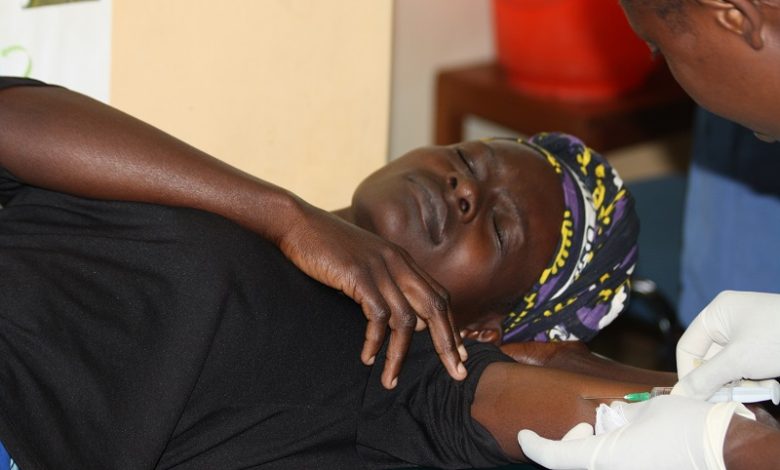
Up to 108,000 women will not have access to contraceptive implants following an order by US President Donald Trump’s administration for the destruction of over Sh12.53 billion (US$9.7 million) worth of US-funded contraceptives which are set to be incinerated in France.
Seventy-seven percent of these essential supplies were earmarked for five countries in the Africa Region, the other affected countries being the Democratic Republic of the Congo (DRC), Tanzania, Zambia, and Mali — many of which are already facing severe humanitarian crises.
According to the International Planned Parenthood Federation (IPPF), the incineration of these contraceptives will deny more than 1.4 million women and girls access to life-saving care. Rather than reaching the communities who need them most, these essential medical supplies – many of which don’t expire until 2027 to 2029 – are being needlessly and egregiously destroyed.
Its member associations in the affected countries were due to receive a share of these contraceptive stocks. Instead, they are now facing a sharp decline in supply following the decision to incinerate them.
They will, however, now face increased challenges to deliver essential and life-saving care. According to RHSC*, the loss of these supplies is projected to result in 174,000 unintended pregnancies and 56,000 unsafe abortions.
“In Kenya, the effects of US funding disruptions are already being felt. The funding freeze has caused stockouts of contraceptives, leaving facilities with less than five months’ supply instead of the required 15 months; reduced capacity building for health workers; disrupted digital logistics and health information systems, and caused a 46 per cent funding gap in Kenya’s national family planning programme,” said Nelly Munyasia, Executive Director for the Reproductive Health Network in Kenya.
“These systemic setbacks come at a time when unmet need for contraception remains high. Nearly one in five girls aged 15–19 is already pregnant or has given birth. Unsafe abortions remain among the five leading causes of maternal deaths in Kenya.”
According to IPPF, more than 40 per cent of the total value of the contraceptive stockpiled in Brussels was allocated for shipment to Tanzania alone.
The country will not get 1,031,400 injectable contraceptives and 365,100 implants for distribution, representing over 50 per cent of USAID annual support to Tanzania’s health system and a terrifying 28 per cent of the total annual need of the country.
Dr Bakari Omary, Project Coordinator at UMATI, IPPF’s Member Association in Tanzania, said: “We are facing a major challenge. The impact of the USAID funding cuts has already significantly affected the provision of sexual and reproductive health services in Tanzania – leading to a shortage of contraceptive commodities, especially implants. This shortage has directly impacted clients’ choices regarding family planning uptake.”
In Mali, 1,100,880 oral contraceptives and 95,800 implants will be denied, representing 24 per cent of the country’s annual need while in Zambia, 48,400 implants and 295,000 injectable contraceptives will be denied to women.
IPPF said the development adds a new layer of outrage to what is already a cruel political decision. These contraceptives were already manufactured, packaged, and ready for distribution, adding that it offered to take them for redistribution at no cost to the US taxpayer, but this offer was declined.
It termed the actions of the US administration make it clear that politics trump economics, given the additional costs necessary for transportation, storage, and incineration of these products.
“This decision to destroy ready-to-use commodities is appalling and extremely wasteful. These life-saving medical supplies were destined to countries where access to reproductive care is already limited, and in some cases, part of a broader humanitarian response, such as in the DRC. The choice to incinerate them is unjustifiable and undermines efforts to protect the health and rights of women and girls,” said Marie-Evelyne Petrus-Barry, Africa Regional Director of IPPF.
“We will not stay silent while essential care is destroyed by ideology,” she added.
Sarah Durocher, President of Le Planning familial (IPPF’s French Member Association), said: “We call on the French government to take responsibility and act urgently to prevent the destruction of USAID-funded contraceptives. It is unacceptable that France, a country that champions feminist diplomacy, has remained silent while others, like Belgium, have stepped in to engage with the US government. In the face of this injustice, solidarity with the people who were counting on these life-saving supplies is not optional: it is a moral imperative.”