U.S. military action against Venezuela amounts to violation of International Law, Guterres warn
Maduro is facing charges of narco-terrorism, conspiracy, drug trafficking and money laundering among others.

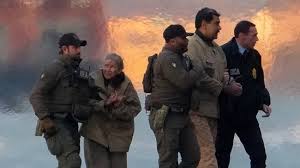
The United Nations (UN) Secretary-General Antonio Guterres has voiced deep concern over the lack of respect for international law in the U.S. military action against Venezuela over the weekend.
Guterres emphasised that the UN Charter enshrines the prohibition of the threat or use of force against the territorial integrity or political independence of any state, the UN chief added.
“I remain deeply concerned that rules of international law have not been respected with regard to the Jan. 3 military action,” said Guterres in a statement to the Security Council, read on his behalf by Under-Secretary-General for Political Affairs Rosemary DiCarlo.
US forces took Venezuelan President Nicolás Maduro and his wife Cilia Flores from a compound in Caracas.
Yesterday, barely 48 hours after their unceremonious capture, Venezuelan leader stood in a New York court and pleaded not guilty to conspiracy charges brought by the US government.
Maduro is facing charges of narco-terrorism, conspiracy, drug trafficking and money laundering among others.
The US Congress and world leaders have condemned Donald Trump’s military incursion and seizure of a sitting president of a foreign country as flagrant breach of the international law, violation of sovereignty and territorial integrity of a foreign state.
“The maintenance of international peace and security depends on the continued commitment of all (UN) member states to adhere to all the provisions of the charter,” said Guterres.
The UN chief also expressed deep concern about the possible intensification of instability in Venezuela, the potential impact on the region, and the precedent that the U.S. military action on Venezuela may set for how relations between and among states are conducted.
He called on all Venezuelan actors to engage in an inclusive, democratic dialogue in which all sectors of society can determine their future, and urged Venezuela’s neighbors, and the international community more broadly, to act in a spirit of solidarity and in adherence to the principles, laws and rules erected to promote peaceful coexistence.
“In situations as confused and complex as the one we now face, it is important to stick to principles. Respect for the UN Charter and all other applicable legal frameworks to safeguard peace and security. Respect for the principles of sovereignty, political independence and territorial integrity of States. The prohibition of the threat or use of force,” the UN chief said.
The power of the law must prevail, said Guterres, adding that international law contains tools to address issues such as illicit traffic in narcotics, disputes about resources and human rights concerns. “This is the route we need to take,” he said.
As the world grapples with the highly unusual military seizure by the US of another world leader, the criminal case against Maduro will work through the justice system much like any other filed in New York, based upon the evidence and US law.
Prosecutors in their charging document alleged Maduro, his wife and son and their accomplices engaged in a cocaine-trafficking conspiracy and partnered with cartels designated as terrorist groups.
They said the accused “abused their positions of public trust and corrupted once-legitimate institutions to import tons of cocaine into the United States”.
Maduro has previously called such charges a tool to further “imperial” plans for getting access to Venezuela’s rich oil reserves.
While in the US court yesterday, Maduro lawyer suggested he should be immune from prosecution as the leader of a sovereign country and that the US taking him by force is illegal.
As he left court, Maduro said in Spanish that he is a “kidnapped president” and a “prisoner of war”.
His wife, Cilia Flores, was in good spirits, according to a statement from her attorney, Mark E Donnelly, that added “we look forward to reviewing and challenging the evidence the government has”. She also pleaded not guilty.
In the 25-page indictment, US prosecutors laid out a case that allegedly began in 1999, when Maduro was first elected to public office, saying he, Flores, his son Nicolás Ernesto Maduro Guerra, and three others participated in a “relentless campaign of cocaine trafficking”.
The current and former interior ministers for Venezuela who oversaw the country’s police forces – Diosdado Cabello Rondón and Ramon Rodriguez Chacin – have also been charged, as has Hector Rusthenford Guerrero Flores, an alleged gang leader of Tren de Aragua.
The US is offering rewards for information leading to the arrests of Cabello Rondón and Guerrero Flores, who was charged in New York in December with racketeering, drug importation and other crimes.
After the US raid, Cabello Rondón appeared on television in Venezuela urging residents to “trust in our leadership, trust in our military and political leaders during the situation we are facing.”
Altogether, the six people face four counts, including engaging in a narco-conspiracy with designated terrorist groups, conspiring to traffic cocaine into the US, and possessing and using illegal weapons – primarily machine guns – to carry out the alleged conspiracy.
The indictment accuses them of working with the Farc, or Revolutionary Armed Forces of Colombia, the Sinaloa and Zetas cartels, and Tren de Aragua. The US government designated them all terrorist groups in February 2025.
Prosecutors allege the accused provided “law enforcement cover and logistical support” for drug shipments through Venezuela, knowing they were headed for the US.
Before becoming president, the US government says, Maduro provided passports to drug traffickers and “facilitated diplomatic cover for planes used by money launderers to repatriate drug proceeds from Mexico to Venezuela”.
After taking office in 2013, he allegedly allowed the drug trade to “flourish for his own benefit, for the benefit of members of his ruling regime, and for the benefit of his family members”.
Prosecutors allege his wife, who was leader of Venezuela’s National Assembly, accepted hundreds of thousands of dollars in bribes, including as kickbacks for safe passage of drug shipments, as well.