Trump signals dialogue with Iran amid threat of New US military strikes

By Washington Correspondent
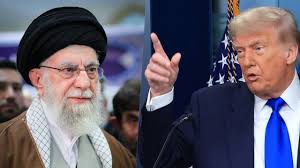
US President Donald Trump has confirmed that Washington has opened dialogue with Iran even as it weighs fresh military options against the Islamic Republic, amid escalating tensions over Iran’s nuclear programme and a brutal crackdown on nationwide protests.
Speaking to reporters on Friday, Trump acknowledged both past and planned conversations with Tehran, while simultaneously warning that significant US naval power is being deployed to the region.
He said a “massive armada,” led by the aircraft carrier USS Abraham Lincoln, was heading toward Iran, adding that he hoped such force would not have to be used. “Time is running out,” Trump warned, underlining the urgency of Washington’s demands.
The remarks came as The New York Times reported that Trump has been presented with additional military options, including potential raids by US commandos on Iranian nuclear facilities that were not destroyed during the 12-day conflict in June, when the US and Israel jointly targeted Iran’s nuclear infrastructure. According to the report, Trump has not yet decided whether to authorise such attacks.
Trump has tied the threat of military action to two key demands: that Iran abandon its nuclear ambitions and halt the killing of protesters. Rights groups say thousands have been killed in the regime’s violent suppression of mass anti-government demonstrations, with some estimates placing the death toll in the tens of thousands.
Trump said he had conveyed to Iranian leaders that “no nuclear” weapons and an end to the repression of civilians were non-negotiable conditions for avoiding US strikes.
Beyond nuclear sites, the US president has also been briefed on more aggressive scenarios, including targeted strikes against Iran’s leadership aimed at weakening or toppling Supreme Leader Ayatollah Ali Khamenei.
However, US officials cautioned that it remains unclear who would govern Iran in the event of regime destabilisation, or whether any successor authority would pursue improved relations with the West.
Israel is also pushing for deeper military coordination, particularly to target Iran’s ballistic missile programme, which Israeli and US officials say has largely recovered since June’s conflict.
Tel Aviv views Iran’s missile capabilities as an existential threat and is lobbying Washington for a joint operation to permanently degrade them.
The developments mark one of the most volatile moments in US-Iran relations in decades. Trump’s dual approach combining diplomacy with overt military pressure—reflects a high-stakes strategy designed to force rapid concessions from Tehran.
However, the deployment of naval assets and discussion of command raids significantly raise the risk of miscalculation, potentially triggering a wider regional war.
Any US strike on Iranian territory could provoke retaliation against American bases, allies, and shipping lanes in the Middle East, particularly in the Strait of Hormuz, a critical artery for global energy supplies. This would have immediate repercussions for oil markets, global inflation, and fragile economies worldwide.
Politically, targeting Iran’s leadership risks destabilising the country without a clear plan for succession, potentially creating power vacuums similar to those seen in Iraq and Libya. While internal unrest has weakened the regime, external military pressure could also rally nationalist support around hardliners.
For US allies, especially in Europe and the Gulf, the crisis underscores deep divisions over how to manage Iran through coercion, containment, or negotiated reintegration. Meanwhile, Russia and China are likely to exploit the tensions to expand their influence in Tehran and challenge US dominance in the region.
The growing standoff highlights a defining test for Trump’s foreign policy on whether force can compel compliance without igniting a broader conflict whose consequences would reverberate far beyond the Middle East.