Toxic fuel scandal: Waiver allowed contaminated petrol into Kenya market, Senate told

Fresh revelations before Parliament have exposed how a shipment of substandard fuel flagged for excessive sulphur content was allowed into Kenya’s distribution system, blended with existing stocks and released to oil marketers under a controversial government waiver.
The unfolding revelations exposes the gaps in the regulatory oversight, fuel quality control and manipulable decision-making within Kenya’s energy sector despite the far-reaching economic and safety implications the unsafe fuel poses to Kenyans and the environment.
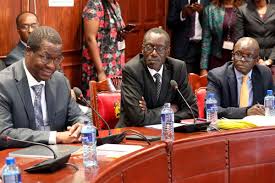
While appearing before the Senate Energy Committee, officials from the Kenya Pipeline Company (KPC) confirmed that the consignment was admitted into the pipeline despite failing mandatory quality tests.
Acting KPC Managing Director Pius Mwendwa told senators that the 60,000-tonne shipment, which arrived aboard MT Paloma on March 27, 2026, recorded sulphur levels of 43 parts per million (ppm), far above the legal limit of 10ppm.
“We received the consignment on March 27, 2026, but after testing it, we realised there were high levels of sulphur,” Mwendwa said.
Despite the failed tests, the fuel was cleared following a directive from the Ministry of Trade.
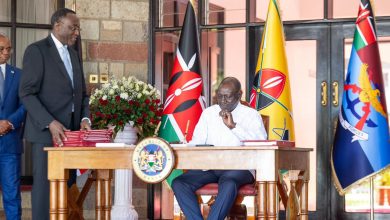
Mwendwa said KPC acted on a formal waiver issued by Trade Cabinet Secretary Lee Kinyanjui.
“We received a waiver letter from the Cabinet Secretary for Trade to allow the consignment into the country and into our systems as per his instructions. The fuel was allowed into the KPC system and later released to oil marketing companies pursuant to the waiver,” he said.
Documents tabled before the committee show the ministry directed that the Premium Motor Spirit onboard MT Paloma be blended with existing fuel stocks to dilute excess sulphur and manganese levels.
The directive further instructed KPC and the Energy and Petroleum Regulatory Authority (EPRA) to jointly oversee distribution of the blended fuel pending arrival of a new consignment.
The disclosures contradict earlier assurances by Energy Cabinet Secretary Opiyo Wandayi, who had indicated that the contaminated fuel would not be released into the local market.
The revelations sparked concern among senators, with Ledama Olekina warning of potential safety risks.
“We are already seeing instances of vehicles burning on our roads… how can we allow this to continue and endanger the lives of Kenyans?” he posed.
Mwendwa, however, maintained that KPC was acting under instruction and that responsibility for disposal or further handling of the fuel lies with the State Department of Petroleum and relevant regulators.
In a parallel development, lawmakers also heard that Oryx Energies Kenya Ltd suffered losses estimated at $25 million (Sh3.2 billion) after an emergency fuel supply contract was abruptly cancelled while shipments were already in transit.
Managing Director Angeline Maangi told the committee that the company had responded to an urgent government request issued on March 19, 2026, to secure fuel supplies amid global disruptions linked to tensions in the Middle East.
“The company acted at the government’s request, under extreme market conditions, and with the sole purpose of supporting Kenya’s energy security,” she said.
Maangi explained that the firm had already committed significant operational resources after receiving approval to supply 60,000 metric tonnes, followed by an additional 36,000 tonnes, before the deal was cancelled on March 31.
“The shipment was en route for delivery when the Ministry cancelled the offer. By that time, a binding contractual arrangement had already been established,” she said.
The company rejected the cancellation and urged the government to honour the agreement, warning that such actions could undermine private sector participation during future crises.
Senators questioned the speed and structure of the deal, with Danson Mungatana raising concerns over due diligence, while Boni Khalwale demanded clarity on who would bear the financial loss.
Oryx Energies Kenya Ltd told the Senate that it incurred losses of about Sh3.2 billion ($25 million) after the government abruptly cancelled an emergency fuel supply deal while shipments were already en route to Kenya.
Managing Director Angeline Maangi said the company had responded to an urgent request from the State Department of Petroleum on March 19, 2026, seeking additional Premium Motor Spirit (PMS) to cushion the country against supply disruptions linked to the Middle East crisis.

She noted that the request was communicated directly from the Principal Secretary’s official email, though it was unclear whether other firms were invited to bid.
Oryx submitted its proposal within a tight two-hour window and confirmed its ability to deliver under the proposed terms. By March 25, the Ministry of Energy and Petroleum had accepted the company’s offer to supply 60,000 metric tonnes, later approving an additional 36,000 tonnes two days later.
However, the arrangement was cancelled on March 31, 2026 just as shipments were already underway.
“By that time, a binding contractual arrangement had already been established,” Maangi told the Senate committee, adding that the company had already committed significant operational resources.
Oryx defended its pricing, noting that its quoted premium reflected global supply disruptions, including reduced tanker availability, higher insurance costs and longer shipping routes around the Cape of Good Hope.
Meanwhile, the committee also reviewed a separate case involving One Petroleum, whose shipment aboard MT Paloma formed part of the disputed consignment.
The firm maintained it had taken steps to ensure the cargo does not enter the Kenyan market following directives from the Ministry of Energy.