Thousands miss dream courses as KUCCPS placement exposes degree rush
KUCCPS data shows that the Bachelor of Medicine and Bachelor of Surgery (MBChB) programme attracted more than 6,500 applications for only 702 available places across public and private universities, meaning nearly 5,800 qualified applicants were unsuccessful.

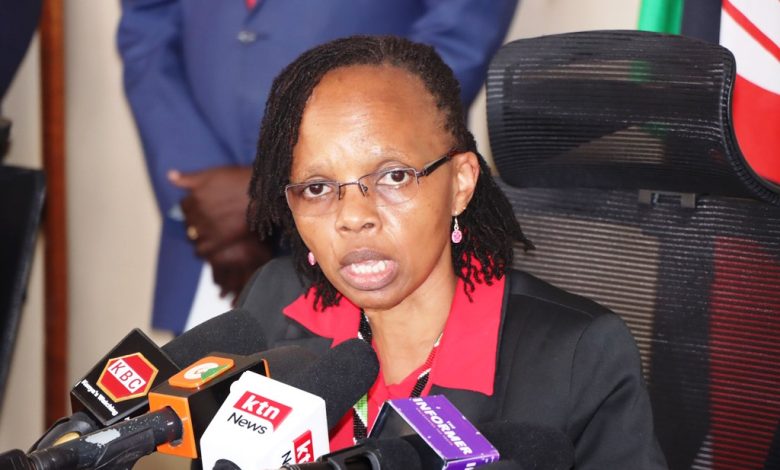
Thousands of students who qualified for university admission have missed out on their preferred degree programmes after the Kenya Universities and Colleges Central Placement Service (KUCCPS) released the 2026/2027 placement results, exposing intense competition for highly sought-after professional courses and a growing shift in students’ career choices.
Education Cabinet Secretary Julius Ogamba announced that KUCCPS placed 293,869 students in universities and tertiary institutions, including 202,133 admitted to degree programmes, 28,246 to the Kenya Medical Training College (KMTC), 765 to Kenya Utalii College, 875 to Secondary Teacher Training Colleges and 500 to the Kenya School of Law.
The degree placements were drawn from 270,508 candidates who attained the minimum university entry grade of C+ in the 2025 KCSE examination.
However, 51,835 students who qualified for university admission did not apply through KUCCPS at all.
KUCCPS Chief Executive Officer Agnes Wahome said many of the students deliberately pursued alternative education and career paths instead of seeking government placement.
“When we look at how the students applied, those who had straight A’s, 96.3 per cent, applied. Some have gone abroad, some have joined the military, while others are joining universities as self-sponsored students in both our public and our private universities,” Wahome said.
The placement exercise also highlighted the extraordinary demand for a handful of prestigious degree programmes, particularly Medicine, Engineering and Computer Science, leaving thousands of qualified applicants disappointed despite meeting the academic requirements.
Medicine remained Kenya’s most competitive university course.
KUCCPS data shows that the Bachelor of Medicine and Bachelor of Surgery (MBChB) programme attracted more than 6,500 applications for only 702 available places across public and private universities, meaning nearly 5,800 qualified applicants were unsuccessful.
Other health-related programmes also attracted overwhelming demand. Pharmacy received more than 2,600 applications for fewer than 600 slots, while Bachelor of Dental Surgery, Nursing, Clinical Medicine and other health sciences similarly recorded application numbers far exceeding available capacity.
Engineering, Computer Science, Law and Architecture also ranked among the country’s most sought-after programmes, with competition far outstripping available places.
The mismatch between demand and capacity meant that many top-performing students were placed in their second, third or fourth choices despite scoring excellent grades.
Wahome said placement is determined not only by KCSE performance but also by programme capacity and cluster subject requirements, meaning even candidates with strong grades can miss out when demand exceeds available slots.
The results also reveal changing trends in higher education preferences.
While traditional professional courses continue to dominate students’ aspirations, an increasing number of degree-qualified learners are voluntarily choosing diploma and technical programmes, reflecting changing labour market realities and growing confidence in skills-based education.
KUCCPS noted that there remains sufficient capacity across universities and colleges to accommodate all qualified learners, although places in elite professional programmes remain extremely limited. The agency had earlier opened applications for more than 1.4 million training opportunities across universities, TVET institutions and colleges.
The placement results now shift attention to the next challenge—financing higher education.
Education stakeholders say the record number of university admissions will place President William Ruto’s higher education funding model under renewed scrutiny as thousands of families prepare to meet tuition, accommodation and living expenses.
With public universities continuing to face financial pressures, government scholarships and Higher Education Loans Board (HELB) support are expected to determine whether many of the successfully placed students are ultimately able to take up their university places.