Tanzania polls a sham, AU observer report says

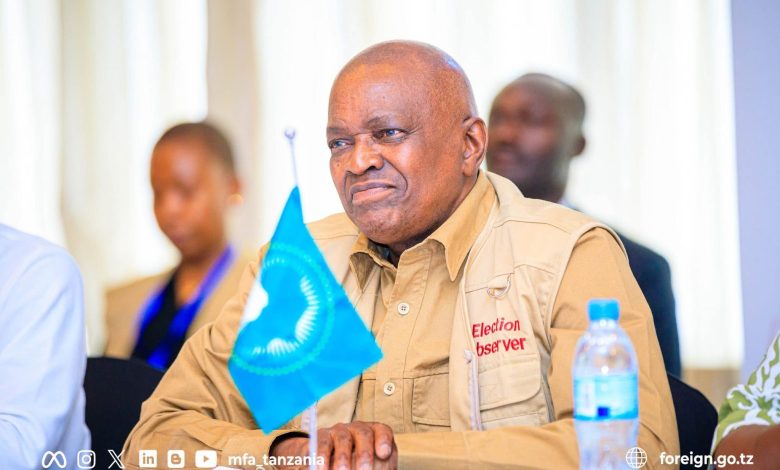
The African Union (AU) Election Observation Mission has indicted the just concluded October 29, 2025 polls that saw President Samia Suluhu Hassan elected by 98 per cent rating as a sham.
In a damning report released this week, the mission said Tanzania failed to comply with AU principles, normative frameworks, and international standards for democratic elections, citing legal, institutional, and procedural shortcomings that undermined the integrity of the process.
In a Preliminary Statement released on Wednesday, November 5, 2025, the AU Mission led by former Botswana President Mokgweetsi Masisi said the electoral environment “before, during, and after” the vote was not conducive to peaceful and credible elections.
And as such, Tanzania’s election did not comply with democratic standards in which President Samia was declared the landslide winner but opponents accused the government of fraud and there were protests over the exclusion of her main challengers.
“At this preliminary stage, the Mission concludes that the 2025 Tanzania General Elections did not comply with AU principles, normative frameworks, and other international obligations and standards for democratic elections,” the mission said.
Observers saw ballot stuffing at several polling stations, with people being issued multiple papers to vote, it said, also noting an absence of political party agents. During counting, some observers were asked to leave stations, it added.
The government says the election was fair and transparent.
Tanzania’s main opposition party CHADEMA, which was barred from participating in the election, says it has documented hundreds of deaths in the protests.
Boniface Mwabukusi, president of the Tanganyika Law Society representing lawyers in mainland Tanzania, said he estimated the death toll at over 1,000 based on reports from local contacts.
Compiling a precise count was difficult, however, because the government was threatening people to prevent them from sharing information, he said.
Hassan, who was sworn back into office on Monday after being credited with 98 per cent of the vote, acknowledged people died, but her government has called the opposition toll hugely exaggerated.
“Tanzania should prioritise electoral and political reforms to address the root causes of its democratic and electoral challenges witnessed ahead of, during, and after last week’s elections,” the AU mission added in its statement.
“The preparedness of the electoral commission and other institutions was inadequate to address the challenges that compromised the integrity of the elections.”
The AU deployed 72 observers across 17 regions of Tanzania and Zanzibar to monitor the October 29 polls, which were marred by opposition boycotts, candidate disqualifications, violence, and a six-day nationwide internet blackout.
The AU also condemned the excessive use of force by police and military units in dispersing post-election protests, which reportedly led to several deaths and property destruction.
The Mission urged the government to address structural weaknesses in its electoral laws, including: the presidential appointment of electoral commissioners without independent oversight; the constitutional prohibition on challenging presidential results in court; the ban on independent candidates; and unequal media and resource access during campaigns.
It further called for a broad-based national dialogue to foster inclusive politics, citizen participation, and credible elections. The AU’s final report, containing detailed findings and recommendations, will be released within two months.
President Samia Suluhu Hassan, declared the winner with 98 percent of the vote, dismissed international criticism as “external interference.”
Speaking at a closed-door inauguration ceremony held under heavy security at a military base in Dodoma, Suluhu praised the National Electoral Commission (NEC) for conducting what she termed a “peaceful, fair, and efficient” election.
“We thank the electoral commission for coordinating and supervising the entire process with unquestionable efficiency,” she said on November 3.
“In this election, we had 17 candidates from various parties. We competed on merit, and all of us showed that politics is not war.”