M23 rebels impose school fees in Eastern DRC, threaten Tshisekedi’s free education policy
For families living in M23-controlled territories, the compulsory fees represent an additional financial burden at a time when many households are already coping with displacement, insecurity and reduced sources of income.

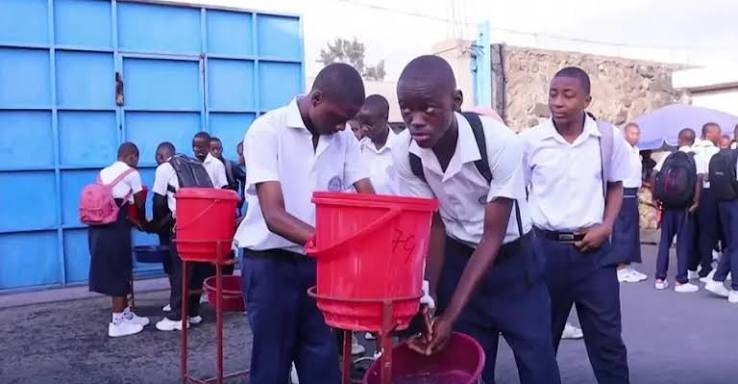
President Félix Tshisekedi’s flagship free primary education programme in the Eastern Democratic Republic of Congo (DRC) has come under renewed threat after the M23 rebel group imposed compulsory school fees in territories under its control in North Kivu.
The move has sparked concern over the impact on poor households already struggling with the effects of prolonged conflict, displacement and loss of livelihoods.
For families living in M23-controlled territories, the compulsory fees represent an additional financial burden at a time when many households are already coping with displacement, insecurity and reduced sources of income.
According to a provincial decree reportedly issued by the AFC/M23 authorities and published by local media, parents in rebel-controlled areas will now be required to pay school fees every term through an account operated by CADECO in the name of the provincial education coordination of the rebel administration.
At primary level, the fees range from 5,000 to 45,000 Congolese francs (CDF) per student per term. At secondary level, charges can rise to 240,000 CDF per term, particularly for students enrolled in technical and vocational programmes.
Reelactu.com, which reported on the decree, said the document requires fees to be paid into the designated CADECO account before school fees can be validated.
The directive also introduces penalties for schools and students who fail to comply.
Heads of educational institutions who do not implement the fee-collection measures may face administrative sanctions, while students whose fees remain unpaid could be expelled or denied certain school services, depending on the provisions of the decree.
The development effectively creates a separate education financing system in rebel-held territories, reversing one of the central elements of Tshisekedi’s education policy.
“Since 2019, the Congolese government has financed free primary education throughout the national territory, with teachers, including those in rebel-occupied areas and others who have become refugees due to the war, always receiving their salary,” Reelactu.com reported.
“The AFC/M23 decree thus establishes a separate system in the occupied territories, where parents once again become responsible for paying school fees.”
The introduction of the charges comes as schools reopen across the DRC for the new academic year following a two-month break.
Classes resumed yesterday nationwide after the government rejected calls by teachers’ representatives to postpone the start of the school year.
The education crisis is compounded by the deteriorating security situation in the east. The DRC government has suspended academic and extracurricular activities at 11 public higher education institutions in Goma and Bukavu because of security concerns, according to local media reports.
The suspension which covers the 2026–27 academic year, affects teaching, examinations and student registration at the institutions.