Government moves to regulate social media ahead of 2027 polls
Government officials, however, maintain that the regulatory push is not aimed at censorship but at ensuring a safer digital environment, protecting users from abuse, and maintaining public order during the election period.

Kenya has moved to tighten regulation of social media platforms ahead of the 2027 General Election following the establishment of the National Cybersecurity Agency (NCSA), a new state body mandated to coordinate cybersecurity efforts and protect the country’s digital infrastructure.
The agency, created through the National Cybersecurity Agency Order, 2026, and issued by President William Ruto under the State Corporations Act (Cap. 446), will oversee national cybersecurity operations and respond to growing digital threats across both public and private sectors.
The Ministry of Interior and National Administration welcomed the move, describing the agency as an autonomous regulatory and technical body that will strengthen Kenya’s capacity to secure its rapidly expanding digital ecosystem.
Government officials, however, maintain that the regulatory push is not aimed at censorship but at ensuring a safer digital environment, protecting users from abuse, and maintaining public order during the election period.
According to the ministry, the establishment of the NCSA marks a significant step in safeguarding critical information infrastructure that supports national security, public service delivery, economic activity, and the daily lives of millions of Kenyans.
“Establishment of the Agency marks a significant step in Kenya’s efforts to secure its rapidly expanding digital ecosystem and safeguard critical information infrastructure that supports national security, public service delivery, economic activity and the daily lives of millions of Kenyans,” the ministry said.
The agency will be tasked with addressing a wide range of online threats, including cybercrime, identity theft, data breaches, malicious software, and coordinated misinformation campaigns, which authorities say pose a growing risk to national stability and public confidence in digital systems.
Over the past decade, Kenya has grown into one of Africa’s leading digital economies, driven by mobile money services, digital financial platforms, e-government systems, telecommunications, health technology, education platforms, and online commerce.
However, this rapid expansion has also increased exposure to cyber threats such as ransomware attacks, fraud, data breaches, and online manipulation.
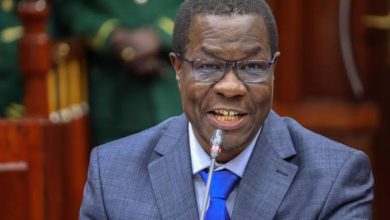
Internal Security Principal Secretary Raymond Omollo defended the initiative, saying the creation of the agency is aimed at strengthening Kenya’s digital resilience and protecting critical infrastructure.
He noted that cyber threats have risen alongside the country’s increasing reliance on digital systems, warning that issues such as cybercrime, identity theft, malicious software, misinformation campaigns, and attacks on infrastructure continue to threaten national security and economic stability.
“Cybercrime, ransomware attacks, online fraud, identity theft, malicious software, data breaches, misinformation campaigns and attacks on critical digital infrastructure continue to pose growing risks to national security, economic stability and public confidence in digital services,” Omollo said, adding that cybersecurity has become a national priority.
Omollo further explained that the new framework will ensure coordinated oversight across government and private sector systems, improve vulnerability detection, and enhance response to emerging cyber threats.
The agency will also establish a Cybersecurity Centre of Excellence to support training, research, and innovation in digital security.
Despite government assurances that the initiative is not intended to restrict free expression, the move has sparked concern among critics and civil society groups.
They warn that the expanded regulatory framework could be used to increase surveillance or limit online freedoms, particularly during a politically sensitive election period.
Concerns have also been raised over the potential use of cybersecurity and misinformation controls to influence political discourse, given past efforts to curb hate speech and disinformation online.
The Communications Authority of Kenya has separately indicated that it is considering stricter oversight of digital platforms, citing rising cases of misinformation, cyberbullying, and coordinated propaganda targeting political leaders.
The debate now places Kenya at the centre of a broader global conversation on how governments can balance cybersecurity, regulation of online platforms, and protection of democratic freedoms ahead of elections.