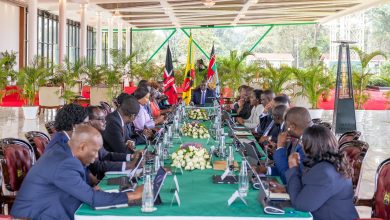
Government signs controversial Sh154.2billion JKIA upgrade deal amid court challenge
The petition, filed by COFEK through its Secretary General Stephen Mutoro, seeks conservatory orders restraining the respondents from taking any further steps capable of creating contractual, financial, proprietary or public obligations arising from the proposed redevelopment of Kenya's main international airport.

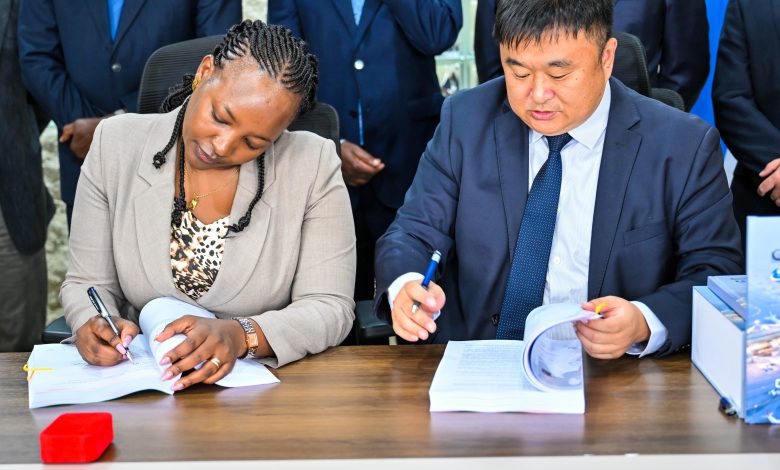
Kenya officially committed to a Sh154.2 billion commercial contract for the modernisation programme for Jomo Kenyatta International Airport (JKIA) with a Chinese firm, amid an ongoing suit filed by the Consumers Federation of Kenya (COFEK) in the High Court to halt the controversial project.
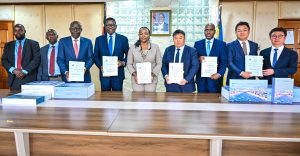
Today, June 23, 2026 at Transcom House at Roads and Transport Ministry headquarters in Nairobi, government official signed the contract which will involve the construction of a new terminal building, upgrades to existing facilities, and broad improvements to both airside and landside operations.
The contract signing session was overseen by Roads and Transport Cabinet Secretary Davis Chirchir.
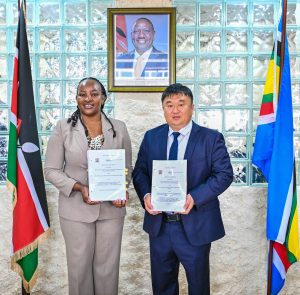
The agreement was signed on behalf of the government by Aviation and Aerospace Development Principal Secretary Teresia Mbaika, while China Road and Bridge Corporation General Manager Yu Xiaodong signed for the contractor.
Chirchir described the project as a strategic investment designed to enhance safety, improve efficiency, and support Kenya’s long-term economic growth by boosting trade, tourism, and investment through improved air connectivity.
“Today, I witnessed the signing of the contract for the Jomo Kenyatta International Airport Modernisation Project, a major national infrastructure investment valued at Sh154.2 billion,” he said.
According to the Ministry, the upgrade will expand passenger and cargo handling capacity, modernise ageing infrastructure, and introduce improved service delivery systems to position JKIA as a premier regional gateway.
The contract signing follows the completion of the JKIA Master Plan in February 2026, which provided a roadmap for the airport’s expansion and redevelopment. Procurement for the project has been ongoing for three months, attracting interest from both local and international firms.
More than 40 companies participated in a pre-bid conference held in April 2026, where they were briefed on the project scope, technical requirements, and implementation standards.
Chirchir said all bids were evaluated on technical and financial merit, adding that the process complied fully with procurement laws and regulatory frameworks.
“As a Ministry, we remain firmly committed to transparency, accountability and strict adherence to all required standards as we deliver world-class aviation infrastructure,” he said.
Also present during the signing were Kenya Airports Authority Managing Director Eng. Kenya Airports Authority Moses Wekesa, alongside legal representatives from the Ministry, CRBC, and senior officials from the government and aviation agencies.
The government says the project will be a key milestone in transforming JKIA into a modern, efficient airport capable of handling growing regional and international traffic.
The petition, filed by COFEK through its Secretary General Stephen Mutoro, seeks conservatory orders restraining the respondents from taking any further steps capable of creating contractual, financial, proprietary or public obligations arising from the proposed redevelopment of Kenya’s main international airport.
The petitioner also wants the court to order the preservation of all records relating to the project, including agreements, approvals, financing documents, correspondence, land-use records and implementation documents, pending the determination of the petition.
Mutoro argues that while the government has initiated the procurement process for the airport’s expansion, critical information relating to the consortium behind the project, beneficial ownership, financing arrangements, governance structure and contractual obligations has not been disclosed despite the project’s immense public significance.
The petition further raises concerns over reports that IMC Construction Kenya Limited, a company reportedly associated with Zimbabwean businessman Wicknell Chivayo, is part of the consortium or implementation structure, arguing that the nature of its involvement and the approval process remain unclear.
However, Chirchir has since disowned Chivayo’s alleged involvement.
According to the petition, unless the court intervenes, the respondents may proceed with signing agreements, securing financing, committing public resources and undertaking implementation measures before the constitutional issues are determined, rendering the case nugatory.
Mutoro argues that the project raises substantial constitutional questions on transparency, accountability, public participation, access to information, public procurement and the prudent management of public resources.