Sh27billion SHA debt leaves hospitals struggling, patients borrowing
The growing dependence on SACCO medical loans manifests the widening gap between SHA's promise of universal healthcare and the reality facing many Kenyans, who are increasingly forced to borrow simply to access treatment while hospitals wait months for reimbursement.

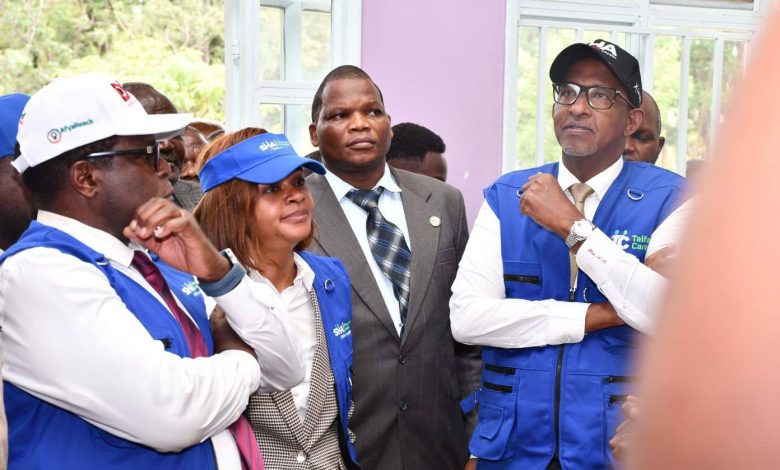
Thousands of Kenyans are increasingly turning to Savings and Credit Cooperative Societies (SACCOs) to finance healthcare as the deepening financial crisis at the Social Health Authority (SHA) leaves hospitals struggling with delayed reimbursements and patients unable to access treatment.
The growing reliance on cooperative loans comes as regulated SACCOs disbursed Sh2.2 billion in medical loans in the three months to March 2026, making healthcare financing the fastest-growing loan segment in the cooperative sector.
The surge coincides with mounting concerns over SHA’s ability to settle claims owed to hospitals. A report by Controller of Budget (CoB) Margaret Nyakang’o shows county health facilities were owed Sh26.87 billion in outstanding SHA and defunct National Health Insurance Fund (NHIF) claims by March 31, 2026—more than triple the Sh8.29 billion recorded at the end of December 2025.
The growing dependence on SACCO medical loans manifests the widening gap between SHA’s promise of universal healthcare and the reality facing many Kenyans, who are increasingly forced to borrow simply to access treatment while hospitals wait months for reimbursement.
The ballooning debt has placed public health facilities under severe financial strain, forcing some hospitals to scale back services while private facilities have increasingly demanded cash payments or suspended treatment for SHA patients because of delayed reimbursements.
According to the Sacco Societies Regulatory Authority (SASRA), members are increasingly borrowing to pay for hospital bills, buy medicine and even finance their annual SHA contributions as they struggle to access healthcare under the new insurance scheme.
The trend reflects growing pressure on households as delayed SHA payments continue to disrupt healthcare delivery despite repeated government assurances that the system is functioning effectively.
Nakuru County has been hit hardest, with health facilities owed Sh2.81 billion through the Facility Improvement Fund, including Sh2.4 billion owed by the Social Health Insurance Fund (SHIF) and Sh432.9 million inherited from the former NHIF.
Kakamega follows with Sh1.3 billion in pending claims, while Nyeri is owed Sh632 million, Mombasa Sh596.7 million and Kiambu Sh474.8 million.
Other counties with substantial unpaid claims include Garissa (Sh429.48 million), Bomet (Sh421.69 million), Homa Bay (Sh390.3 million), Bungoma (Sh358.5 million), Kajiado (Sh343.8 million), Kitui (Sh333 million), Siaya (Sh287.47 million) and Kisumu (Sh282.39 million).
Further outstanding claims are reported in Elgeyo Marakwet, Migori, Nyandarua, Tharaka-Nithi, Kericho, Embu, Busia, Kwale, Narok and Samburu.
The Controller of Budget also noted significant gaps in reporting, with 19 counties—including Nairobi, Uasin Gishu, Meru, Kilifi, Taita Taveta and Murang’a—failing to submit data on outstanding SHA claims, suggesting the national debt could be even higher.
The findings raise fresh questions over SHA’s financial sustainability nearly two years after its rollout in October 2024 to replace the National Health Insurance Fund (NHIF) through the establishment of the Social Health Insurance Fund (SHIF).
The government has continued to defend the programme, arguing that it is expanding healthcare access.
Speaking on June 13, 2026, Interior Principal Secretary Raymond Omollo said more than 31 million Kenyans had registered under SHA, with 11,034 health facilities contracted under the programme.
He added that SHA had paid more than Sh147 billion in claims since its launch.
However, contribution levels remain relatively low, with only about 4.8 million Kenyans actively contributing—roughly four million salaried workers and 890,000 from the informal sector—generating approximately Sh70 billion in contributions.
Health sector stakeholders argue the payment delays are undermining the programme’s objectives.
The Kenya Medical Practitioners and Dentists Union (KMPDU) and the Rural Private Health Association (RUPHA) have previously accused SHA of failing healthcare providers through delayed reimbursements, noting that by August 2025 the authority had paid about Sh53 billion against claims worth Sh96.2 billion.
The financial strain is also being felt by county governments. Appearing before the Senate County Public Accounts Committee in June, Homa Bay Governor Gladys Wanga said SHA owed the county about Sh350 million, warning that delayed reimbursements continue to affect service delivery.
“Every treatment you make, you file the claim, but the money doesn’t necessarily come back to you on time. SHA owes us approximately Sh350 million for the health facilities in Homa Bay,” she told senators.