Revealed: Nine counties spent peanuts on development in first half of 2024/25 fiscal year
Controller of Budget Margaret Nyakango said this was well below the Public Finance Management Act 2012, which stipulates that counties utilise at least 30 per cent of their budgets on development in


At least nine out of the 47 counties spent less than 10 per cent of their total revenue on development programmes in the first half of the 2024-2025 Financial Year, the latest report by the Controller of Budget reveals.
This was well below the Public Finance Management Act 2012, which stipulates that counties utilise at least 30 per cent of their budgets on development in line with the spirit of devolution.
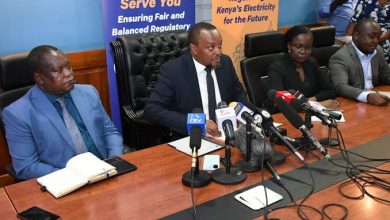
Releasing the report on Tuesday, Controller of Budget Dr Margaret Nyakang’o observed: “During the reporting period, county governments spent Ksh 33.60 billion on development activities, representing an absorption rate of 16 per cent against the annual development budget of Ksh 211.53 billion. Analysis of development expenditure as a proportion of the approved annual development budget showed that several county governments had an absorption rate of less than 10 percent for their development programs.”
The county governments which spent peanuts on development programs included Elgeyo Marakwet (5.7 per cent), Kitui (6.0 per cent), Governor Johnson Sakaja’s Nairobi (6.3 per cent), Taita Taveta (6.4 per cent), Nakuru (6.7 per cent) and Nyeri (6.8 per cent). Other counties in the bottom ten bracket included Governor Peter Anyang’ Nyong’o’s Kisumu (7.6 per cent), Baringo (8.4 per cent) and Lamu (9.3 per cent).
According to Dr Nyakang’o, Kwale had the highest percentage of its budget spent on development activities at 36.9 per cent followed by Kilifi (34.3 per cent), Mandera (32.9 per cent), Garissa (32.1 per cent), Siaya (31.1 per cent), Turkana (30.2 per cent), Trans Nzoia (30.0 per cent), Kericho (28.3 per cent), Wajir (27.1 per cent) and Marsabit (27.1 per cent).
In her recommendations, Dr Nyakang’o stated: “County governments must prioritise development expenditure to comply with the statutory requirement of allocating at least 30 percent of the budget to development activities as stipulated in the PFM Act 2012. Robust project planning, monitoring and implementation mechanisms should be adopted to improve the absorption rate of development funds and enhance counties development.”
The COB also sanctioned ten counties for operating more than 100 bank accounts as well as raised concerns over 15 others which spent millions of shillings on non-priority items. The counties with the highest number of accounts include Baringo, Nairobi City, Bomet, Elgeyo Marakwet, Machakos, Murang’a Nakuru, Nyamira, Nyandarua and Trans Nzoia.
According to the report, the counties that achieved the higher proportion of their local revenue collection to their respective annual revenue targets were Narok at 87 per cent, Elgeyo Marakwet at 60 per cent, Samburu county at 59 per cent, Laikipia county at 55 per cent, Garissa (53 per cent) and Wajir (52 per cent). Conversely, the counties that had the lowest proportion of their local revenue collection to their respective annual revenue targets included Kiambu and Bungoma each attaining 20 percent, Kajiado (19 per cent), Kisumu (18 per cent), Bomet at 16 per cent and Machakos at 12 per cent.
Dr Nyakang’o also flagged several counties for failing to settle their outstanding pending bills. “In the first half of the 2024-2025 FY, the county governments reported outstanding pending bills stock of Ksh 180.52 billion, comprising of Ksh 143.49 billion for recurrent activities and Ksh36.03 billion for development activities,” Dr Nyakang’o stated in the report.
Topping the list with the highest pending bills is Nairobi at Ksh 118.26 billion followed by Kiambu at Ksh5.63 billion, Machakos at Ksh5.07 billion, Mombasa at Ksh 3.72 billion and Bungoma at Ksh 2.83 billion. “As of 31 December 2024, Counties reported outstanding pending bills which amounted to Ksh 182.13 billion, comprising of Ksh 145.06 billion for recurrent expenditure and Ksh 37.07 billion for development expenditure,” the report states.
“During the period under review, several county governments adjusted their pending bills as of 30th June 2024. Furthermore, several county governments have not followed their scheduled payment plans for these outstanding bills. County governments are expected to prioritise the payment of outstanding bills according to their established payment plans,” she advised.