Rape survivors turn to High Court over Kenya’s ‘broken’ forensic justice system
Survivors argue that many police stations and public health facilities do not have trained forensic examiners, standardised rape kits, specimen-collection equipment, chain-of-custody tools or forensic nurses. They also cite the absence of clear medico-legal documentation procedures and accredited forensic examination centres.

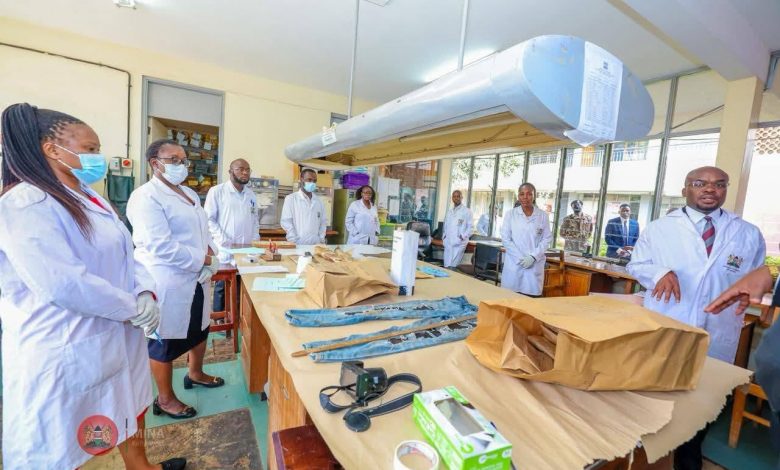
For a survivor of sexual violence, the search for justice often begins at a police station or hospital—places where the evidence needed to identify and prosecute an attacker should be carefully collected, preserved and analysed.
But survivors of sexual violence in Kenya say this critical chain is frequently broken from the moment a victim reports an assault.
Biological samples can deteriorate. Critical exhibits can be misplaced. Police officers may lack the equipment or training to collect forensic evidence, while public health facilities may not have specialised personnel or facilities to conduct medico-legal examinations.
By the time a case reaches court, survivors say, some of the evidence that could have helped identify their attackers may already be compromised or lost.
It is this gap that has prompted Survivors of Sexual Violence Kenya (SSV Kenya) to move to the High Court, accusing the government of failing to establish an effective forensic system capable of supporting survivors and bringing sexual offenders to justice.
The petition has placed Kenya’s handling of forensic evidence under scrutiny, raising questions about the country’s capacity to use DNA and other modern scientific tools to investigate sexual crimes and build a reliable database that could help identify repeat offenders.
SSV Kenya has sued the Attorney General, Interior Cabinet Secretary, Inspector General of Police, Health Cabinet Secretary, Director General for Health, Kenya Law Reform Commission (KLRC), Kenya Medical Supplies Authority (Kemsa) and Kenya Bureau of Standards (Kebs).
The survivors contend that the country continues to depend heavily on physical examinations and victims’ accounts, while scientific evidence that could independently link perpetrators to crimes remains underused.
Where sperm or other biological material requires analysis, the survivors say, investigators often have to rely on specialised facilities such as the Directorate of Criminal Investigations (DCI) headquarters or the Kenya Medical Research Institute (KEMRI).
They argue that this is inadequate for a country where sexual violence cases are reported across all 47 counties.
Evidence lost before it reaches court
The petition is now challenging the handling and preservation of forensic evidence.
Survivors argue that many police stations and public health facilities do not have trained forensic examiners, standardised rape kits, specimen-collection equipment, chain-of-custody tools or forensic nurses.
They also cite the absence of clear medico-legal documentation procedures and accredited forensic examination centres.
The result, they say, is that victims may undergo medical examinations without crucial evidence being properly collected, documented, packaged, stored and transferred.
“Even in the limited number of cases where forensic evidence is collected, biological samples, toxicology materials, and other exhibits routinely rot, degrade, or expire while held at police stations, the Government Chemist, or public hospitals,” the petition states.
The survivors attribute the deterioration to inadequate storage regulations, poor refrigeration and biospecimen facilities, a lack of medico-legal mortuary standards and unclear mechanisms for transferring evidence between agencies.
They also cite the absence of regulations governing the safe disposal of expired or contaminated forensic material.
For a survivor, such failures can have devastating consequences.
A case that could potentially have been strengthened by DNA evidence can instead come down to the victim’s testimony, physical examination findings and whatever other evidence investigators manage to recover.
The petitioners argue that this fragmented system undermines the integrity of evidence and makes it harder for prosecutors and courts to establish what happened and who was responsible.
Forensic capacity ‘severely deficient’
In her supporting affidavit, SSV Kenya coordinator Alice Karanja said Kenya’s approach to investigating sexual crimes remains largely rooted in traditional policing methods despite advances in forensic science.
She said the country could make greater use of modern forensic tools to investigate sexual violence and other crimes.
Karanja acknowledged that the DCI has a forensic laboratory but argued that the expertise and procedures required to properly collect and preserve evidence have not been sufficiently cascaded to officers at lower levels.
She said many officers who are the first point of contact for victims lack the skills and tools needed to ensure that evidence collected at the scene or during medical examination remains usable.
“This regulatory and institutional vacuum has had systemic and predictable consequences,” Karanja said.
She claimed that most police stations and public health facilities lack trained forensic examiners, standardised rape kits, chain-of-custody tools, specimen-collection equipment, forensic nurses, medico-legal documentation guidelines and accredited forensic examination locations.
“As a result, the majority of victims of crime never have evidence properly collected at the point of first contact with the justice or health system,” she said.
The petitioners say the problem extends beyond sexual assault investigations.
They describe Kenya’s forensic capacity as severely deficient in several disciplines, including DNA analysis and profiling, toxicology, forensic pathology, crime-scene reconstruction, digital and cyber forensics, ballistics, fingerprint analysis, environmental forensics and child-friendly forensic interviewing.
According to the survivors, some of these services are either severely underdeveloped, inaccessible in most counties or completely unavailable in some areas.
Police training and hospitals under scrutiny
Karanja has accused the Interior CS of failing to sufficiently integrate forensic science into police training.
She further claims that Kenya’s universities have not adequately developed specialised curricula in areas such as forensic DNA analysis and cyber forensics, creating a shortage of professionals needed to support a modern criminal justice system.
The petitioners have also taken issue with the health sector.
Karanja alleges that the Health CS has failed to gazette county, private and national hospitals as designated forensic science examination centres, limiting the ability of survivors to access appropriate services close to where they live.
This, the survivors argue, creates a system in which a victim in a remote county may have to navigate multiple institutions before crucial evidence can be properly examined.
For survivors already dealing with the trauma of sexual violence, such institutional hurdles can become another barrier to justice.
‘Cart before the horse’
The petition comes as the government advances the Draft National Forensic Science Bill, 2026, legislation intended to provide a framework for forensic investigations and related matters.
But the survivors want the government to slow down.
Karanja argues that the proposed legislation is being developed before the government has adequately identified and addressed the systemic problems undermining forensic investigations.
She accused the Interior CS, working with the KLRC, of pursuing the Bill without first establishing a comprehensive policy framework to identify the governance problems within the forensic sector, define institutional mandates and assess whether existing laws and structures are adequate.
She also questioned whether the government had sufficiently evaluated the practical feasibility of implementing the proposed law.
In the survivors’ view, legislation alone cannot fix a forensic system in which police officers lack basic evidence-collection equipment, hospitals do not have appropriate examination facilities and agencies lack reliable mechanisms for transferring and storing biological evidence.
Court asked to halt forensic law
SSV Kenya wants the High Court to compel the government to undertake and publish a comprehensive legal, policy and institutional review of Kenya’s forensic system.
The survivors are also seeking an inter-sectoral consultation bringing together stakeholders involved in criminal investigations, healthcare, forensic science and the administration of justice.
They want the court to issue orders stopping the government from proceeding with the proposed National Forensic Science Bill until the identified gaps are addressed and there is broader consensus on the framework required to regulate forensic investigations and data storage.
Survivors of the ordeal who walks into a police station or hospital after an assault more often than not suffer double tragedy of unyielding expectations for the justice system to preserve every piece of evidence that could identify the perpetrator.