Pope Leo’s slamming of ‘tyrants’ in rare global rebuke of world leaders timely

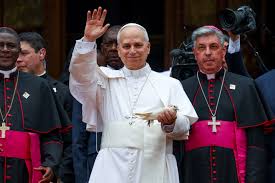
Pope Leo’s latest intervention on the global stage lands with unusual force and unmistakable urgency.
In a world increasingly shaped by geopolitical rivalries, armed conflicts, and rising authoritarian tendencies, his warning that humanity is being “ravaged by a handful of tyrants” is not just moral rhetoric—it is a timely diagnosis of a deteriorating international order.
From Cameroon, where he is visiting amid ongoing conflict and fragile ceasefire arrangements, the Pope has chosen not the comfort of ceremonial language but the discomfort of truth-telling.
His condemnation of leaders who prioritise military spending over human development, and who invoke religion to justify war, speaks directly to one of the most troubling patterns of modern governance: the normalisation of violence as a tool of policy and power consolidation.
At a moment when wars continue to displace millions and destabilise entire regions, the Pope’s call for a “decisive change of course” resonates far beyond the Catholic Church.
It is a message directed at heads of state, policymakers, and global institutions that too often appear paralysed in the face of escalating conflict.
His critique that billions are readily available for destruction while resources for healing, education, and reconstruction remain scarce is a reminder of the distorted global priorities that define the current era.
What makes Pope Leo’s message particularly significant is not only its content but its courage.
In openly challenging world leaders—including powerful figures in the United States—he has stepped into a space where moral authority is often avoided in favour of diplomatic neutrality.
His remarks are a reminder that spiritual leadership, when exercised with conviction, can still function as a conscience for the international community.
The Pope’s warning against the manipulation of religion for military and political gain also strikes at a deeply sensitive issue.
Throughout history, religious language has too often been co-opted to legitimise violence, exclusion, and domination.
His assertion that such practices “drag that which is sacred into darkness and filth” is a powerful rejection of this misuse.
It is also a call to religious communities worldwide to reclaim faith as a force for peace rather than a tool of division.
The response from political leaders has been predictably mixed. Some have dismissed his remarks as overreach into matters of statecraft, while others have reacted defensively to what they perceive as criticism of their foreign policy decisions.
Yet such reactions only underscore the relevance of his message. When moral critique is uncomfortable to power, it often signals that the critique has touched something real.
In the United States, the exchange between Pope Leo and President Donald Trump over the war in Iran has further amplified the global debate on leadership and responsibility.
The rhetorical clash, including social media exchanges, reflects a broader tension between political realism and moral idealism.
While state leaders emphasise security imperatives and strategic interests, the Pope is reminding the world that security built on destruction is ultimately fragile and self-defeating.
His assertion that “it takes only a moment to destroy, yet often a lifetime is not enough to rebuild” is particularly poignant.
It captures the asymmetry between the speed of violence and the slow, painstaking process of recovery.
Entire societies can be destabilised in days, while reconstruction can take generations. This imbalance should weigh heavily on those who make decisions about war and peace.
Equally important is the Pope’s emphasis on corruption, exploitation, and inequality as underlying drivers of conflict.
His call for governments to resist the “whims of the rich and powerful” highlights the intersection between economic injustice and political instability.
Wars do not emerge in a vacuum; they are often fuelled by competition over resources, power, and influence, frequently at the expense of ordinary citizens who bear the consequences.
The support expressed by religious leaders such as the Archbishop of Canterbury further underscores the ecumenical resonance of Pope Leo’s message.
When leaders across Christian traditions converge on a call for peace and restraint, it signals a broader moral consensus that transcends institutional boundaries.
At the same time, the situation in Cameroon, where the Pope is visiting, illustrates the complexity of translating moral appeals into political outcomes.
Despite ceasefires and mediation efforts, conflicts persist, driven by deep historical grievances and structural inequalities. Yet even in such contexts, the presence of a global religious figure calling for peace can create space for dialogue and renewed attention to neglected crises.
Pope Leo’s intervention should therefore not be dismissed as symbolic or ceremonial. It is a reminder that leadership, whether religious or political, carries an ethical dimension that cannot be reduced to strategy alone.
At a time when global politics often appears fragmented and transactional, his call for conscience-driven leadership is both necessary and overdue.
By Wanjiku Waweru,
The author is a seasoned Reporter at The Informer Media Group