Part One: Inside betting industry in Kenya
Even as BCLB’s regulatory failures have been cited as one of systemic inadequacy, alleged entrenched corrupt practices and claimed existence of an extortion syndicate, under-resourcing, poor digital capabilities and board’s reactive enforcement have also been highlighted as key setbacks

In our Part One of a Three Part Investigative Series dubbed ‘Inside betting industry in Kenya’, The Informer Media Group lays bare the deep seated intricacies that have dogged the multi-billion sector that almost runs opaquely.
Our initial broadcast brings to you the key regulatory and structural challenges that have reduced the Betting Control and Licensing Board (BCLB), the country’s gambling regulator into an almost a lame duck as local and international economic sharks milk betting fans dry.
Even as BCLB’s regulatory failures have been cited as one of systemic inadequacy, alleged entrenched corrupt practices and claimed existence of an extortion syndicate, under-resourcing, poor digital capabilities and board’s reactive enforcement have also been highlighted as key setbacks.
While short-term steps like gambling advertisement bans signal intent, they also fall short of the sweeping legislative reforms, technological empowerment and structural realignment needed for effective gambling regulation in Kenya.
Below as some of the key challenges cited.
A fast-moving market outpacing old rules
For years, Kenya regulated gambling largely under the Betting, Lotteries and Gaming Act (Cap. 131) via the Betting Control and Licensing Board (BCLB). The market shifted online and onto mobile wallets faster than the legal framework evolved, creating grey zones around offshore platforms, digital advertising, and real-time supervision.
In 2025, the National Assembly passed and the president assented to the Gambling Control Act, 2025, replacing BCLB with a new Gambling Regulatory Authority (GRA) and creating a Gambling Appeals Tribunal. The shift promises stronger, more independent oversight, but translating a new statute into day-to-day regulatory capacity is a multi-year execution challenge.
Fragmented responsibilities between national and county levels
Kenya’s devolved system means national and county governments both touch gambling: the centre handles core licensing and standards, while counties influence premises permits, zoning, and business operations. In practice, that split has created duplication, delays, and forum-shopping. The 2025 mediation report on the Gambling Control Bill tried to clarify “shared” functions by vesting licensing in the national Authority while recognizing county roles—but coordination will still be tested on the ground.
Policy volatility on taxes and fees
Frequent changes to excise and withholding rules make compliance harder and encourage regulatory arbitrage. Since 2021, excise on betting stakes moved multiple times (7.5 per cent to 12.5 per cent and later 15 per cent), before Parliament approved a 2025 reduction to 5 per cent—a move supporters say improves compliance but critics warn could spur activity.
In parallel, withholding shifted from taxing “winnings” to taxing “withdrawals” at 5 per cent, a significant administrative change for operators and punters alike. Fee hikes under discussion (including sharp increases for online licences) add further uncertainty and risk pushing smaller firms—and punters—into the unregulated market.
Why this matters: constant fiscal changes complicate product design, risk models, and KRA integrations; they also make long-term planning (and responsible-gaming investments) harder for operators.
Enforcement against illegal and offshore operators
Blocking unlicensed websites, stopping cross-border offerings, and curbing “skin” brands remain difficult.
Even with periodic crackdowns and public lists of illegal sites, mirror domains, VPN use, and crypto rails make whack-a-mole enforcement costly.
Without stable inter-agency tooling (customs, telcos/ISPs, CA, CBK, KRA), illicit supply persists.
The new law adds tougher penalties and contemplates real-time monitoring, but rollout, funding, and technical integration will decide whether it bites.
Advertising controls vs. practical compliance
Kenya has repeatedly tightened gambling advertising—formal BCLB Advertising Guidelines (2021), then, in 2025, a 30-day blanket suspension followed by a new multi-agency framework. The intent is to protect minors and constrain high-pressure marketing; the challenge is consistent enforcement across broadcasters, influencers, and programmatic digital ad networks where age-gating is porous.
Youth exposure and public-health capacity
Kenyan and regional studies have flagged high youth participation and elevated harm risk, with universities a particular hotspot. Treatment, research, and prevention funding remain thin, with limited standardized screening in schools or primary health. The new Act gestures to consumer protection, but sustained funding for harm-minimization (helplines, counseling, exclusion programs) and outcome measurement is the hard part.
Identity checks, age-gating, and data protection
M-Pesa-based sign-ups and online wallets make KYC/age verification easier in theory, but gaps persist where third-party affiliates, SMS short-codes, or offshore apps bypass strong checks.
Kenya’s Data Protection Act and the ODPC’s enforcement posture require operators to handle personal data prudently; building interoperable, privacy-preserving self-exclusion lists and affordability checks without over-collecting data remains a live challenge.
Match-fixing and integrity risks in sport
Kenya has battled periodic match-fixing scandals—often intertwined with betting syndicates. The Football Kenya Federation has issued suspensions and opened probes, but deterrence requires coordinated monitoring (leagues, data companies, sportsbooks, and law enforcement) and cross-border cooperation with FIFA/CAF. Building this integrity stack is complex and resource-intensive.
Litigation risk and regulatory certainty
Operators have frequently litigated licensing, taxes, and enforcement measures. Courts have weighed in on parliamentary procedure and agency powers, occasionally pausing directives. While judicial review is essential, repeated lawsuits slow policy execution and can produce conflicting signals to the market.
A new Gambling Appeals Tribunal may streamline disputes—but only if it is capacitated and seen as independent.
Capacity, funding, and technology for supervision
Moving from form-based oversight to real-time supervision requires technology (data ingestion from platforms, anomaly detection, geo-blocking, AML analytics), people (data scientists, auditors, investigators), and stable funding.
The new GRA structure aims to provide operational independence, but it must stand up secure tech, hire specialist staff, and maintain APIs with KRA, CBK, CA, telcos, and payment providers to close the loop from bet placement to tax remittance.
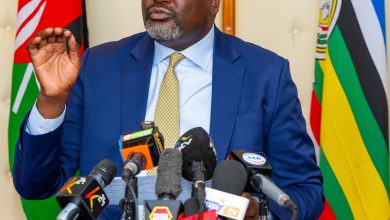
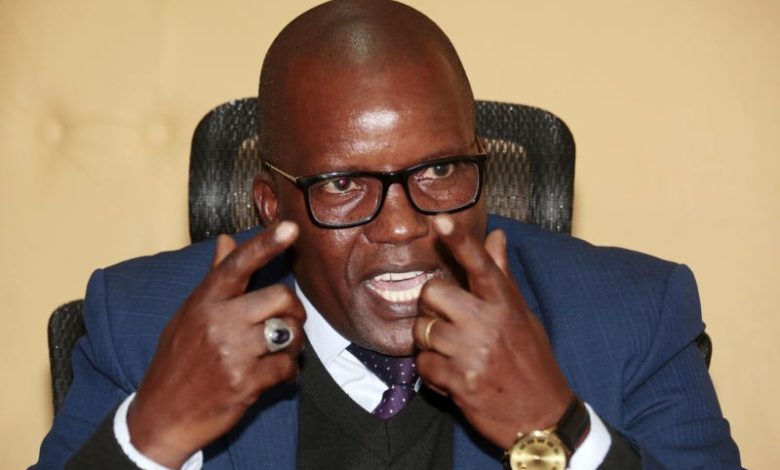
Below are excerpts of an exclusive Question and Answer (Q&A) by The Informer Media Group with BCLB Board Chairperson Dr. Jane Mwikali Makau and BCLB Chief Executive Officer (CEO) Peter Mbugi.
- Recently, a multi-agency team was formed to regulate gambling activities in order to promote responsible betting culture, what key milestones have you achieved so far?
The multi-agency framework established to regulate gambling in Kenya has strengthened coordination among agencies, enhanced compliance monitoring and developed advertisement guidelines to promote responsible betting practices. This synergy has also increased efficiency in addressing emerging challenges within the sector.
- From the BCLB website, an updated list of licensed betting operators is missing. What has necessitated this delay and what are possible ripple effects to gambling clients who may seek to confirm regulatory status of the firms involved?
The updated list of licensed betting operators is currently under review and verification to ensure accuracy and integrity of information before public release. The list will be uploaded on the BCLB website shortly. This precaution safeguards both operators and the public against misinformation.
- Cumulatively, as of today, how many gambling entities has BCLB licensed so far for the year 2025?
As of September 2025, the Betting Control and Licensing Board has duly licensed 156 gambling operators across various categories. This data is available for public inspection upon request and will also reflect in the updated list once published online.
- There are claims that BCLB senior officials are involved in a corruption web of bribery demands, extortion and blackmail targeting betting operators seeking to renew their licenses, as the leadership, what is your observations on these claims?
The Board takes these allegations with utmost seriousness. As the leadership, we wish to categorically state that corruption, extortion, and bribery are contrary to the ethos of the BCLB. We are not aware of any substantiated claims against senior officials, and we encourage anyone with credible evidence to present it to the relevant investigative agencies.
- What measures has your office instituted to curb such incidents that may emanate internally from rogue BCLB officials?
To safeguard integrity, the board has instituted robust internal audit mechanisms, strengthened whistleblower channels, and collaborates closely with investigative authorities. Any officer found culpable of unethical conduct faces disciplinary action in line with public service regulations and the law.
- What is BCLB’s corporate policy towards zero tolerance to corruption?
BCLB is guided by a firm zero-tolerance policy on corruption. All staff subscribe to the Public Service Code of Conduct and are continuously sensitized on ethical practices. We also maintain open reporting channels for stakeholders to flag any suspected malpractice.
- From your records, how much in total did the government rake-in in terms of levies derived from gaming activities in the last financial year?
In the last financial year (2024/25), the government collected approximately Sh303million from issuance of permits and licenses. This revenue continues to support national development priorities.
We reaffirm our commitment to transparency, accountability, and fostering a fair, responsible betting environment in Kenya.