Outrage over Ruto’s decision to scrap mandatory vetting for Northern Kenya ID applicants


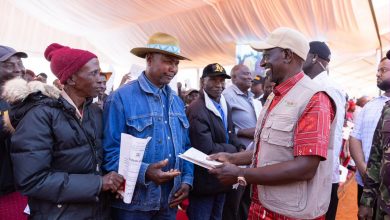
President William Ruto’s controversial policy decision to scrap-off the 60-year old mandatory vetting requirements for applicants of national identity cards, birth certificates, and passports in the Northern Kenya whose porous borders with Somalia has perennially caused a security challenge continue to elicit mixed reactions.
Security experts, political leaders and citizens have cited grave national security risk the decision poses including possible infiltration by the Al Qaeda linked Al Shabaab militants into the country.
Other have cited political reasons and potentially huge vote bloc ahead of the 2027 presidential polls.
Although President Ruto took the initiative as a move to ensure inclusivity, senior government officials within the security sector who cannot be named contradicting presidential directive contend the order should be “re-looked at as a matter of national security.” A senior official told The Informer Media Group.
This comes even as the fate and whereabouts of the five chiefs abducted ahead of the just concluded president’s tour in the Mandera county remains unclear.
They were kidnapped by Al Shabaab militants and taken to Somalia.
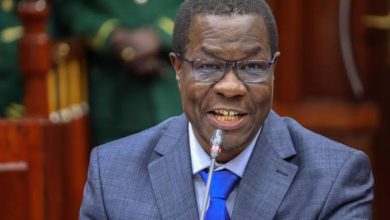
Yesterday, Trans Nzoia Governor, George Natembeya criticised Ruto’s order saying it would have serious security implications for the country.
Natembeya, a career administrator who rose to the rank of Rift Valley Regional Commissioner before his exit from service cautioned that the directive issued by the president was ill advised and would have serious diplomatic implications.
Natembeya warned that members of the terror groups can exploit the directive to enter the country, obtain identification documents, and potentially infiltrate elective positions such as Members of County Assembly, Member of Parliament, governorship or even presidency.
“The move has a grievous security implication, especially if the same get access to Kenyan passports and travels to the USA and this is not something to just do anyhow as it will reach a point that even an MCA will be elected from the outlawed groups,” Natembeya said.
He said through the directive criminal elements will infiltrate Kenya’s homeland security and even the disciplined forces. “Those who abducted our chiefs will be given Kenyan national identity cards. So when they go on with their abduction exercises, they will carry ID cards,” Natembeya said.
“Some of them will even infiltrate the security apparatus of our country including the police, military or even the President’s escort team will have its commander being a criminal,” he said.
Natembeya is the latest person to oppose the executive order that President Ruto issued last week while making a tour to the region.
Mumia East Member of Parliament Peter Salasya has since vowed to table a motion in the National Assembly seeking to overturn the order.
“I will put up a motion in the parliament to denounce this policy. Parliament has powers to do away with this silly executive order,” Salasya said.
Natembeya argued that President Ruto should have taken an approach taken by the U.S. President Donald Trump in handling national security matters.
“What is happening right now is that countries are seriously looking at the issue of making their borders non-porous. The USA for instance a bigger country is preventing people from entering its boundaries. How will it be that a small, underdeveloped country is opening its borders,” Natembeya urged.
Ruto’s decision comes just days after the High Court in Garissa ordered a fresh census for three counties in the Northeastern region.
Vetting became a security requirement for issuing identity cards and birth certificates in Northern Kenya after the Shifta insurgency of the 1960s.
The Shifta war was a secessionist conflict in which ethnic Somalis, Muslim Borana, among others, attempted to join Somalia.
The development is now seen as a way for Ruto to secure and strengthen the northeastern voting bloc and make inroads into areas traditionally dominated by the opposition.
Mandera, Wajir, Garissa, Isiolo, and Marsabit counties had about 882,000 voters in the 2022 presidential election. However, residents of these counties have complained that their numbers were underreported in the 2019 national census.
The High Court in Garissa recently quashed the 2019 census results for Wajir, Mandera, and Garissa counties, ordering a fresh exercise due to discrepancies in the reported results.